
Advice
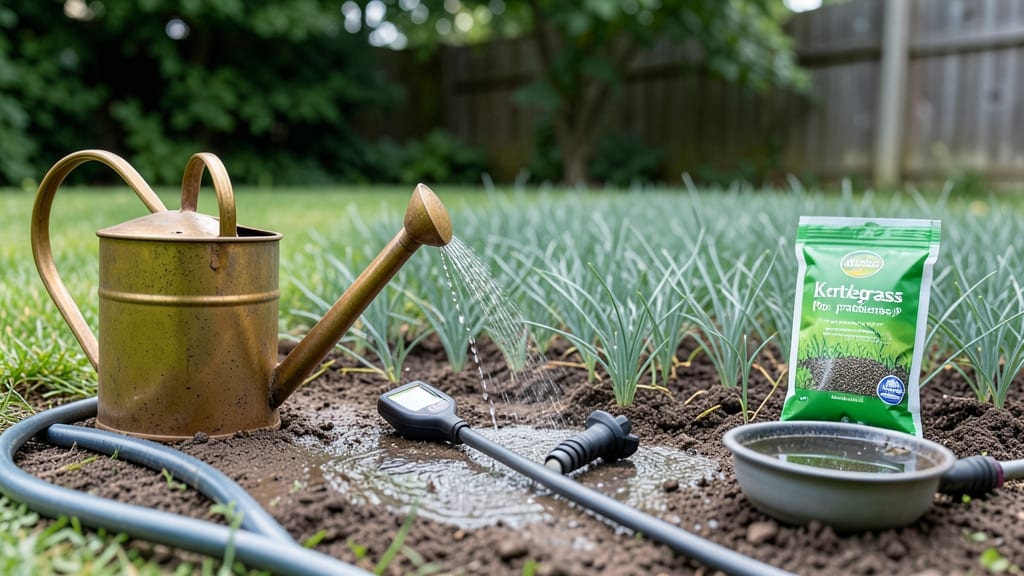
Yes, new grass seed can be overwatered, leading to seed rot, mold, and poor germination. Maintain consistently moist—not saturated—soil by watering lightly 2-3 times daily for 10-15 minutes until sprouts appear, then reduce frequency as roots develop.
Overwatering creates a suffocating environment where seeds can't breathe, starving them of oxygen and inviting fungal infections like Pythium. 💧 The soil should feel like a damp sponge—not dripping—when you check it with your finger.
I’ve seen entire lawns fail because well-meaning gardeners kept the area soggy for days, thinking more water was better. Instead, aim for gentle, frequent misting that keeps the top inch of soil moist without pooling water.
Once seedlings emerge (usually in 7-14 days), shift to deeper watering every 2-3 days to encourage root growth. This adjustment prevents waterlogging while still supporting the young plants' needs. For hot climates, early morning watering minimizes evaporation, while humid areas may require less frequent but thorough soakings.
Always prioritize soil health over strict schedules—your grass will thank you with even, lush growth.
💡 In This Article
- How Overwatering Damages New Grass Seed Growth
- Optimal Watering Schedule for Germinating Grass Seed
How overwatering damages new grass seed growth
When you overwater new grass seed, you're essentially suffocating it by creating anaerobic conditions in the soil. Seeds need oxygen to germinate, and excess water displaces air from the soil pores, starving them.
This lack of oxygen triggers a process called seed rot, where the seed's stored energy reserves break down prematurely. You'll notice this as seeds that fail to sprout or develop into weak, discolored seedlings—often appearing grayish or mushy instead of vibrant green.
The real danger lies in fungal infections like Pythium, a water-loving pathogen that thrives in soggy conditions.
This fungus attacks the seed's outer coating and young roots, creating a cottony white growth that can spread rapidly. 🌱 In severe cases, entire sections of your lawn may develop a "damping-off" effect, where seedlings collapse at the soil line.
The key indicator is a sudden die-off of seedlings that were previously healthy, often accompanied by a musty odor from the soil.
Excess water also disrupts the natural process of radicle (root) development. Seeds need just enough moisture to soften their outer shell and initiate root growth, but too much water creates pressure that can actually push seeds deeper into the soil than they should be.
This phenomenon, called hydroseeding, can bury seeds too deeply for proper germination, leaving them stranded without access to light or nutrients. The ideal planting depth is typically 1/4 to 1/2 inch below soil level.
Another critical factor is how water affects soil temperature. Overwatering can cool the soil too much, slowing down metabolic processes that seeds rely on to germinate. In cooler climates, this might delay sprouting by days or even weeks.
Conversely, in hot weather, overwatering can create a greenhouse effect, trapping heat and causing seeds to dry out too quickly once the excess moisture evaporates. The delicate balance between moisture and temperature is why consistent, gentle watering is so crucial during the germination phase.
Consider this visual cue: Healthy germinating seeds should have firm, white roots that spread outward, while overwatered seeds develop weak, dark, and tangled roots.
The soil around healthy seedlings stays lightly moist but crumbles easily when touched, whereas overwatered soil feels compacted and may leave a film of water on the surface. This simple touch test can save you from costly mistakes in your lawn establishment.