
Watering
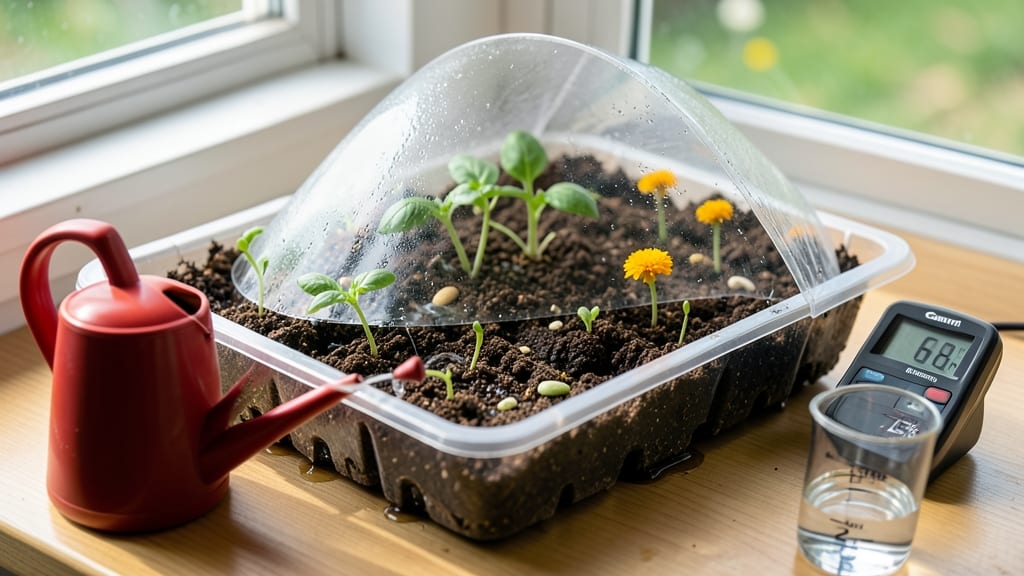
You can overwater seeds, and doing so will suffocate their roots, trigger rot, or wash seeds away before they even sprout, so maintain lightly damp—not soggy—soil until seedlings emerge.
Overwatering seeds creates a suffocating environment where roots can't breathe, cutting off the oxygen they need to activate enzymes that trigger germination. 🌱 The excess moisture also promotes fungal growth, which can attack delicate sprouts before they break through the soil.
I've seen seeds literally float away in waterlogged trays, or worse, develop mold that kills them entirely. The key is to keep the soil damp enough to support early root development but never saturated.
Instead of drowning your seeds, try the "finger test"—stick your index finger about an inch into the soil. If it feels damp but not wet, you're in the right zone. For stubborn seeds, a humidity dome or gentle bottom-watering method works wonders without oversaturating the mix.
Remember, seedlings are fragile, and too much water can undo all your hard work before they even get a chance to grow.
💡 In This Article
- How Excess Water Strangles Seed Germination
- Perfect Watering Techniques for Germinating Seeds
How excess water strangles seed germination
When soil becomes waterlogged, seeds suffocate because roots can't access oxygen—a critical component for germination. Plant respiration relies on oxygen to power cellular processes, and submerged roots switch to anaerobic metabolism, which produces toxic ethanol as a byproduct.
This chemical buildup disrupts enzyme activity, particularly amylase, which breaks down starches into sugars needed for early growth. 🌱 Without these enzymes functioning properly, seeds remain dormant or die before sprouting.
The problem worsens because waterlogged conditions create the perfect breeding ground for Pythium and Phytophthora fungi, which attack seed coats and emerging roots. These pathogens thrive in stagnant moisture, forming a fuzzy mold that can kill seeds within 24-48 hours.
Even if seeds survive, fungal infections often leave them stunted or deformed. I once watched a batch of tomato seeds develop black, mushy roots after just 3 days of overwatering—a clear sign of fungal rot.
Physical displacement is another silent killer. Seeds need stable contact with soil to anchor their roots, but excess water weakens soil structure, causing it to break apart. In extreme cases, seeds float to the surface or get washed away entirely.
This is especially dangerous with small seeds like carrots or lettuce, which can drift away in just 1/2 inch of standing water. Even if seeds stay put, displaced soil blocks light penetration, which seedlings need for photosynthesis to fuel their first leaves.
Moisture levels also disrupt the delicate balance of hormones that regulate germination. Gibberellins, the plant hormones that signal seeds to break dormancy, require oxygen to synthesize properly. Without it, these hormones fail to trigger the seed's metabolic shift from dormancy to growth.
The result? Seeds may sprout roots but never push through the soil, creating what gardeners call "damping-off"—a condition where seedlings collapse at the soil line.
Temperature plays a hidden role too. Waterlogged soil stays cooler than ideal germination ranges (65-75°F for most seeds), slowing metabolic processes. The extra moisture also dilutes soil nutrients, making them less accessible to developing roots.
For example, phosphorus—critical for root development—becomes locked in insoluble compounds when oversaturated. This nutrient deficiency can stall germination for weeks, even if seeds appear healthy on the surface.
What most people don't realize is that overwatering creates a domino effect: suffocation → fungal growth → nutrient leaching → hormonal disruption. Each step compounds the damage, making recovery nearly impossible once seeds are compromised.
The good news? This damage is entirely preventable with the right watering approach—one that prioritizes aeration and controlled moisture. 💫