
Companion Plants
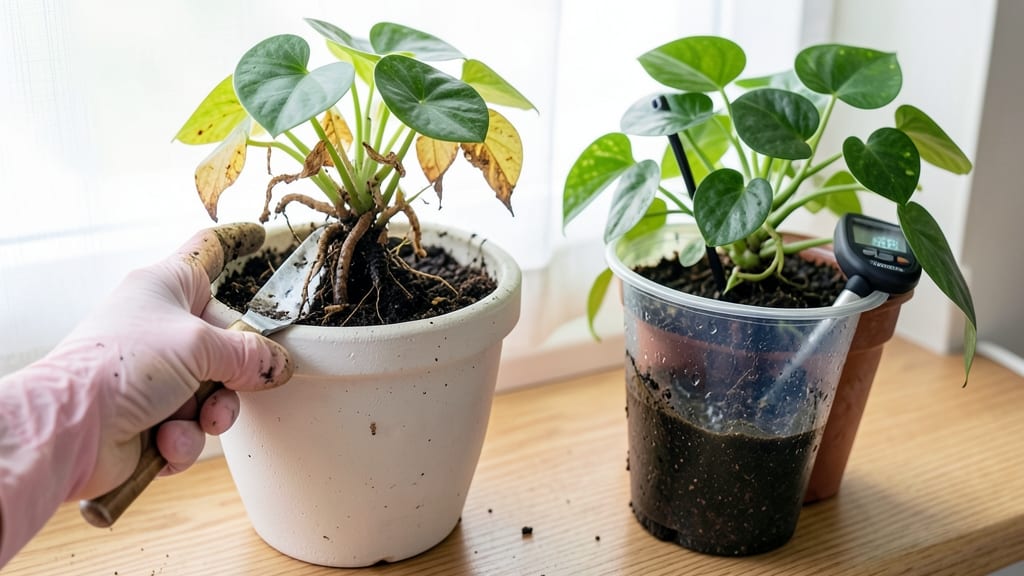
You can save a plant that has been overwatered by stopping water immediately, repotting it into dry soil, and examining roots for rot. Trim any blackened or mushy roots, treat with fungicide if needed, and adjust your watering routine to prevent future problems.
Overwatering creates a suffocating environment for roots, cutting off their oxygen supply and inviting fungal infections. 🌱 The first sign is often yellowing leaves, but if you catch it early, you can often reverse the damage.
I’ve successfully revived plants by repotting them into a mix with perlite or sand to improve drainage—this helps roots breathe again while preventing further rot. The key is patience: don’t water again until the top inch of soil feels completely dry to the touch.
For plants with severe root damage, a diluted hydrogen peroxide solution (1 part peroxide to 4 parts water) can help disinfect the roots before repotting. This works because the mild oxidizing properties kill harmful bacteria while being safe for plant tissue.
After repotting, place your plant in bright, indirect light and monitor its progress—new growth is a great sign recovery is underway.
💡 In This Article
- How Overwatering Damages Plant Roots and Leaves
- Step-by-Step Overwatered Plant Rescue Guide
How overwatering damages plant roots and leaves
When soil stays too wet for too long, roots suffocate because water displaces the air pockets they need to breathe. Healthy roots require oxygen for cellular respiration—the process that converts sugars into energy.
In waterlogged soil, oxygen levels can drop to less than 5% (compared to 20% in well-drained soil), forcing roots to switch to anaerobic respiration, which produces toxic ethanol as a byproduct.
This is why you might notice a sour smell around overwatered plants—it’s the plant’s own alcohol buildup from desperate energy production. 🌱
The damage doesn’t stop there. Saturated soil creates the perfect breeding ground for fungal pathogens like Phytophthora and Pythium, which thrive in moisture levels above 60% soil water content. These fungi attack root cells, causing them to rot and turn black or mushy.
Meanwhile, excess water flushes away essential nutrients like nitrogen and phosphorus, leaving the plant starving even as its roots drown. The result? Yellowing leaves (chlorosis) starting from the bottom, wilting despite damp soil, and stems that feel soft or hollow when pressed.
What makes this particularly tricky is that overwatering symptoms mimic underwatering—both cause wilting because the plant can’t absorb water efficiently. The key difference? With overwatering, the soil stays soggy, while underwatering shows dry, cracked soil. This confusion leads many gardeners to water even more, accelerating the problem.
The root system’s ability to absorb water depends on tiny hair-like structures called root hairs, which die off within 24-48 hours of oxygen deprivation, making recovery even harder. 💧
Leaves also suffer because the plant can’t transport water and nutrients upward. Blocked vascular pathways cause brown, crispy edges on leaves—a sign of nutrient starvation. In severe cases, the entire leaf may yellow and drop as the plant prioritizes survival over growth.
The good news? Unlike physical damage, these symptoms are often reversible if you act quickly to restore proper drainage and oxygen flow to the roots.
Consider this comparison: A healthy root system in well-drained soil has a 3:1 ratio of air to water, while overwatered soil can reach 1:1 or even 1:2 water-to-air ratios. This imbalance is what triggers the cascade of problems—from suffocation to disease.
The first step in saving your plant is understanding that the soil isn’t just "wet" but actively harming the roots at a cellular level. 🌿