
Orchid Care
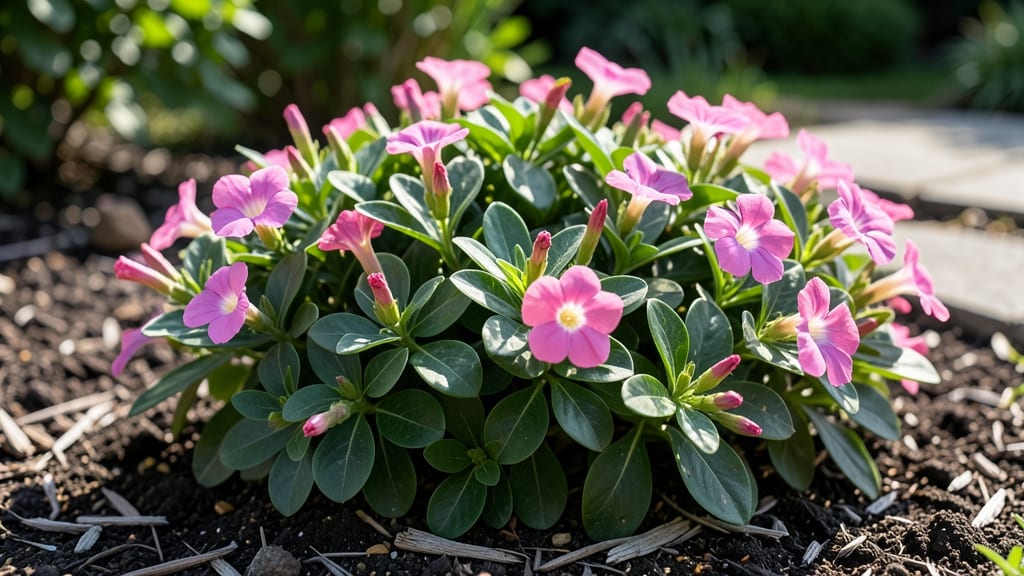
Whether cora vinca is annual or perennial depends on your climate: it thrives as a tender perennial in warm zones but dies back completely each winter in colder regions, returning from seed rather than surviving dormancy like hardy perennials.
Cora vinca's behavior hinges on temperature tolerance—it's not built for frost. In zones 8-11, it grows continuously, but in colder areas (zones 3-7), freezing temps kill the foliage, forcing it to restart from seed each spring. 🌱 This explains why gardeners in northern climates often treat it as an annual despite its perennial classification.
The key difference from true perennials like vinca minor is its lack of cold-resistant underground structures.
What this means for gardeners: if you live in a cooler zone, plan to replant each year or use containers to move it indoors during winter. In warmer climates, proper mulching can help protect it through mild winters, extending its lifespan beyond a single season.
💡 In This Article
- Why Cora Vinca Dies Back Each Year in Cold Climates
- How to Extend Cora Vinca’s Seasonal Life in Gardens
Why cora vinca dies back each year in cold climates
The key reason cora vinca (Catharanthus roseus) behaves like an annual in cooler climates is its lack of cold hardiness. Unlike true perennials, it lacks specialized underground structures like rhizomes or deep root systems that store nutrients and survive winter dormancy.
Instead, its growth habit relies on warm-season photosynthesis, making it highly sensitive to temperatures below 32°F (0°C). 🌡️ When frost hits, the entire plant—roots and all—dies back because it hasn't evolved the protective mechanisms of hardy perennials like vinca minor (Vinca minor), which can withstand -10°F to -20°F (-23°C to -29°C) with ease.
Botanically, cora vinca's survival strategy shifts with climate. In warm zones (8-11), it grows continuously, producing flowers for 6-8 months before natural senescence kicks in. But in colder regions, the plant's life cycle resets annually because the cold triggers complete cellular breakdown.
What makes this fascinating is how it mimics annuals: after frost kills the parent plant, seeds drop to the soil and germinate in spring—just like marigolds or zinnias.
This seed-based regeneration explains why gardeners in northern climates often treat it as an annual, even though it's classified as a tender perennial.
The frost sensitivity stems from its tropical origins in Madagascar. Cora vinca evolved in regions where temperatures rarely drop below 60°F (15°C), so its cellular membranes and proteins lack the antifreeze proteins found in hardy perennials.
When temperatures fall below 40°F (4°C), the plant's metabolic processes slow dramatically, and any frost triggers irreversible damage to its vascular system. 🧊 This is why even a light frost can kill established plants—unlike vinca minor, which can regrow from its root crown after winter.
What most gardeners don't realize is how this growth habit affects its flowering cycle. In warm climates, cora vinca produces continuous blooms from spring until frost, while in cooler areas, it focuses all its energy on seed production before dying back.
This explains why you'll see it labeled as both an annual and perennial—it's a matter of climate adaptation rather than inherent biology. The plant's ability to self-seed prolifically in spring is actually its survival mechanism for colder regions, ensuring new plants emerge each year.
For comparison, consider vinca minor (periwinkle), which thrives in zones 4-9 and survives winter through its deep root system. Cora vinca, by contrast, has a shallow root system that can't penetrate frozen soil.
This fundamental difference in root structure is why vinca minor can regrow from the same spot year after year, while cora vinca must restart from seed. 🌱 The trade-off is that cora vinca's vibrant flowers and continuous blooming make it worth the annual replanting effort for many gardeners.
Understanding this botanical behavior helps explain why some gardeners successfully overwinter cora vinca in containers or greenhouses—it's not about making it a true perennial, but about protecting it from the cold until temperatures rise again.
The plant's natural cycle is designed for warm climates, and any attempt to force it to survive winter in colder zones requires artificial protection rather than relying on its inherent cold tolerance.