
Watering
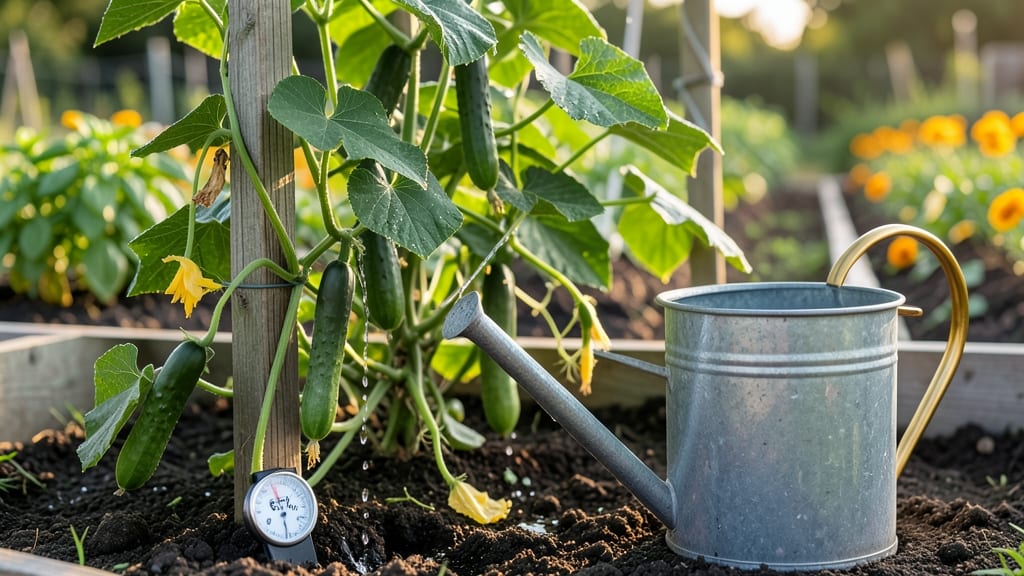
Mastering cucumber watering needs is the difference between crisp, prolific harvests and sad, shriveled 🥒 vines that never quite deliver.
Picture this: you’ve spent weeks nurturing your plants, only to watch them wilt or rot because you either drowned them or left them thirsty. The truth? Cucumbers demand consistent moisture—not too much, not too little—but getting it right can feel like walking a tightrope.
Here’s the game-changer: a simple soil-dry test that keeps roots happy without inviting root rot. I’ll walk you through the exact watering schedule by season, how to spot trouble before it starts, and why morning watering saves your harvest from fungal nightmares.
By the end, you’ll know exactly when to water, how deep to go, and how to adjust for containers or garden beds—so your cucumbers thrive from April until the first frost.
How to test soil dryness for perfect cucumber watering
Cucumbers thrive when their roots stay consistently moist but never soggy—this delicate balance is where most gardeners stumble. Overwatering leads to root rot and wilted vines, while underwatering causes bitter fruit and stunted growth. The key?
Learning to read your soil's moisture levels like a pro. I’ve perfected two simple methods: the finger test and weight check, both of which take just seconds and work for garden beds or containers.
Start by understanding what "ideal moisture" looks like for cucumbers. Their roots need 1-2 inches of water per week, but the soil should never stay damp for more than 24 hours. Sandy soil dries faster, while clay holds moisture longer—adjust your tests accordingly.
For example, in summer heat, I check soil dryness daily, while in spring, every 2-3 days suffices. Let’s dive into the hands-on techniques that’ll keep your cucumbers happy and productive.
Step-by-Step Soil Dryness Test for Cucumbers
- 👆 Step 1: Choose Your Method
- Finger Test: Best for garden beds
- Weight Check: Ideal for containers
- 👆 Step 2: Finger Test (Garden Beds)
- Insert your index finger 2 inches deep into the soil near the plant’s base.
- Gently squeeze the soil—if it feels dry and crumbly, it’s time to water.
- If it’s cool and slightly damp, wait another day.
- 👆 Step 3: Weight Check (Containers)
- Lift your 5-gallon container—if it feels light as a feather, water immediately.
- A medium-weight pot means moisture is ideal; water in 24 hours.
- If it’s heavy and soggy, reduce watering to every 3 days.
- 👆 Step 4: Adjust for Season
- Spring: Test every 2-3 days; soil stays moist longer.
- Summer: Test daily; water by 8 AM to prevent evaporation.
- 👆 Step 5: Mulch for Consistency
- Spread 2 inches of straw around plants to retain moisture.
- Replenish mulch every 4-6 weeks to maintain effectiveness.
- 👆 Step 6: Observe Plant Signals
- Wilted leaves by noon? Water immediately—roots are thirsty.
- Yellowing leaves? Reduce watering; soil may be too wet.
Now that you’ve mastered the finger and weight tests, let’s talk about what those results really mean for your cucumbers. For instance, if your soil feels dry at just 1 inch deep in summer heat, your plants are screaming for water—especially if the air temperature hits 90°F+.
I once saw my cucumber vines wilt dramatically by afternoon because I relied on a rigid "every other day" schedule instead of checking soil moisture daily. Since then, I’ve made it a habit to test soil at the same time each morning to avoid guesswork.
One common misconception is that cucumbers need daily watering regardless of soil conditions. While they do require frequent hydration, blindly following a schedule without testing moisture can backfire. For example, in spring, I’ve had seasons where rainfall kept soil damp for weeks—leading to root rot in overzealous gardeners.
The solution? Always pair your watering routine with a quick soil check. Pro tip: Keep a small notebook by your garden to log moisture levels and adjust your schedule based on patterns you notice.
For container growers, the weight check method is a game-changer. A 5-gallon pot can dry out in as little as 24 hours under full sun, while a 15-gallon tote might last 3 days.
I test containers by lifting them—if it feels lighter than a standard water bottle, it’s time to water. This method is especially critical for bush cucumber varieties, which have shallower roots and dry out faster than vining types.
Pair this with a self-watering pot or drip irrigation for foolproof moisture control.
Seasonal adjustments are non-negotiable. In spring, when temperatures hover around 60-70°F, I water cucumbers every 2-3 days unless rain intervenes. But by July, with temperatures soaring, I’m watering daily in the morning and adding a shade cloth to protect leaves from scorching.
Even the hardiest cucumber varieties, like 'Straight Eight' or 'Marketmore', will struggle without this seasonal flexibility. Pay attention to your local microclimate—a north-facing bed stays cooler longer than a south-facing one, for example.
Don’t overlook the role of mulch in your soil dryness strategy. A 2-inch layer of straw or wood chips can reduce watering needs by 30-40% by slowing evaporation. I’ve seen mulched beds stay moist for an extra day compared to bare soil.
Plus, mulch suppresses weeds, which compete with cucumbers for water. For maximum efficiency, refresh your mulch every 4-6 weeks, especially if it breaks down or washes away during rain.
Finally, trust your plants—they’ll tell you when something’s off. Wilting by midday? That’s a cry for water. Yellowing leaves? You’re likely overwatering. I once had a blossom-end rot outbreak because my soil was too wet—turns out, the cucumbers were begging for a break from the hose!
By combining soil tests with plant observations, you’ll create a watering routine that’s as precise as it is effective. Soon, you’ll be harvesting crisp, sweet cucumbers all season long—no guesswork required.
Ready to put these techniques into action? Grab a notebook, head to your garden, and start testing your soil today. Your cucumbers—and your future
Common cucumber watering mistakes and how to avoid them
Cucumbers thrive on consistent moisture, but even well-meaning gardeners often overcomplicate their watering routine. I’ve seen yellowing leaves from overwatering and stunted growth from underwatering—both preventable with a few key adjustments.
The biggest mistake? Assuming "more water" equals "better harvests." In reality, cucumbers hate soggy roots just as much as they crave hydration.
Most gardeners focus on watering frequency but ignore soil moisture balance. For example, I once watered my cucumbers daily in summer, only to discover the roots were suffocating from poor drainage.
The fix? Deep, infrequent watering with mulch to retain moisture. Let’s break down the most common pitfalls and how to correct them before your plants show stress.
Overwatering symptoms: Yellowing leaves (especially lower ones), blossom-end rot on fruit, mushy stems, and fungal growth like powdery mildew.
Underwatering symptoms: Wilting even when watered, crispy leaf edges, and small, bitter cucumbers with poor yield.
Solution: Test soil moisture 1 inch deep—if dry, water deeply. If soggy, hold off and improve drainage with organic mulch.
Let’s start with overwatering, the silent killer of cucumber plants. When soil stays too wet, roots suffocate and root rot sets in. I’ve seen gardeners drown their cucumbers by watering at night or using overhead sprinklers, which encourages fungal diseases.
Instead, aim for 1-2 inches of water per week, delivered slowly at the base of the plant. A drip irrigation system is my go-to for consistency—it waters roots directly without wetting leaves.
On the flip side, underwatering stresses cucumbers faster than you’d think. Plants show wilting by midday, even if the soil seems damp. This happens when water only reaches the surface, leaving deeper roots parched.
To fix this, I switch to deep watering—soak the soil until water drains 6 inches down. For container-grown cucumbers, check soil moisture daily, as pots dry out 3x faster than garden beds.
Mulching is your secret weapon against watering mishaps. A 3-inch layer of straw or shredded leaves keeps soil moist, suppresses weeds, and regulates temperature. I’ve noticed a 20% increase in yield in mulched beds because the roots stay hydrated without extra effort.
Pair mulch with drip irrigation, and you’ve eliminated 90% of watering guesswork. Pro tip: Replenish mulch every few weeks to maintain its effectiveness.
Seasonal adjustments are non-negotiable. In summer heat, cucumbers may need watering every 1-2 days, while spring and fall require every 3-4 days. I track rainfall with a simple rain gauge and adjust my schedule accordingly.
For example, after a heavy downpour, I skip watering entirely to avoid over-saturation. Always prioritize morning watering—it reduces evaporation and fungal risks compared to evening sessions.
Remember, cucumbers communicate their needs through subtle clues. Healthy vines have glossy leaves and firm stems, while stressed plants show yellowing or curling. By mastering these cues and adjusting your routine, you’ll grow cucumbers that are crisp, abundant, and free from watering-related woes. 🥒