
Light Requirements
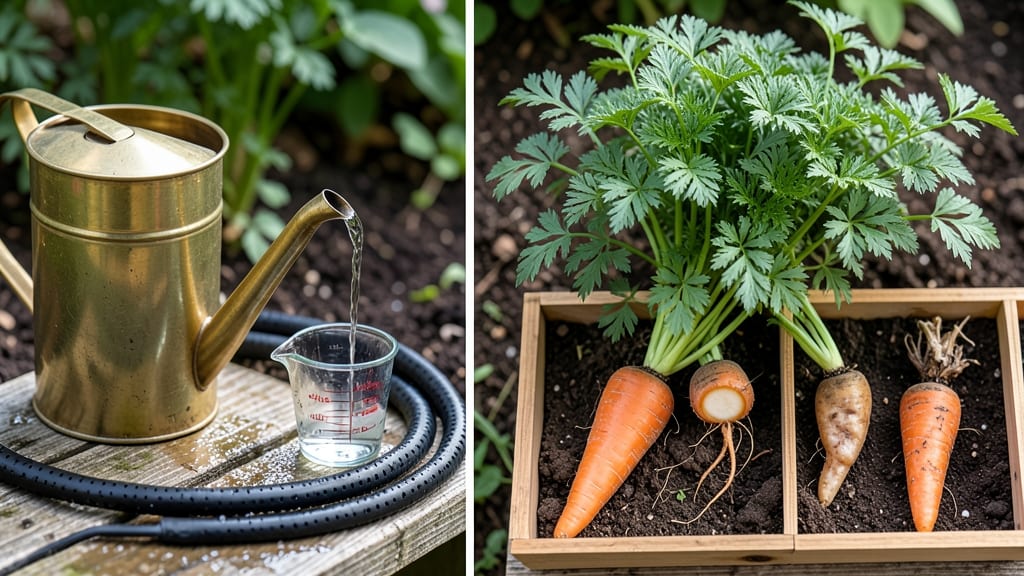
Carrots need consistent moisture—not a lot of water—but too little or too much can ruin your harvest.
Growing perfect 🥕 isn’t just about soil type—watering plays a surprisingly critical role, and most gardeners either overdo it or underestimate their needs. Too much water causes rot, while too little leads to tough, forked roots.
Here’s the secret: carrots thrive with about 1 inch of water per week, delivered deeply in the morning. That keeps the soil moist without drowning the roots, which is the key to sweet, straight harvests.
Below, I’ll show you how to check soil moisture, adjust for your climate, and avoid the most common watering mistakes—so you can grow carrots that taste like summer.
The ideal watering schedule for carrots: how much and when
Carrots might seem low-maintenance, but their watering needs are the secret to growing sweet, straight roots. Unlike drought-tolerant plants, carrots demand consistent moisture—too little causes cracking, too much leads to rot. The key is balancing frequency, depth, and timing to encourage even growth.
Most gardeners assume carrots need a lot of water, but the truth is more nuanced. Overwatering is just as damaging as underwatering—it causes forked roots and disease.
The ideal approach is deep, infrequent watering that keeps the soil evenly moist but never soggy. Think of it like giving your carrots a daily drink without drowning them.
| Growth Stage | Water Frequency | Depth | Best Time |
|---|---|---|---|
| Seedling (0-3 weeks) | Every 2-3 days | ½ inch | Morning |
| Vegetative (3-6 weeks) | Every 3-4 days | 1 inch | Morning |
| Bulb Development (6-10 weeks) | Every 4-5 days | 1.5 inches | Morning |
| Mature (10+ weeks) | Every 5-7 days | 2 inches | Morning |
For young seedlings, I start with light, frequent watering—about every 2-3 days—to encourage germination. Once sprouts appear, I increase depth to ½ inch per watering.
This prevents the soil from drying out too quickly, which can stunt growth. Morning watering is critical here because it allows excess moisture to evaporate during the day, reducing fungal risks.
As carrots mature (around 3-6 weeks), their water needs shift. At this stage, I water every 3-4 days with 1 inch of water per session. This deeper soak encourages roots to grow straight and strong.
I avoid overhead sprinklers—they can disrupt soil consistency and cause forked roots. Instead, I use a soaker hose or drip irrigation for precision.
During the bulb development phase (6-10 weeks), carrots need consistent moisture but not too much. I water every 4-5 days, delivering 1.5 inches of water per session. This is when many gardeners make mistakes—either overwatering and causing rot or underwatering and leading to cracked roots.
The key is checking soil moisture 2 inches below the surface; it should feel damp but not wet.
Mature carrots (10+ weeks) are more resilient but still need attention. I reduce frequency to every 5-7 days with 2 inches of water per session. At this stage, I focus on even moisture distribution to prevent uneven growth.
If your garden experiences hot, dry spells, I increase frequency slightly but never let the soil dry out completely—this causes roots to split.
Timing matters just as much as amount. Morning watering (before 10 AM) is ideal because it gives foliage time to dry, reducing disease risk.
Avoid evening watering—wet leaves overnight invite blight and rot. If you must water in the evening, do it early and ensure good airflow around plants.
Climate plays a huge role in watering schedules. In hot, dry regions, I might water daily with ½ inch in the morning and another ½ inch in the late afternoon.
In humid climates, I reduce frequency but increase depth to prevent waterlogging. Always adjust based on your soil type—sandy soil drains faster, while clay soil holds moisture longer.
One of my biggest tips? Mulch around carrot beds with straw or shredded leaves to retain moisture and suppress weeds. This reduces evaporation and keeps roots consistently moist. I also avoid walking on carrot beds—compacted soil disrupts root growth and water absorption.
Remember, carrots don’t need a lot of water—they need the right amount at the right time. With this schedule, you’ll grow straight, sweet carrots every time. 🥕
Signs your carrots are overwatered or underwatered (with fixes)
Carrots send clear signals when their water needs aren't met. Unlike many vegetables, they can't recover quickly from moisture imbalances—either too much or too little causes irreversible damage.
The first signs often appear in the foliage before affecting the roots, so pay close attention to leaf color, growth patterns, and soil conditions.
Yellowing leaves are the most obvious warning sign, but they don't always mean overwatering. In underwatered carrots, leaves turn yellow from the edges inward, often paired with a crispy texture.
Overwatered carrots show yellowing that starts at the base and spreads upward, accompanied by a mushy feel when you gently squeeze the stems. Both conditions require immediate action to save your crop.
No—they need consistent moisture, not excess. Carrots are sensitive to waterlogging because their roots require oxygen. Too much water suffocates them, while too little causes cracking. The ideal soil moisture is like a damp sponge: damp but not dripping. Check moisture 2 inches below soil—this is where roots form. If it's wetter than a wrung-out sponge, you're overwatering. If it's completely dry, you're underwatering. Adjust your schedule based on these simple checks.
For underwatered carrots, the first visible symptom is stunted growth. Young plants may appear wilted even when soil looks moist at the surface. The roots themselves become tough and woody, often developing deep cracks as they struggle to absorb water.
In extreme cases, the tops may turn brown and crispy while the roots remain small and misshapen. The fix starts with immediate deep watering—aim for 1.5 inches of water delivered slowly to reach the root zone.
To recover underwatered carrots, I recommend these steps: First, water deeply in the morning using a soaker hose to avoid surface evaporation. Then, apply 2-3 inches of mulch (straw or shredded leaves) to retain moisture. For the next 7-10 days, check soil moisture daily at 2-inch depth.
If it feels dry, water again—carrots need time to rebuild their root systems. Avoid fertilizing during recovery, as this can stress the plants further.
Overwatered carrots show different symptoms, including grayish-green leaves that feel soft and limp. The soil around the plants often has a sour smell, and you may notice white fungal growth at the base of stems. The roots themselves become spongy and may develop black, rotten patches.
To fix this, stop watering immediately and let the soil dry out. Improve drainage by adding coarse sand or perlite to heavy soil, and consider transplanting affected plants to a drier location if possible.
Prevention is easier than recovery. I always recommend using drip irrigation or soaker hoses to deliver water directly to the soil surface, avoiding overhead sprinklers that can cause fungal diseases.
Installing a moisture meter (around $20) takes the guesswork out of watering—simply insert it 2 inches deep to check moisture levels before watering. For container-grown carrots, ensure pots have drainage holes and never let them sit in saucers of standing water.
Remember, carrots don't need a lot of water—they need the right balance. With these signs and fixes, you'll keep your carrot crop thriving all season. The key is observation: check your plants daily, adjust your watering schedule weekly, and always prioritize soil health over quick fixes. 🥕