
Watering
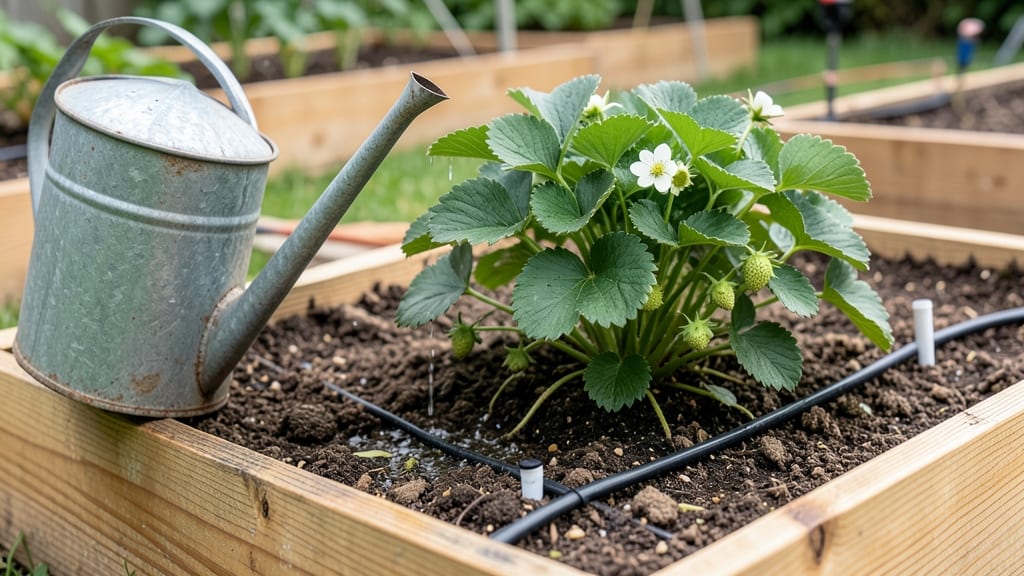
Do strawberries like a lot of water? They do—but not as much as you might think 🍓. Too much, and their roots suffocate; too little, and the fruit shrinks. The trick is finding that sweet spot where they drink deeply without drowning.
Picture this: you’ve spent weeks nurturing your strawberry patch, only to watch the leaves yellow or the berries turn mushy. That’s the classic overwatering trap—and it’s easier to avoid than you’d guess.
Here’s the deal: strawberries thrive with 1 to 1.5 inches of water per week, but the how matters just as much. Drip irrigation beats top-watering, and timing (morning, not evening) keeps diseases at bay.
Below, I’ll break down the exact schedule for your climate, how to spot underwatering vs. overwatering, and the one watering mistake that kills more strawberry plants than anything else.
How much water strawberries need: the science behind their soaking schedule
Strawberries thrive with consistent moisture, but their water needs shift dramatically from planting to fruiting. Unlike drought-tolerant plants, strawberries demand 1–1.5 inches of water per week—about the depth of your index finger pressed into the soil.
Too little causes wilting and poor fruit set, while too much triggers root rot and fungal diseases. The key is balancing moisture without soggy soil.
Your strawberries' water needs depend on three critical factors: soil type, climate conditions, and growth stage. Sandy soil drains quickly, requiring daily checks, while clay holds moisture longer, needing less frequent watering.
Hot, dry climates demand morning watering to prevent evaporation, whereas humid areas benefit from evening soaks to reduce fungal spores. Let’s break down the science behind their soaking schedule.
🌱 Did You Know? Strawberries absorb water through their leaves and crowns, not just roots. Mulching with straw or wood chips locks in moisture while protecting berries from rot. Aim for a 2-inch mulch layer to keep soil evenly damp.
Here’s how to match your watering routine to your strawberries’ needs at every stage:
During fruiting season, strawberries need the most water—1.5 inches weekly—to support heavy berry production. Use a rain gauge or tuna can to measure water depth. If rainfall covers your needs, reduce hand watering to avoid overhead wetting, which spreads diseases like gray mold.
Aim for deep, infrequent watering to encourage strong root systems.
To test soil moisture, insert your finger 2 inches deep. If it feels dry, water thoroughly until moisture reaches 6 inches down. For container-grown strawberries, check weight—lighter pots need watering.
Mulch helps retain moisture, but avoid piling it against the crowns, as this can cause rot. A 3-inch gap around the base keeps plants healthy.
Climate plays a huge role: In hot, dry zones (like Arizona), water in the early morning to reduce evaporation. In humid climates (like Florida), water in the late afternoon to prevent fungal growth.
Always water at the soil level, never the leaves, to minimize disease risk. A drip irrigation system delivers water directly to roots for efficiency.
Watch for yellowing leaves or wilted foliage, which signal underwatering. Conversely, mushy berries or moldy crowns mean overwatering. Adjust your schedule based on weather forecasts: Heavy rain? Skip watering for 2–3 days. Heatwave? Increase frequency to every other day. Strawberries communicate their needs—learn to listen!
Pro tip: Group strawberries with companion plants like basil or thyme to improve soil moisture retention. These herbs shade the soil slightly, reducing evaporation while adding flavor to your harvest. Just avoid planting them too close—they’ll compete for water and nutrients. Balance is everything in strawberry care!
💧 Key Takeaway: Strawberries don’t love "a lot of water"—they crave consistent, deep hydration tailored to their stage. Master this schedule, and you’ll enjoy juicy, disease-free berries all season long.
Overwatering strawberries: 5 silent signs you’re drowning your plants
Strawberries thrive with consistent moisture, but their roots can’t handle soggy soil for long. When you overwater, you’re not just wasting water—you’re suffocating their roots and inviting fungal diseases. The tricky part? Many overwatering symptoms mimic underwatering, like yellow leaves or stunted growth, making it easy to misdiagnose.
I’ve seen gardeners pull out their hair over strawberry plants that refuse to fruit only to discover they were drowning them daily. The key is recognizing the subtle warning signs before your entire harvest rots at the base. Let’s uncover what your plants are silently screaming for help.
No—but they need consistent moisture. Strawberries prefer 1–1.5 inches of water weekly, but their roots rot in standing water. Overwatering disrupts oxygen flow, starving roots of nutrients and inviting gray mold (Botrytis) and root rot. The fix? Let the top 1–2 inches of soil dry between waterings and improve drainage with compost.
First, watch for yellowing leaves that start at the older, lower leaves. Unlike nutrient deficiencies, these leaves won’t have brown edges—they’ll turn a pale, uniform yellow as chlorophyll breaks down. This is your plant’s SOS for root suffocation, where excess water blocks oxygen and drowns the roots.
Next, check for mushy, black stems at the soil line. This is a classic sign of root rot, where fungal pathogens thrive in waterlogged soil. If you gently tug on the plant and it pulls out easily, the roots are already decaying.
At this stage, recovery is slim—your best bet is to remove affected plants and disinfect the soil.
Another red flag? White, fuzzy mold on berries or leaves—this is gray mold (Botrytis), a fungal disease that loves damp conditions. It starts as small gray spots but spreads rapidly in humid, overwatered environments. To prevent it, water at the base (not overhead) and space plants for airflow.
If your strawberries are small, hard, and underdeveloped, overwatering might be to blame. Excess moisture leaches nutrients from the soil, leaving your plants starved for essential minerals like nitrogen and phosphorus—critical for fruit development.
A quick fix is to amend soil with compost and reduce watering to every 3–4 days in dry climates.
To recover overwatered strawberries, stop watering immediately and let the soil dry out. If the roots are still firm, repot in well-draining soil with perlite or sand.
For in-ground plants, create raised beds or mounds to improve drainage. With proper care, your plants can bounce back—but act fast before the damage becomes permanent!