
Companion Plants
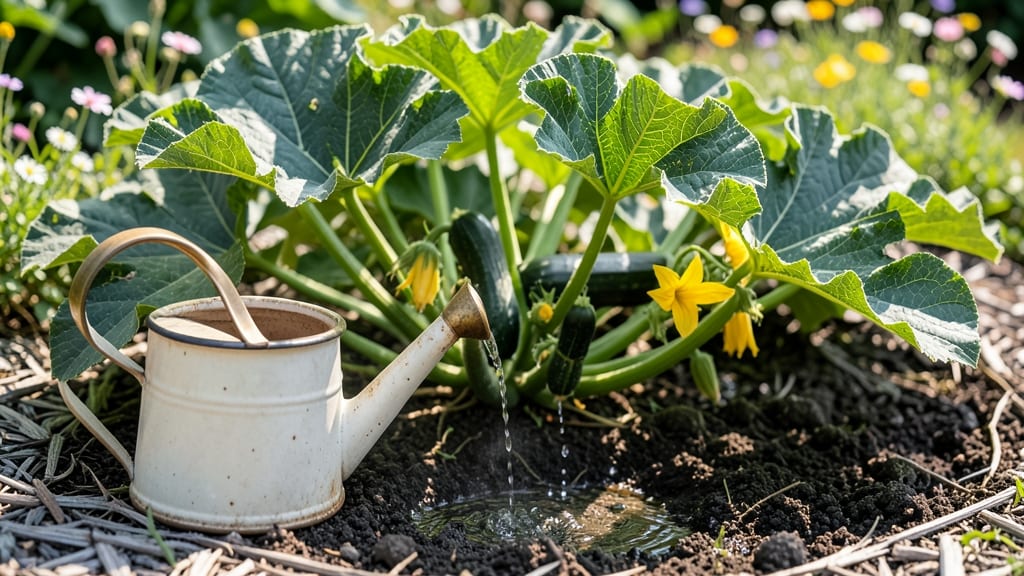
How much water do zucchini plants actually need?
Zucchini plants are thirsty eaters—they crave consistent moisture to produce those heirloom-sized squashes you dream of. But here’s the catch: too much water can drown their roots, while too little stunts growth and shrinks your harvest.
The secret lies in balanced hydration, which keeps soil evenly damp (not soggy) and encourages robust vines and plentiful fruit.
I’ve grown zucchini for years, and I’ve learned that 1-2 inches of water per week is the golden rule for most climates. However, this changes with temperature, soil type, and growth stage.
Young seedlings need gentle, frequent watering to avoid drying out, while mature plants can handle deep, infrequent soakings—think of it like giving them a long drink instead of sips all day.
Let’s break down the exact watering schedule you should follow, plus how to spot when your zucchini is thirsty or waterlogged. This summary table will give you a quick reference, but we’ll dive deeper into the why and how to adjust for your garden’s unique conditions.
Now that you’ve got the baseline watering needs, let’s talk about how to adjust for your climate.
In hot, dry summers (like the Southwest U.S.), zucchini plants may need daily watering to prevent wilting, while humid climates (like the Southeast) can often stretch watering to every other day. Always check the top 2 inches of soil—if it’s dry, it’s time to water.
One of my biggest zucchini-growing mistakes was overwatering in clay-heavy soil. The roots suffocated, and my plants developed fungal diseases. Since then, I’ve sworn by mulching with straw or wood chips to lock in moisture and regulate soil temperature.
This simple trick cuts down on watering by 30-40% while keeping roots happy.
Speaking of soil, well-draining soil is non-negotiable for zucchini. If your garden holds water like a sponge, consider raising beds or amending the soil with compost and perlite. Waterlogged roots lead to root rot, which kills plants faster than you can say “blossom-end rot.”
Always water at the base of the plant, not the leaves, to avoid fungal spores hitchhiking on foliage.
Here’s a pro tip: Morning watering is your best friend. Watering in the early hours (before 10 AM) gives leaves time to dry completely, reducing the risk of powdery mildew.
I’ve seen gardens where nighttime watering led to mushroom-like growths on stems—yikes! Stick to mornings, and your zucchini will thank you with glossy, disease-free leaves.
What about container-grown zucchini? These plants dry out twice as fast as in-ground varieties. If you’re growing zucchini in pots, check soil moisture daily and water every 1-2 days. Use self-watering containers or terracotta pots (they wick away excess moisture) to keep roots in their sweet spot.
Finally, let’s debunk a common myth: “Zucchini plants need a lot of water all the time.” While they do love moisture, consistency is more important than quantity.
Erratic watering leads to cracked squash and bitter flavors. Think of it like raising kids—steady love (or water) builds resilience, while hit-or-miss attention causes chaos.
Ready to put this into action? Start by testing your soil’s drainage—dig a hole, fill it with water, and time how long it takes to drain. If it’s slower than 4 hours, your soil needs amending.
Then, grab your watering can or hose and give your zucchini the perfect drink—deep, even, and right at the roots. Your harvest will thank you with bountiful, sweet squashes all season long. 🎃
5 Signs your zucchini plants are stressed by water (and how to fix it)
Zucchini plants thrive when they receive the right amount of water, but too much or too little can cause serious stress. I’ve seen firsthand how wilting leaves or yellowing foliage can signal hidden watering problems. The good news? Most issues are fixable with simple adjustments to your routine.
Overwatering and underwatering both create similar symptoms, like drooping leaves or stunted growth. The key is learning to read your plants. For example, blossom-end rot is a classic sign of inconsistent moisture, often caused by uneven watering.
Let’s break down these warning signs and how to correct them before your harvest suffers.
- 💧 1. Wilting Leaves
Check soil moisture—if top inch is dry, water deeply. If soggy, reduce frequency. - 🌿 2. Yellowing Leaves
Lower leaves yellowing? Likely overwatered. Upper leaves yellow? Probably underwatered. - 🍅 3. Blossom-End Rot
Dark spots on fruit? Mulch heavily and water consistently at soil level. - 🌡️ 4. Soil Cracks
Hard, cracked soil means severe drought. Water slowly to rehydrate roots. - 🪴 5. Slow Growth
Stunted plants? Test soil moisture—zucchini needs 1-2 inches per week.
If your zucchini plants show wilting during the day, they’re likely thirsty. Water deeply in the morning to give roots time to absorb moisture before heat stress sets in. I’ve found that drip irrigation works best—it delivers water directly to the roots without wetting foliage, reducing disease risk.
For yellowing leaves, focus on the pattern. Overwatered plants often have yellow lower leaves, while underwatered ones show stress in newer growth. Adjust your schedule: 1-2 inches of water per week is ideal, but increase during hot summer months.
A simple soil probe can help you check moisture levels without guessing.
One of the most frustrating issues is blossom-end rot, which appears as dark, sunken spots on the fruit’s blossom end. This happens when calcium uptake is disrupted by inconsistent watering.
To fix it, apply mulch around the base to retain moisture and consider adding calcium-rich fertilizer like crushed eggshells or lime.
Remember, zucchini plants are heavy drinkers but hate soggy soil. Always water at the base of the plant rather than overhead. This prevents fungal diseases and ensures roots get the hydration they need. With these fixes, your zucchini will bounce back—and you’ll be on your way to a bountiful harvest.