
Watering
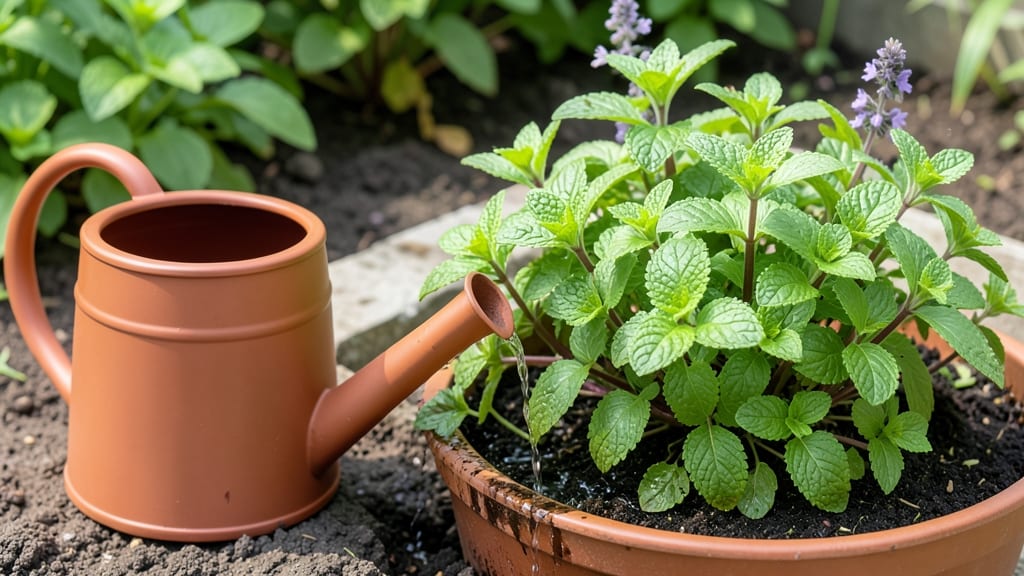
Mint needs a lot of water to thrive, but most gardeners either drown it or let it wilt—both mistakes stifle growth and flavor.
Picture this: your 🌿 mint plant wilts by noon, even though you watered it yesterday. Or worse, the leaves turn yellow and mushy, signaling root rot. The truth is, mint loves moisture but hates soggy soil—it’s all about balance.
In USDA Zone 6a, where spring planting kicks off in April, mint demands daily watering until roots establish. Once settled, check soil moisture with your finger: if the top 1 inch feels dry, it’s time to water.
Overwatering is just as deadly as underwatering, and I’ve learned that the hard way.
Below, I’ll show you the 1-inch dry test, how to adjust for summer heat, and the telltale signs your mint is thirsty—or drowning. No more guesswork, just lush, fragrant growth.
How much water does mint actually need? The science behind moisture requirements
Mint isn't just picky about water—it thrives in moist conditions but drowns in soggy soil. Native to damp riverbanks and Mediterranean regions, mint evolved to love consistent moisture without waterlogged roots.
This dual need explains why many gardeners struggle: too little water causes wilting, while too much triggers root rot and yellowing leaves.
In its natural habitat, mint grows along streams where soil stays evenly damp but never waterlogged. Replicating this balance in your garden means watering deeply 1-2 times daily in hot climates, while adjusting to every 2-3 days in cooler, humid areas. The key? Well-draining soil that holds moisture without pooling.
Climate plays a huge role in mint's water needs. In hot, dry regions (like Arizona or Texas), mint may need daily watering to replace lost moisture, while in humid zones (like the Pacific Northwest), you might only water every 2-3 days. Even slight variations in temperature or sunlight can shift your watering schedule by 20-30%.
Mint's aggressive root system spreads quickly, competing for water in the top 6-12 inches of soil. This means shallow watering won't reach deep enough—always water until you see moisture 2-3 inches down.
A simple test: stick your finger in the soil; if the top inch feels dry, it's time to water. If it's still damp, wait another day.
Overwatering is mint's #1 enemy. Unlike drought-tolerant herbs like rosemary, mint cannot handle soggy roots. When roots sit in water, they suffocate, leading to fungal infections and mushy stems. Even well-draining pots can trap excess moisture, so always ensure drainage holes are present and use light, airy potting mixes.
Seasonal adjustments are critical. During spring and summer, mint drinks heavily and may need daily watering, especially in containers. In fall and winter, cut back to every 3-5 days as growth slows. Mulching with 2-3 inches of straw or wood chips helps retain moisture while preventing soil compaction.
Container-grown mint has different needs than in-ground plants. Pots dry out faster, so check soil moisture daily in summer. A 1-gallon pot may need ½ cup of water daily, while a 5-gallon container might only need 1 cup every 2 days. Always water until it runs out the drainage hole—this ensures even moisture distribution.
| Condition | Requirement | Specification |
|---|---|---|
| Natural Habitat | Moisture Level | Damp but not waterlogged |
| Soil Type | Drainage | Well-draining, loamy |
| Hot/Dry Climate | Watering Frequency | Daily to every 2 days |
| Humid Climate | Watering Frequency | Every 2-3 days |
| Container Size | Water Amount | ½ cup (1-gallon) to 1 cup (5-gallon) |
| Seasonal Need | Spring/Summer | Daily (morning watering) |
| Seasonal Need | Fall/Winter | Every 3-5 days |
| Critical Warning | Avoid | Soggy roots, evening watering |
Mint's root zone extends 12-18 inches deep, so surface watering won't suffice. Use a soaker hose or drip irrigation to deliver water slowly and evenly. This method reduces runoff and ensures moisture reaches the roots where it's needed most.
For potted mint, bottom-watering (placing the pot in a tray of water for 10-15 minutes) can prevent overwatering while keeping soil consistently moist.
If you're unsure whether your mint is getting enough water, check the leaves. Healthy mint leaves are dark green and slightly wrinkled—a sign of proper hydration. If leaves appear dull or crispy, it's underwatered. Yellowing or mushy stems, on the other hand, mean you're overdoing it.
The goal is to keep soil consistently moist but never soggy, mimicking its natural riverbank environment.
Pro tip: Group mint with other moisture-loving plants like cilantro or parsley to create a microclimate that retains humidity. This reduces water evaporation and keeps roots happy without extra effort. Just avoid pairing it with drought-tolerant herbs like thyme or oregano—their differing needs can complicate care.
The 1-Inch dry test: how to water mint without overdoing it
Mint loves moisture, but that doesn’t mean it thrives in soggy soil. The 1-inch dry test is my go-to method for keeping mint happy without drowning its roots.
This simple finger-check prevents root rot while ensuring your plant stays hydrated—no guesswork required. Let’s break down how to use it for potted mint and in-ground plants alike.
First, understand that mint’s water needs shift with seasonal changes. In summer heat, you’ll water more frequently, while winter dormancy means cutting back. The 1-inch test adapts to these shifts naturally, making it foolproof for gardeners of all experience levels. Ready to master it?
- Step 1: Stick your finger 1 inch deep into the soil near your mint’s base. Avoid disturbing the roots.
- Step 2: Check soil moisture—if it feels dry to the touch, it’s time to water. If damp, wait another day.
- Step 3: For small pots (6" or less), water until liquid drains from the bottom. Larger containers need deeper soaking.
- Step 4: Adjust frequency by season:
- Spring/Fall: Every 2-3 days
- Summer: Daily or every other day
- Winter: Every 5-7 days
- Step 5: Water in the morning to reduce fungal risks. Avoid evening watering—it keeps leaves wet overnight.
Common mistakes throw off this method. Many gardeners water on a fixed schedule (e.g., every morning), ignoring the soil’s actual needs.
Others overwater because they assume mint’s love of moisture means it needs constant sogginess. Drainage is key—if water pools in the pot or soil stays clumpy, your mint is at risk.
Pro tip: Use a moisture meter for the first week to calibrate your finger’s touch. Over time, you’ll develop an intuitive sense of when mint needs hydration. I’ve found that sandy soil dries faster than clay, so adjust your test accordingly.
For example, sandy mixes may need daily checks in summer, while clay holds moisture longer.
Watch for yellowing leaves or mushy stems—these are red flags. If you see them, scale back watering immediately and let the soil dry slightly between tests. With practice, the 1-inch rule becomes second nature, and your mint will reward you with lush, fragrant growth all season long. 🌿