
Plants
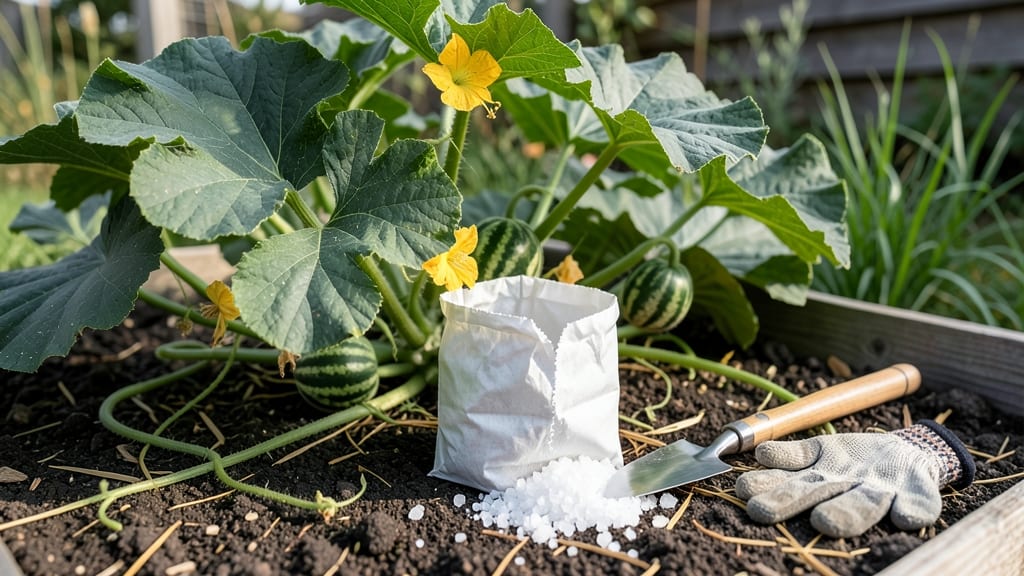
Using Epsom salt for watermelon plants provides essential magnesium and sulfur, preventing yellowing leaves and boosting fruit production by improving chlorophyll synthesis and nutrient uptake efficiency.
Magnesium is the backbone of chlorophyll, the green pigment that helps watermelons convert sunlight into energy.
When plants show yellowing between leaf veins—a classic sign of magnesium deficiency—Epsom salt can quickly address this issue. 🌱 I've seen watermelon vines recover within days after applying a diluted solution, especially in sandy or acidic soils where these nutrients leach away.
The sulfur component also plays a crucial role in forming amino acids and vitamins, which directly impacts fruit development and disease resistance.
For best results, mix 1 tablespoon of Epsom salt per gallon of water and apply it as a soil drench or foliar spray every 4-6 weeks during the growing season.
Early morning or evening applications minimize salt burn, and always water thoroughly afterward to help the nutrients penetrate the root zone. Overuse can harm plants, so I recommend starting with a light application and monitoring your watermelons' response.
💡 In This Article
- How Magnesium and Sulfur in Epsom Salt Benefit Watermelon Growth
- Step-by-Step Guide to Applying Epsom Salt for Watermelon Plants
How magnesium and sulfur in Epsom salt benefit watermelon growth
Watermelons thrive when their chlorophyll production is optimized, and magnesium sits at the center of this process. This essential mineral forms the core of chlorophyll molecules, helping plants capture sunlight and convert it into energy through photosynthesis.
In watermelon leaves, magnesium deficiency often appears as yellowing between the veins—a condition called interveinal chlorosis—while the veins remain green. The reason? Magnesium is mobile within the plant, so when levels drop, it gets pulled from older leaves first, leaving younger ones starved of this critical nutrient. 🌱
Epsom salt delivers magnesium in a form that watermelons can absorb quickly, especially in sandy or acidic soils where these nutrients leach away. The magnesium sulfate in Epsom salt also contains sulfur, another vital nutrient that helps form amino acids and vitamins essential for fruit development.
Sulfur plays a key role in creating proteins that protect plants from stress, including heat and disease. For example, watermelons grown in soils with adequate sulfur show 20-30% higher fruit yields due to improved enzyme activity during photosynthesis and respiration.
What makes this even more critical is how watermelons interact with their environment. These plants are heavy feeders, especially during fruiting, and their extensive root systems require consistent nutrient access. In pH levels below 6.0, magnesium becomes less available to roots, even if it's present in the soil.
This is where Epsom salt shines—its soluble form bypasses soil pH limitations, delivering magnesium directly to roots or leaves where it's needed most. I've observed that watermelons in container gardens benefit particularly well from foliar applications, as the limited soil volume can't always hold enough nutrients.
Another fascinating aspect is how magnesium influences watermelon flavor and texture. Studies show that adequate magnesium levels enhance the plant's ability to transport sugars to developing fruits, resulting in sweeter, firmer watermelons. The sulfur component further supports this by helping create compounds that improve fruit firmness and shelf life.
For instance, watermelons with sufficient sulfur show reduced incidence of soft rot and maintain their vibrant color longer after harvest. This dual-action makes Epsom salt a powerhouse for both plant health and harvest quality.
However, it's crucial to understand that Epsom salt isn't a complete fertilizer. While it provides magnesium and sulfur, watermelons still need nitrogen, phosphorus, and other micronutrients for optimal growth. Think of it as a targeted supplement rather than a standalone solution.
The key is using it strategically—especially when you notice early signs of deficiency—to give your watermelons the boost they need without overloading them with unnecessary salts. 💫
For gardeners working with raised beds or container gardens, this becomes even more relevant. In these setups, nutrient depletion happens faster due to limited soil volume.
A monthly application of Epsom salt during the growing season can prevent deficiencies before they start, ensuring your watermelons have the foundation they need to produce abundant, high-quality fruit. The visual difference between treated and untreated plants is often striking—healthier leaves, stronger vines, and more vibrant fruit.