
Orchid Care
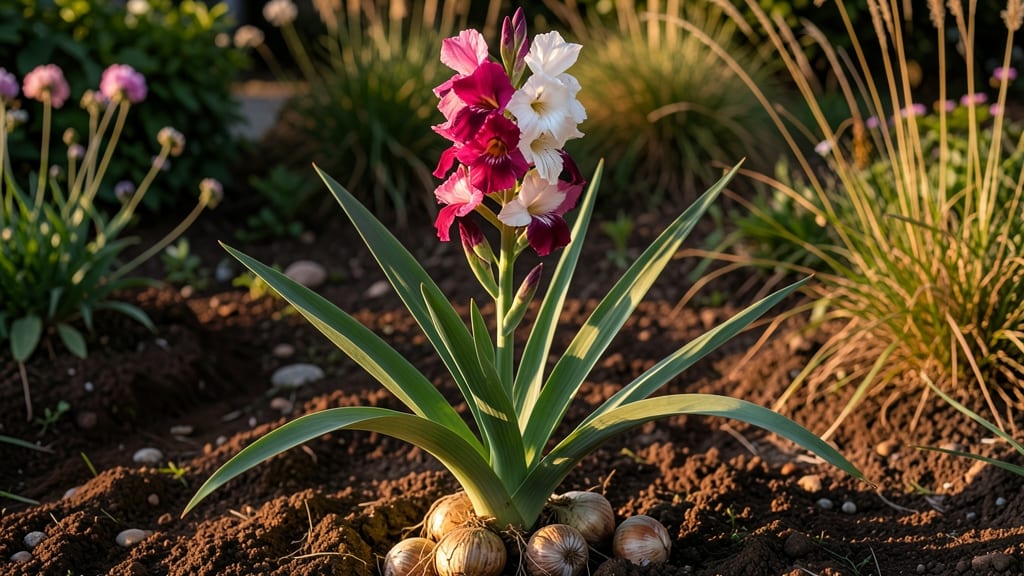
Gladiolus bulbs are technically perennial but treated as annuals because their corms naturally decline after 1-2 years of growth, requiring replanting for vibrant blooms. The underground storage organs undergo annual dormancy cycles, though they can persist longer with proper care and ideal growing conditions.
This classification comes down to how gladiolus corms behave underground. 🌱 Unlike true perennials that regrow from the same root system year after year, gladiolus corms produce new offsets each season but gradually weaken over time.
In colder climates, they often die back completely after flowering, while warmer regions might see them return for 2-3 seasons with consistent care. The key difference lies in their reproductive strategy—gladiolus plants focus energy on producing new corms rather than maintaining a single long-lived root system.
What this means for gardeners is that while you might not need to replace them annually, most growers treat them as annuals for predictable blooms. The trade-off?
Fresh corms each season guarantee stronger stems and bigger flowers, though experienced gardeners often save and replant their healthiest corms to extend the cycle.
💡 In This Article
- The Perennial vs. Annual Debate: How Gladiolus Corms Survive Over Time
- Extending Gladiolus Lifespan: Pro Tips for Longer Blooms
The perennial vs. annual debate: how gladiolus corms survive over time
Gladiolus plants exhibit a fascinating biological cycle that explains why they're classified as both perennial and annual in gardening circles. Their underground storage organs, called corms, function like living batteries—storing energy to fuel the plant's growth and flowering each season.
Unlike true perennials that regenerate from the same root system, gladiolus corms produce new, smaller corms (called cormels) around the parent corm during their growing season. This reproductive strategy allows them to persist year after year, but with diminishing vigor over time.
The key factor in their lifespan is their dormancy cycle, which occurs naturally after flowering. When temperatures drop or daylight shortens, the corm enters dormancy, halting growth until spring.
In warmer climates (USDA zones 8-10), this cycle repeats annually with minimal stress, allowing corms to potentially live 3-5 years with proper care. However, in colder regions (zones 3-7), the corms often fail to survive winter's freeze-thaw cycles, which is why they're commonly replanted each spring.
The corm's natural decline happens because each year's energy is divided between producing flowers, foliage, and new cormels rather than maintaining the parent corm.
What makes this even more interesting is how climate and soil conditions interact with their biology. In well-draining soil with consistent moisture, gladiolus corms can maintain better health longer.
The ideal pH range of 6.0-7.0 supports nutrient uptake, while sandy loam soils prevent rot that shortens their lifespan. 🌱 The trade-off is that each flowering cycle weakens the parent corm by 20-30%, as energy is diverted to produce new cormels.
This is why gardeners often see their gladiolus plants produce fewer, smaller blooms in their second or third year without intervention.
Here's where the annual vs. perennial debate gets practical: while true perennials like peonies or daylilies regrow from the same root system each year, gladiolus rely on this annual corm replacement strategy.
The difference is that their "perennial" nature is more about the species' ability to reproduce underground rather than maintaining a single long-lived storage organ.
This is why most gardeners replant fresh corms annually—they guarantee stronger stems and larger blooms, though experienced growers often save their healthiest corms to extend the cycle for 1-2 more seasons.
Consider this comparison: A true perennial like a daylily might live 20+ years from the same root system, while a gladiolus corm might persist 3-5 years before needing replacement. The key distinction lies in their reproductive focus—daylilies prioritize maintaining their root system, while gladiolus invest energy in producing new corms.
This biological difference explains why they're treated as annuals in most gardening contexts despite their technical perennial classification.
The science behind this involves a process called apical dominance, where the plant prioritizes growth at the top (flower production) over maintaining its storage organs.
This is why you'll often see gladiolus plants produce beautiful blooms in their first year but struggle to regrow vigorously in subsequent years without fresh corms. The plant's survival strategy is to produce as many offspring (cormels) as possible, ensuring the species continues even if individual corms decline.