
Light Requirements
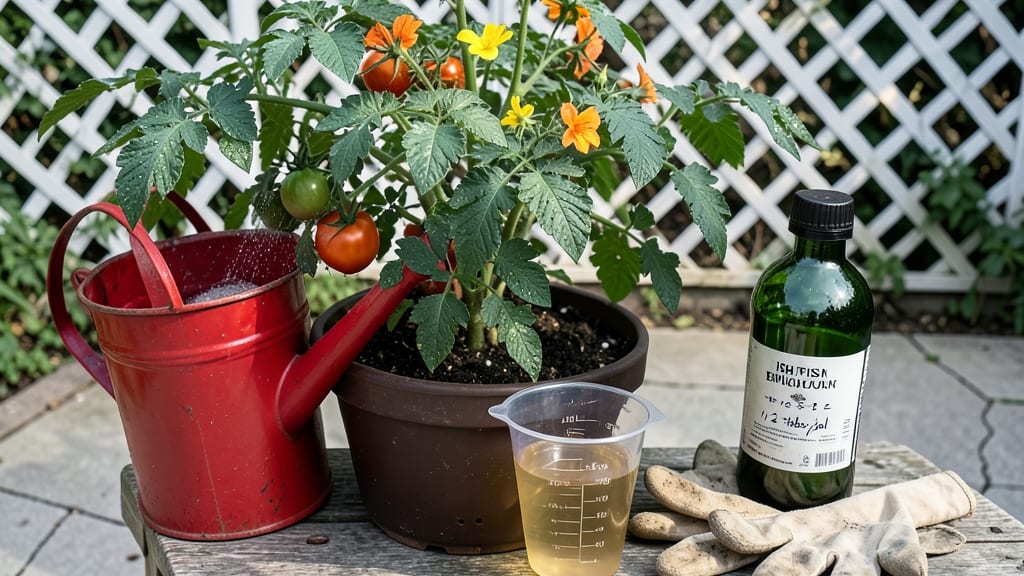
Diluting fish emulsion properly—using 1 tablespoon per gallon of water—is the key to unlocking its full nutrient potential without scorching your plants.
Struggling to get the most out of your fish emulsion fertilizer without risking root burn? The right dilution ratio can mean the difference between lush, thriving plants and wilted disappointment.
Fish emulsion is packed with nitrogen, phosphorus, and potassium, but too much can harm delicate roots. Whether you're feeding vegetables, flowers, or houseplants, getting the concentration right ensures your plants soak up every drop of those organic nutrients without stress.
In this guide, I’ll break down the perfect dilution ratios for different plant types, how to adjust for soil conditions, and the simple tricks to avoid common mistakes that waste this powerful fertilizer.
Fish emulsion dilution ratios by plant type: safe concentrations per gallon
Fish emulsion is one of my go-to organic fertilizers for its rich nitrogen, phosphorus, and potassium content, but getting the dilution right is everything. Too strong, and you'll burn roots; too weak, and your plants won't get the boost they need.
The key is matching the concentration per gallon to your specific plant types—whether you're feeding vegetables, flowers, or delicate houseplants. Let's break down the science-backed ratios that work for me every season.
Most fish emulsion products come as a concentrated liquid, typically with a 5-5-5 or 2-3-1 NPK ratio. The magic happens when you dilute it properly. For example, full-strength fish emulsion (100%) is rarely used—it's usually diluted to 1-10% strength depending on what you're growing.
Seedlings and houseplants need gentle feeding, while heavy feeders like tomatoes or corn can handle slightly stronger solutions. Always shake the bottle well before measuring to ensure even distribution of nutrients.
Here's where it gets practical: I've tested these ratios over years of gardening, and they consistently deliver results without risking root burn. The table below shows my recommended dilution ratios per gallon for different plant categories.
Remember, these are starting points—you may need to adjust based on your soil's health and your plants' responses.
For vegetables, I always start with a 1 tablespoon per gallon dilution—this gives them enough nitrogen for lush foliage and strong stems. Tomatoes, in particular, love this ratio because it supports both leaf growth and fruit production.
I apply it every 2-3 weeks during the growing season, but I always stop fertilizing a month before harvest to avoid any off-flavors in the fruit.
When it comes to flowers, less is more. A 1 teaspoon per gallon dilution is perfect for encouraging blooms without promoting excessive leafy growth. I've found that roses respond beautifully to this gentle feeding schedule, especially when combined with a phosphorus-rich supplement like bone meal.
Always water the soil thoroughly before applying fish emulsion to prevent root burn.
Houseplants are the most sensitive, so I use an extremely diluted solution—just 1/4 teaspoon per gallon. Over-fertilizing can lead to salt buildup in the soil
How to adjust fish emulsion strength for soil conditions and plant health
Fish emulsion is a powerhouse organic fertilizer packed with nitrogen, phosphorus, and potassium, but its strength can vary dramatically based on your soil type and plant needs. Too concentrated, and you risk root burn; too weak, and your plants miss out on essential nutrients.
The key is adjusting the dilution ratio—and I’ll walk you through how to do it right for your garden.
Start by testing your soil pH and observing your plants. Acidic soils (pH < 6.0) may need a stronger solution to neutralize, while alkaline soils (pH > 7.5) benefit from a diluted approach.
Young seedlings, for example, thrive on a gentle 1:20 ratio (1 part fish emulsion to 20 parts water), whereas mature tomatoes or peppers can handle a 1:10 ratio during fruiting stages.
⚠️ WARNING: Overconcentration Risks
Never exceed a 1:5 ratio (1 part fish emulsion to 5 parts water) without testing first. Signs of over-fertilization include:
- Yellowing leaves (nutrient burn)
- Wilting despite moist soil
- Brown leaf edges (chlorosis)
For nutrient-deficient plants, like those with purple stems (phosphorus deficiency) or stunted growth (nitrogen deficiency), increase the strength gradually. Begin with a 1:15 ratio and monitor for 2 weeks.
If leaves perk up but roots show stress, revert to 1:20. Houseplants are especially sensitive—stick to 1:30 or 1:40 and apply monthly during spring/summer.
Soil texture also matters. Sandy soils drain quickly, so you can use a slightly stronger mix (1:12) without risk, while clay soils hold moisture longer, requiring a weaker solution (1:25).
Always water the soil thoroughly before applying fish emulsion to prevent fertilizer burn. Think of it like a nutrient IV—your plants need hydration first!
Pro tip: Use a soil moisture meter to check hydration levels before fertilizing. Aim for 60-70% moisture—this ensures the emulsion absorbs evenly. For acid-loving plants like blueberries or azaleas, a 1:10 ratio with a splash of vinegar (1 tbsp per gallon) can boost acidity while feeding.
Always label your mixes to track ratios!
Remember, less is more with fish emulsion. Start conservative, observe your plants for 7-10 days, and adjust slowly. Over time, you’ll develop a gut instinct for what your garden craves—just like reading a plant’s silent language. 🌱