
Light Requirements
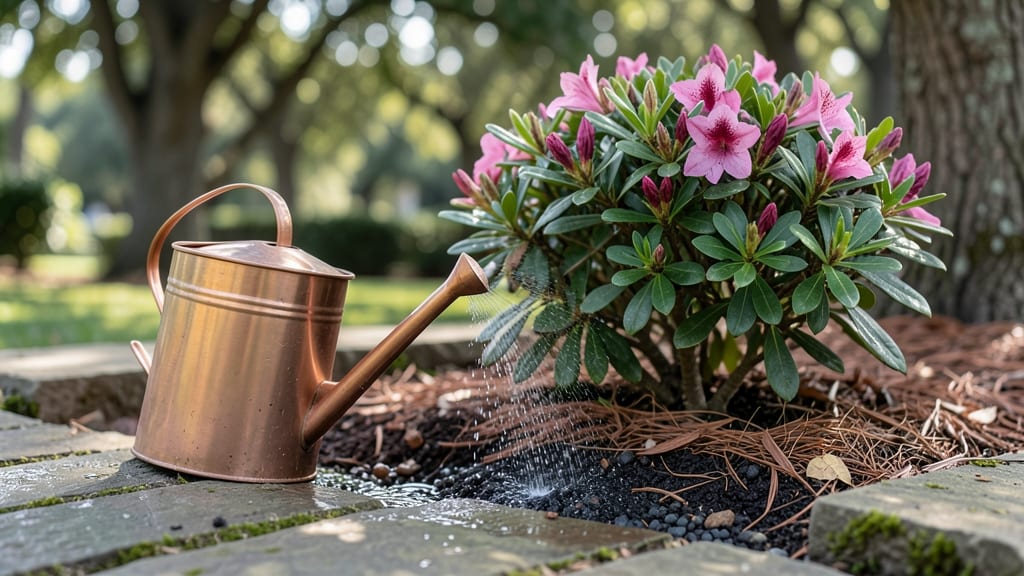
Watering azaleas the right amount keeps their 🌸 blooms vibrant and roots healthy—too much or too little ruins everything.
Here’s the truth: most gardeners either drown their azaleas or let them wilt from neglect, both of which lead to sad, sparse flowers. The key is a deep-soak schedule that matches the season, not just a splash of water when you remember.
In summer, azaleas need about 1–1.5 gallons per plant every 5–7 days, while winter slows their thirst to just a monthly sip. Stick your finger in the soil first—if the top inch feels dry, it’s time to water; if it’s still damp, hold off.
Below, I’ll break down the exact schedule by season, how to spot over- or underwatering, and why mulch is your best friend for keeping moisture just right without the guesswork.
Azalea watering schedule by season: how often to deep-soak for peak blooms
Your azaleas need consistent moisture to produce those stunning spring blooms, but too much water can suffocate their roots. The key is deep-soaking at the right intervals—adjusting with the seasons keeps them thriving without risking root rot or drought stress.
Let’s break down the science-backed schedule that delivers peak blooms every year.
Most gardeners overwater azaleas because they assume these acid-loving shrubs need constant dampness. In reality, their root systems thrive when water penetrates 12-18 inches deep—not just the surface. This deep watering encourages roots to grow downward, making your azaleas more resilient.
The seasonal shifts in temperature and rainfall mean your watering routine should change from spring to winter.
🌱
| Season | Frequency | Water Amount | Soil Moisture Test | Notes |
|---|---|---|---|---|
| Spring | Weekly (every 5-7 days) | 1-1.5 gallons per plant | Top 2-3 inches dry | Increase if blooming |
| Summer | Every 5-7 days (deep water) | 1.5-2 gallons per plant | Top 3-4 inches dry | Morning watering only |
| Fall | Bi-weekly (every 10-14 days) | 1 gallon per plant | Top 1-2 inches dry | Reduce as temps drop |
| Winter | Monthly (minimal water) | 0.5 gallons per plant | Top 3-4 inches dry | Avoid frozen soil |
| Potted Azaleas | Every 3-5 days | 0.5-1 gallon per pot | Top 1 inch dry | Dries out faster |
Spring is when your azaleas wake up from dormancy, so they need weekly deep watering to support new growth and bloom buds. Aim for 1-1.5 gallons per plant, delivered slowly to let water soak into the root zone.
Test soil moisture by sticking your finger 2-3 inches deep—if it feels dry, it’s time to water. Mulch with pine bark to retain moisture and regulate temperature.
Summer brings intense heat and evaporation, so increase your watering to every 5-7 days with 1.5-2 gallons per plant. Always water in the early morning to prevent fungal diseases like powdery mildew that thrive in damp foliage.
If your azalea’s leaves start curling or wilting by midday, it’s a sign of underwatering—adjust your schedule immediately.
Fall signals a slowdown in growth, so reduce watering to bi-weekly as temperatures drop. The goal is to keep the soil consistently moist but not soggy. A simple test: if the top 1-2 inches of soil are dry, it’s time to water.
This is also the time to add compost to the soil to boost nutrient levels for next year’s blooms.
Winter care is minimal, but don’t skip watering entirely. Monthly deep watering prevents root desiccation during dry spells. Use 0.5 gallons per plant and avoid watering if the ground is frozen. Mulch heavily (3-4 inches) to insulate roots from freezing temperatures.
Potted azaleas need more frequent watering—every 3-5 days—since containers dry out faster.
To check if your azaleas are getting
5 Signs your azaleas are overwatered or underwatered (with fixes)
Azaleas thrive on consistent moisture but suffer when their roots sit in soggy soil or dry out completely. Yellowing leaves, wilting branches, or mushy stems are red flags—each signaling a watering imbalance. The key is balanced hydration, where soil stays moist but never waterlogged.
I’ve seen overwatered azaleas develop root rot in just 3-5 days, while underwatered plants drop buds before they even bloom. Let’s decode these signs so you can rescue your shrubs before it’s too late.
Start by checking the soil texture—overwatered azaleas often feel slimy or compacted, while underwatered soil pulls away from the pot edges. Mulch thickness also plays a role: too much can suffocate roots, while too little speeds up moisture loss.
I recommend 2-3 inches of mulch (like pine bark) to retain moisture without smothering the plant. If your azaleas look leggy or sparse, it’s likely a sign of chronic underwatering, while blackened stems at the base mean root rot from overwatering.
- 💧 Yellow leaves with green veins: Overwatered. Let soil dry 1 inch deep before watering again. Improve drainage by adding perlite or sand to soil.
- 🌿 Brown leaf edges: Underwatered. Water deeply until runoff appears. Use a moisture meter to check soil hydration.
- 🪴 Soggy soil + foul odor: Root rot. Repot in fresh, acidic soil mix and trim blackened roots with sterilized shears.
- ✂️ Wilting despite wet soil: Overwatered roots. Prune affected branches and reduce mulch thickness to 1 inch.
- 🌡️ Dropping buds: Inconsistent watering. Water morning-only and mulch to stabilize moisture levels.
If your azalea’s leaves turn yellow with green veins, it’s a classic sign of overwatering. The roots are drowning, cutting off oxygen and nutrients. To fix this, reduce watering frequency and amend the soil with organic matter like peat moss to improve aeration.
I’ve revived many azaleas by switching to drip irrigation, which delivers water slowly at the root zone instead of flooding the surface. For container-grown azaleas, ensure pots have drainage holes and avoid letting them sit in saucers of water.
On the flip side, brown leaf edges or crispy foliage scream underwatering. These plants are begging for hydration—stick your finger 2 inches into the soil. If it’s dry, water until it runs out the drainage holes.
During heatwaves, I water my azaleas every 3-4 days in the early morning to prevent evaporation. Mulch acts like a sponge, locking in moisture, so always keep it 2-3 inches thick around the base (but avoid piling it against the stem).
One of the most devastating signs is blackened stems at the base, a sure sign of root rot. This fungal disease thrives in waterlogged soil and can kill azaleas in weeks.
If you spot this, act fast: remove the plant, trim away mushy roots with a sterilized knife, and repot in fresh, well-draining soil.
For severe cases, consider propagating healthy cuttings to save the variety. Prevention is key: never let azaleas sit in standing water, and avoid watering at night when humidity encourages fungal growth.
Finally, if your azalea’s buds drop before opening, it’s likely due to fluctuating moisture levels. Azaleas need consistent hydration—don’t let the soil dry out completely between waterings. I’ve found that grouping azaleas together creates a microclimate that retains moisture longer.
For container plants, pebble trays filled with water can increase humidity around the roots without overwatering. Always water at the base of the plant, not the foliage, to prevent fungal diseases like powdery mildew.