
Watering
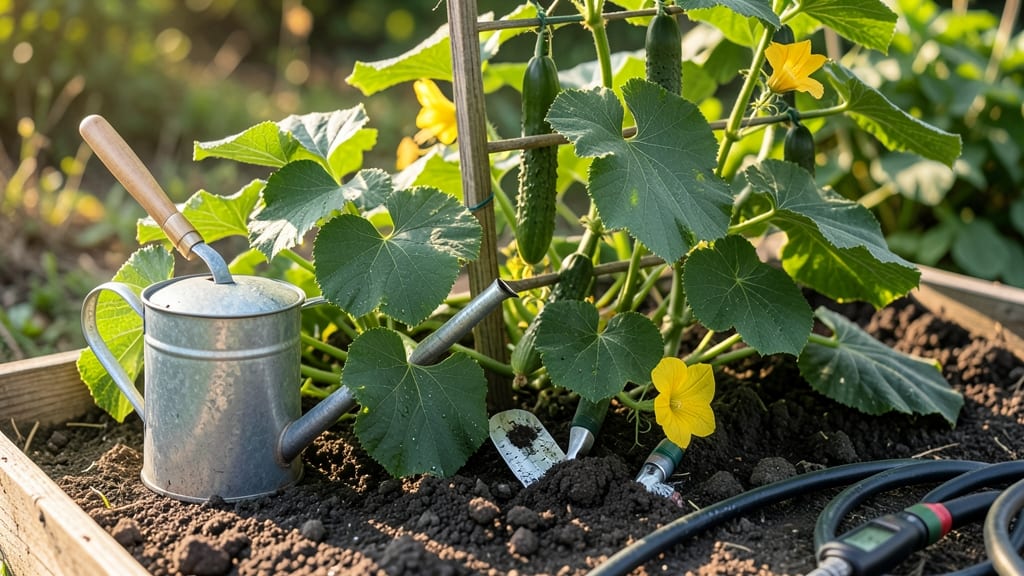
Watering cucumber plants the right amount keeps them thriving and your harvest bountiful 🥒 — but too little or too much can ruin everything.
Picture this: You’ve just planted your cucumbers in April after waiting for that 70°F soil, and now you’re guessing how much water they need. One week, your plants wilt by noon.
The next, you find mushy roots and yellowing leaves. Sound familiar? The truth is, cucumbers need consistent moisture, but the "right amount" changes as they grow.
From seedlings to fruiting, their water needs shift dramatically. A daily deep soak in summer keeps roots happy, while a light check in fall prevents rot. Below, I’ll break down the exact schedule by growth stage, plus how to spot when you’re over- or underwatering before it’s too late.
You’ll learn how to read your soil, adjust for heatwaves, and even use mulch to cut back on watering. By the end, your cucumbers will be thriving, not just surviving.
Cucumber watering schedule by growth stage: daily needs revealed
Cucumbers are 95% water, so consistent hydration is critical for sweet, crisp fruit. But watering too much or too little at the wrong stage can ruin your harvest. I’ve grown cucumbers for years and learned the hard way—seedlings wilt fast while fruiting plants need deep, steady moisture.
Here’s my proven stage-by-stage watering guide to keep your vines thriving from sprout to harvest.
Your cucumber’s water needs change dramatically as it grows. Seedlings need gentle moisture, while flowering plants demand deep soaks. Even the climate shifts requirements—hot summers mean more frequent watering, while cool springs can slow evaporation. Let’s break down the exact schedule by growth phase so you never guess again.
| Growth Stage | Water Frequency | Amount per Session | Soil Moisture Test | Climate Adjustments |
|---|---|---|---|---|
| Seedling (0-2 weeks) | Every 2-3 days | ½ inch (1.25 cm) | Top 1 inch dry | Reduce in humidity |
| Vegetative (2-4 weeks) | Daily (morning) | 1-1½ inches (2.5-3.8 cm) | Top 2 inches damp | Increase in heat |
| Flowering (4-6 weeks) | Every 2 days (deep) | 2 inches (5 cm) | Top 3 inches moist | Add mulch in drought |
| Fruiting (6+ weeks) | Daily (deep water) | 2-3 inches (5-7.5 cm) | Consistently damp | Drip irrigation best |
For seedlings (0-2 weeks), I start with light watering—just enough to keep the top ½ inch of soil moist. Overwatering at this stage causes damping-off disease, which kills young plants.
Use a spray bottle for precision and water in the morning so excess moisture evaporates by evening. Test soil moisture by sticking your finger 1 inch deep; if it’s dry, water again.
When cucumbers hit the vegetative stage (2-4 weeks), they need more frequent watering—daily in the morning. Aim for 1-1½ inches of water per session, delivered directly to the soil (not leaves) to prevent fungal diseases.
I use a soaker hose for even distribution, keeping the soil consistently damp but not soggy. During heatwaves, I check soil moisture twice daily—if the top 2 inches feel dry, it’s time to water.
At the flowering stage (4-6 weeks), cucumbers demand deep, infrequent watering every 2 days. This encourages strong root growth and prevents blossom-end rot, a common issue caused by uneven moisture.
I dig a hole near the plant, fill it with water, and let it soak in completely. Mulch heavily (2-3 inches of straw) to retain moisture and cool roots—this is especially critical in hot, dry climates like Arizona or Texas.
During the fruiting stage (6+ weeks), your cucumbers need daily deep watering—2-3 inches per session. This is when most gardeners struggle because uneven watering causes bitter fruit. I water early in the morning using drip irrigation to deliver water slowly at the root zone.
For container-grown cucumbers, I check soil moisture every morning; if the top 3 inches are dry, I water thoroughly. Never let the soil dry out completely—this triggers stress and reduces yield.
Climate plays a huge role in your watering schedule. In hot, dry regions (like Southern California), I water twice daily—once in the morning and once in the late afternoon—while adding hydromulch to lock in moisture.
In cool, humid climates (like the Pacific Northwest), I reduce frequency to every 2-3 days and avoid overhead watering to prevent mildew. Always adjust based on weather forecasts—afternoon thunderstorms mean I hold off watering that day.
One of my biggest mistakes was ignoring soil type. Sandy soil drains fast, so I water more frequently but shallower, while clay soil stays wet longer, requiring deeper but less frequent watering. Amend your soil with compost before planting to improve moisture retention.
I also use a moisture meter ($2
Signs of overwatering vs. underwatering cucumbers: what to watch for
Cucumbers are thirsty plants that need consistent moisture, but too much or too little water can spell disaster for your harvest. Overwatering leads to root rot and fungal diseases, while underwatering causes stunted growth and blossom-end rot. Learning to spot these signs early can save your plants—and your crop! 🥒
Start by checking the soil moisture before watering. Stick your finger about 1-2 inches deep—if it feels damp, hold off.
If it's bone-dry, it's time to water. Yellowing leaves or wilting vines are red flags, but they can mean different problems depending on how severe they are. Mold or mushy stems? That’s overwatering. Crispy edges or curled leaves? That’s underwatering.
Overwatering vs. Underwatering: Quick Fixes
- Yellow leaves (lower first)
- Mushy stems or wilting
- Foul-smelling soil
- Crispy leaf edges
- Drooping vines
- Blossom-end rot (dark spots on fruit)
If your cucumbers show blossom-end rot (those ugly dark spots on the fruit), it’s often a sign of inconsistent watering. This condition thrives when plants experience fluctuating moisture levels, so aim for even hydration.
Water at the base of the plant in the morning to prevent fungal issues and reduce evaporation. 💧
For overwatered plants, stop watering immediately and let the soil dry out.
If the roots smell foul or look mushy, trim away the affected parts and repot in well-draining soil. Underwatered plants need a deep soak—aim for 1-2 inches of water per session—and consider adding organic mulch to lock in moisture. 🌱
Pay attention to the growth rate too. Healthy cucumbers grow 1-2 inches per day during peak season. If your plants are growing slower than a snail, they’re likely thirsty.
On the flip side, if new leaves are small and pale, you might be overdoing it with the H₂O. Adjust your watering based on these visual cues and your local climate. ☀️
Pro tip: Use a moisture meter or the "squeeze test"—gently press the soil. If it holds its shape, it’s moist enough. If it crumbles, it’s time to water. Consistency is key—cucumbers hate drama, whether it’s too much love or too little. 🌿