
Plants
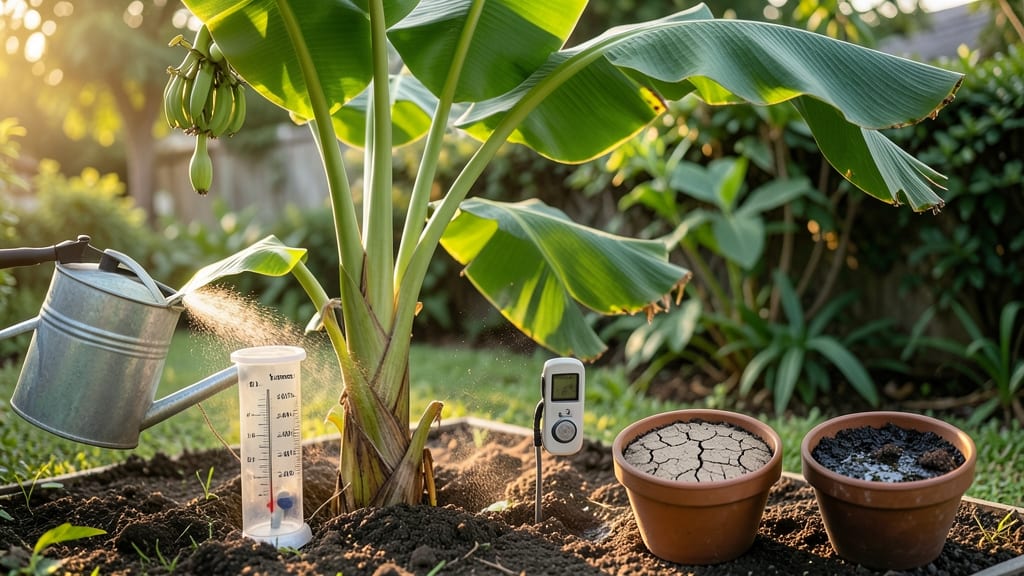
Banana plants need 1-2 gallons of water every 1-2 days to thrive in their tropical homes 🍌 — but too much can drown their roots faster than you can say "root rot."
Picture this: you water your banana like clockwork, only to watch its leaves yellow and droop. That’s not thirst—it’s a cry for help. The secret isn’t just how much you water but how well your soil drains and when you water.
In this guide, I’ll break down the exact watering schedule by growth stage, from seedlings to fruiting, plus soil test tricks to keep your banana happy without turning your pot into a swamp.
You’ll learn how to read your plant’s moisture needs, spot overwatering before it’s too late, and adjust for your climate—whether you’re in a steamy subtropical zone or growing indoors under grow lights.
Banana plant watering schedule by growth stage (with soil moisture rules)
Banana plants are tropical divas—they demand consistent moisture but despise soggy roots. Unlike desert cacti, they can't store water, so their watering needs shift dramatically from seedling to fruiting stages.
I’ve grown Musa acuminata in both containers and ground beds, and I’ve learned the hard way that overwatering kills faster than pests. The secret? Checking soil moisture like a pro, not guessing by the calendar.
Your banana’s growth stage dictates its thirst. Seedlings need gentle hydration, mature plants crave deep soaks, and fruiting bananas demand balanced moisture to avoid splitting. Throw in climate variations—humid summers vs. dry winters—and you’ve got a recipe for disaster if you’re not precise.
That’s why I developed a stage-by-stage watering schedule with soil test tricks to keep your plant thriving without root rot.
Let’s start with seedlings, the most delicate stage. Your newly planted banana (or propagated pup) has tiny roots that can’t handle soggy soil. I use the "finger test" here: stick your index finger 1 inch deep into the soil.
If it feels dry, water lightly—½ gallon is enough to moisten the root zone without drowning it. Overwatering now causes seedling rot, and you’ll lose your plant before it even sprouts leaves. I’ve seen this happen with Musa velutina cuttings in humid climates—consistency is key.
As your banana enters the vegetative stage (3-12 months), it’s growing like a tropical weed, and its thirst increases. Now, you’re looking at deep waterings every 2-3 days. Use a moisture meter for accuracy—aim for 2 inches dry at the surface.
I swear by the Xiaomi Smart Moisture Sensor for my container-grown Dwarf Cavendish—it alerts me when the soil hits 40% moisture, and I water 1-2 gallons at a time. This stage is where most gardeners overcompensate, thinking "more water = bigger plant."
Wrong. Root rot from poor drainage is the real enemy.
When your banana blooms and fruits, the stakes get higher. Fruiting plants need balanced moisture—too much causes split bananas, too little stunts growth. Here’s my golden rule: water every 3-5 days when the top 3 inches of soil are dry.
Use a soaker hose for in-ground plants to deliver water slowly at the base, avoiding the leaves. For potted bananas, I bottom-water by placing the pot in a tray of water for 20 minutes, letting the roots drink up what they need.
This method prevents fungal diseases like sigatoka leaf spot, which thrives in wet foliage.
In dormant seasons (winter in colder zones), your banana’s needs drop dramatically. If you’re growing Musa basjoo in USDA Zone 7, it’ll go semi-dormant. Cut back to watering every 7-10 days, checking for 4 inches dry before watering.
I’ve kept potted bananas alive through Zone 6 winters by moving them to an unheated garage with a grow light and watering sparingly. The goal? Keep the roots alive without encouraging rot. Overwatering now is like giving a sleeping bear too much honey—it’ll wake up angry (and rotten).
Now, let’s talk tools—because guessing gets you root rot. A moisture meter is your best friend, but if you’re on a budget, the finger test works. Push your finger 1-3 inches deep (depending on the stage) and feel for moisture.
If it’s dry, water. If it’s damp, wait. I also use a rain gauge to track outdoor watering—if we’ve had ½ inch of rain, I skip the hose for that day. For container growers, weigh your pot: if it’s lighter than usual, it’s time to water.
These tricks eliminate guesswork and save your plant from waterlogging disasters.
One common mistake I see? Watering at night. Banana leaves stay wet for hours, creating the perfect fungal buffet. Always water in the morning so foliage dries
5 Signs your banana plant is overwatered (and how to fix it)
Banana plants love moisture, but too much water can drown their roots faster than you can say "root rot." If your banana plant suddenly looks sad with yellowing leaves or a mushy stem, overwatering is likely the culprit.
The key is balance—bananas need consistent moisture but hate soggy soil. Let’s diagnose the problem and save your plant before it’s too late!
Overwatering creates the perfect storm for fungal diseases like black sigatoka or root rot, which can kill your banana plant in weeks. The first signs often appear in the lower leaves, where yellowing or browning signals distress.
Don’t panic—catching these symptoms early gives your plant a fighting chance. Here’s how to spot the trouble and fix it fast.
- 1
- 2
- 3
- 4
- 5
Now that you know the ideal watering routine, let’s tackle the 5 red flags of overwatering. Start by checking the soil surface—if it’s always wet or has a sour smell, your banana plant is drowning.
The next step? Adjust your watering habits and give your plant room to breathe.
First, yellowing leaves (especially on older growth) are a classic overwatering sign. Unlike nutrient deficiencies, which start on new leaves, overwatering attacks the lower leaves first. Pair this with drooping fronds, and you’ve got a plant begging for less water.
The fix? Let the top 3 inches of soil dry out between waterings and improve drainage with perlite or sand.
If your banana plant’s stem feels mushy when pressed, root rot is likely setting in. This is an emergency—stop watering immediately and let the soil dry out completely. Remove the plant from its pot (if potted) and trim away any black, mushy roots with sterilized scissors.
Repot in fresh, well-draining soil and hold off on watering for a full week to let the roots recover.
Fungal growth, like mold or white fuzz, is another dead giveaway. Overwatered banana plants become a buffet for pathogens like Fusarium or Pythium. Prune away infected leaves immediately and treat the soil with neem oil or a copper fungicide.
Space out waterings to every other day and ensure your pot has drainage holes to prevent future outbreaks.
Don’t ignore slow growth or stunted leaves—these can also signal overwatering. When roots suffocate in wet soil, they can’t absorb nutrients, leaving your banana plant starving despite your efforts.
Boost growth by amending the soil with compost or coconut coir to improve aeration, then adjust your watering schedule to match the season and climate.
Your banana plant’s recovery starts with drainage and patience. After fixing the watering issue, monitor the soil closely and resist the urge to overcompensate. With the right balance, your banana plant will bounce back—producing lush leaves and eventually, those sweet bananas you’re dreaming of! 🍌