
Watering
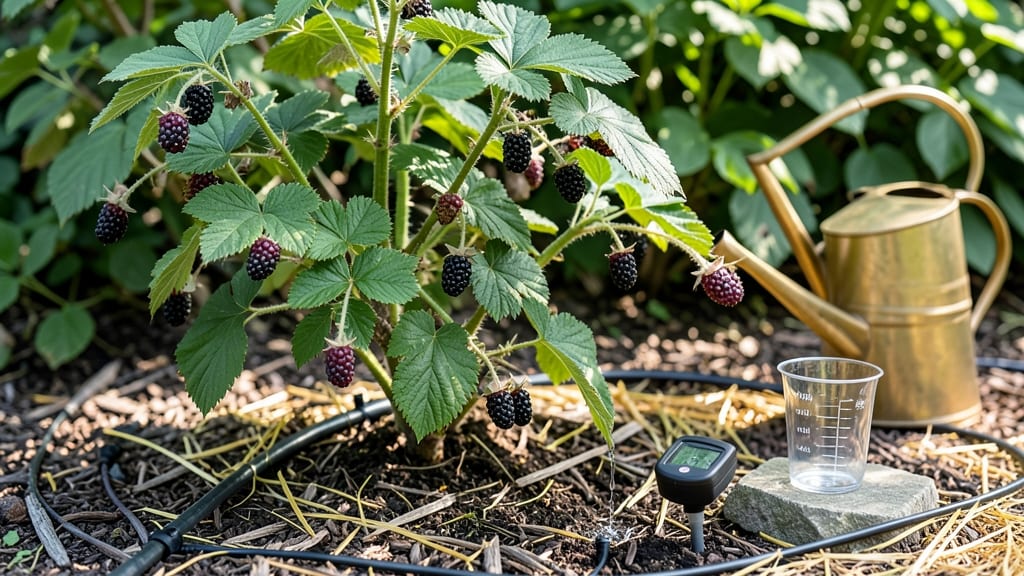
To keep blackberries thriving, they need about 1 to 2 inches of water per week—deep soaks that reach their roots without drowning them.
Blackberries are one of the most rewarding plants to grow—but getting the water balance right is the difference between lush vines and wilted disappointment. Too much, and you risk root rot; too little, and your berries suffer.
Young plants need more frequent watering, while established bushes can handle slightly less. The key is consistency: let the top inch of soil dry out between waterings, but never let the roots run dry during fruiting season.
In this guide, I’ll break down the exact weekly schedule, seasonal adjustments, and signs of over- or under-watering so you can grow plump, juicy blackberries every harvest.
Blackberry watering requirements by growth stage: deep roots need smart hydration
Blackberries develop deep root systems that need consistent moisture but hate soggy soil. Understanding their water needs by growth stage prevents common issues like root rot or poor fruit set.
Young plants require frequent watering to establish roots, while mature vines need deep watering less often but still consistently during fruiting. Let's break down what your blackberries need at each stage.
Soil type dramatically affects watering frequency. Sandy soil drains quickly, requiring daily checks, while clay soil holds moisture longer, needing watering every 3-4 days. Organic, well-draining soil (like loamy mixes) is ideal, balancing moisture retention and aeration.
Always test your soil's moisture by sticking your finger 2-3 inches deep—if it feels dry, it's time to water.
🌱 New Plants (First Year): Water every 2-3 days for the first month after planting to encourage root growth. Use 1-2 gallons per plant each time, soaking the soil deeply. Avoid wetting the leaves to prevent fungal diseases. Mulch with 2-3 inches of straw to retain moisture and regulate soil temperature.
🌿 Established Vines (Years 2-3): Reduce frequency to every 3-5 days, but increase volume to 2-3 gallons per plant. Focus on deep watering to strengthen roots and support cane growth. During drought, increase to daily watering in extreme heat (above 90°F). Monitor for wilting leaves, which signal thirst.
🫐 Fruiting Stage (Spring-Summer): Blackberries need 1-2 inches of water weekly during fruiting. Split this into two deep waterings per week—one at the base and one around the drip line. Stress from uneven watering causes split canes or poor fruit quality. Use a soaker hose for even distribution.
| Growth Stage | Water Frequency | Water Amount | Key Tips |
|---|---|---|---|
| New Plants (0-12 months) | Every 2-3 days | 1-2 gallons/plant | Mulch heavily; avoid leaf wetting |
| Established Vines (1-3 years) | Every 3-5 days | 2-3 gallons/plant | Deep water at base and drip line |
| Fruiting Stage (Spring-Summer) | 1-2 inches/week | Split into 2 deep waterings | Use soaker hose; monitor wilting |
| Dormant Season (Fall-Winter) | Every 2-4 weeks | Light soaking | Reduce to prevent rot; mulch for insulation |
Watch for overwatering signs like yellowing leaves, mold on soil, or mushy stems—these indicate root rot. Underwatering shows as crispy leaf edges, wilting despite soil moisture, or small, hard berries.
Adjust your schedule based on these cues, and always water in the early morning to reduce evaporation and fungal risks.
In hot climates, increase watering to daily during heatwaves, but mulch with 4-6 inches of straw to retain moisture. In cooler regions, reduce to every 5-7 days in spring/fall.
Container-grown blackberries dry out faster—check soil daily and water when the top inch feels dry. Use well-draining pots with drainage holes to prevent waterlogging.
Pro tip: Install a drip irrigation system for precision. Set it to deliver ½ inch of water every 2-3 days during peak growing seasons. This automates consistency while preventing leaf diseases.
Pair it with organic mulch (like wood chips) to lock in moisture and suppress weeds—your blackberries will reward you with larger, sweeter berries.
Remember, blackberries thrive on predictability. Stick to your watering schedule, and your vines will develop strong roots capable of withstanding brief dry spells. The key is deep, infrequent watering that mimics natural rainfall patterns—shallow puddles won’t cut it for these deep-rooted powerhouses.
Weekly watering schedule for blackberries: adjust for climate and soil type
Blackberries thrive with consistent moisture, but their water needs shift based on your local climate and soil type. In hot, dry regions, you’ll need to water more frequently than in humid coastal areas.
The key is delivering 1-2 inches of water weekly—either from rain or irrigation—to keep roots hydrated without waterlogging. Let’s break down how to adjust your schedule for optimal berry production.
For morning watering (ideal to prevent fungal diseases), aim to water between 6 AM and 10 AM. This gives leaves time to dry before evening, reducing the risk of botrytis blight.
Avoid evening watering, as wet foliage overnight invites pests and diseases. Use a soaker hose or drip irrigation to deliver water directly to the root zone, minimizing waste and evaporation.
Seasonal adjustments are critical. During spring and summer, when blackberries are fruiting, increase watering to 1.5-2 inches per week. In fall and winter, reduce to 1 inch or less as growth slows. For container-grown blackberries, check soil moisture daily—they dry out faster. Stick your finger 2 inches deep; if dry, water thoroughly until it runs out the drainage holes. Watch for signs of overwatering, like yellowing leaves or mushy stems, and underwatering, such as curled leaves or wilting canes. If your soil is heavy clay, amend it with compost to improve drainage. For sandy soils, mulch with straw to retain moisture. A 3-inch layer of mulch around the base reduces evaporation and keeps roots cool. Create a customizable checklist to track your watering schedule. Mark off days after watering and note rainfall amounts. Adjust weekly based on your blackberries’ response—plump canes and shiny leaves mean you’re on track! With this routine, you’ll avoid the pitfalls of root rot or poor fruit set while maximizing your harvest. Pro tip: Use a smart sprinkler timer to automate watering during heatwaves. Set it for short, frequent cycles (e.g., 10 minutes every 2 hours) to mimic natural rainfall. This mimics the deep, consistent moisture blackberries love without drowning their roots.