
Watering
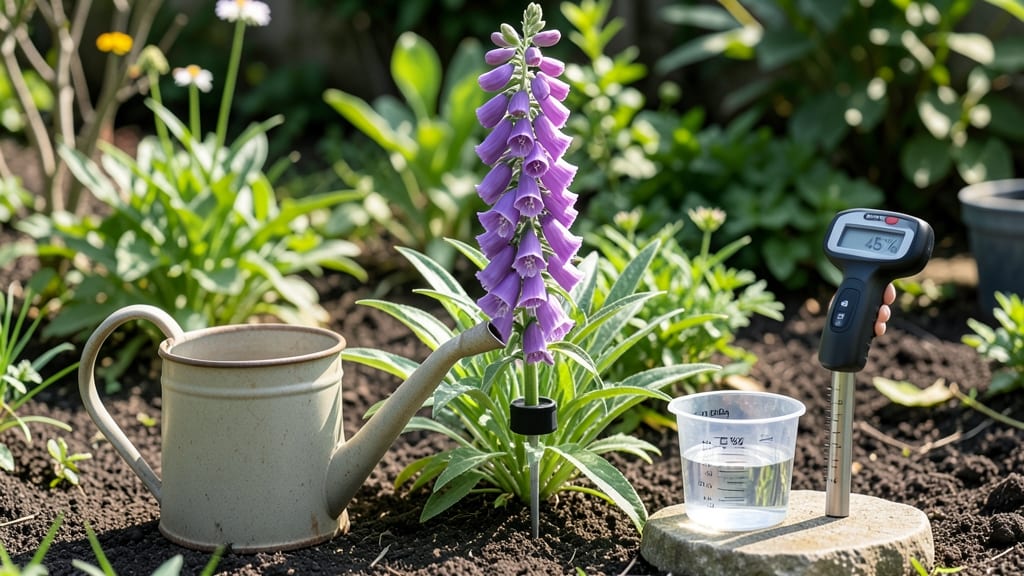
Watering foxglove the right way keeps those tall 🌸 blooms thriving without turning your soil into a swamp.
Foxglove’s striking bell-shaped flowers are a gardener’s dream—but overwatering can turn them into a nightmare, causing root rot and stunted growth. Mastering the right watering schedule ensures your foxglove thrives year after year.
This isn’t just about sticking to a calendar. The finger-dip test is your secret weapon: stick your finger an inch into the soil, and if it’s dry, it’s time to water. If it’s still damp, wait a few more days.
In this guide, I’ll break down how often to water foxglove based on your climate, whether it’s in a pot or the ground, and how to spot the signs of over- or underwatering before it’s too late.
The finger-dip test: perfect watering schedule for foxglove roots
Foxglove (Digitalis purpurea) thrives on consistent moisture but despises soggy soil. The finger-dip test is my foolproof method to check soil moisture before watering. Stick your finger 2-3 inches deep into the soil—if it feels dry at this depth, it's time to water.
This simple trick prevents both overwatering and underwatering, two common pitfalls for new foxglove growers.
Why this depth? Foxglove roots grow 12-18 inches deep, so surface moisture won't reach them. Testing at 2-3 inches ensures you're hydrating the root zone where it matters most. Clay soil holds moisture longer, while sandy soil drains faster—adjust your watering based on your soil type.
How Often to Water Foxglove: Step-by-Step Guide
- 🌱 Step 1: Choose the Right Time
Water foxglove in the early morning (before 10 AM) to reduce evaporation and fungal risks. Avoid evening watering, as damp foliage overnight invites powdery mildew. - 💧 Step 2: Perform the Finger-Dip Test
Insert your finger 2-3 inches deep into the soil. If it feels dry, water thoroughly. If it's moist, wait 1-2 more days before checking again. - ☀️ Step 3: Adjust for Season
- Spring/Fall: Water every 7-10 days (soil is cooler and retains moisture longer).
- Summer: Increase to every 5-7 days due to heat and faster evaporation.
- Winter: Reduce to monthly or only when soil is bone-dry.
- 🪴 Step 4: Water Depth Matters
Apply water until it drips from the drainage holes (for containers) or until the soil 2-3 inches deep is evenly moist. Shallow watering encourages shallow root growth, making plants more vulnerable to drought. - 🌿 Step 5: Mulch for Moisture Control
Spread 2-3 inches of mulch (like shredded bark or straw) around the base to retain moisture and regulate soil temperature. Keep mulch 2 inches away from stems to prevent rot.
Container-grown foxglove needs more frequent watering than garden beds because pots dry out faster. Check containers daily in summer—if the top inch of soil feels dry, it's time to water. Self-watering pots can help maintain consistent moisture without overwatering.
Your foxglove’s leaf color is a silent watering clue. Yellowing leaves often signal overwatering, while dry, crispy edges mean it’s thirsty. Adjust your schedule based on these visual cues, but always confirm with the finger-dip test before reacting.
In hot, dry climates, foxglove may need daily watering during peak summer months, but always pair this with morning watering to minimize stress. If your foxglove is newly planted, keep the soil consistently moist for the first 2-3 weeks to encourage root establishment.
Overwatering is the #1 killer of foxglove, leading to root rot and fungal diseases. If you notice mushy stems or yellowing leaves with black spots, reduce watering immediately and improve drainage. Amend heavy clay soil with compost or perlite to create a well-draining environment.
Pro tip: Group foxglove with other moisture-loving perennials like hostas or astilbes to create a microclimate that retains humidity. This natural grouping reduces your watering workload while keeping all plants happy.
Remember, foxglove is drought-tolerant once established, but it rewards consistent care with taller spikes and more blooms. Master the finger-dip test, and you’ll grow foxglove that thrives for years—without the guesswork.
Foxglove watering by season: adjusting frequency for peak blooms
Foxglove thrives with seasonal watering adjustments that match its natural growth cycles. In spring, when new shoots emerge, keep soil consistently moist but never soggy. Summer heat demands more frequent watering, while fall and winter require reduced moisture to prevent rot.
Container-grown foxglove dries out faster than garden plants, needing daily checks during summer. Garden foxglove, with deeper roots, can handle longer intervals between waterings. Mulching helps retain moisture and regulates soil temperature.
| Season | Garden Foxglove | Container Foxglove | Key Tips |
|---|---|---|---|
| Spring | Weekly (1-1.5 inches) | Every 5-6 days | Water at soil level, avoid leaves |
| Summer | Every 5-7 days (2 inches) | Daily (morning) | Mulch heavily to retain moisture |
| Fall | Bi-weekly (1 inch) | Every 7-10 days | Reduce watering as growth slows |
| Winter | Monthly (light) | Every 3-4 weeks | Only water if soil is bone-dry |
In spring, focus on establishing roots by keeping soil evenly moist. Use a soaker hose to deliver water directly to the base without disturbing foliage. Summer droughts require extra attention—container plants may need daily watering if temperatures exceed 90°F.
Fall marks the transition to dormancy, so reduce watering frequency by half. Winter care is minimal—only water if the soil feels completely dry. Overwatering in cold months leads to root suffocation and fungal diseases.
For drought tolerance, let the top 1-2 inches of soil dry between waterings. Foxglove’s deep roots can access moisture from lower soil layers, making it surprisingly resilient once established. Mulch with compost to improve soil structure and water retention.
Adjust your schedule based on local rainfall and container size. Larger pots hold moisture longer, while small containers dry out quickly. Always water in the early morning to reduce evaporation and fungal risks.