
Watering
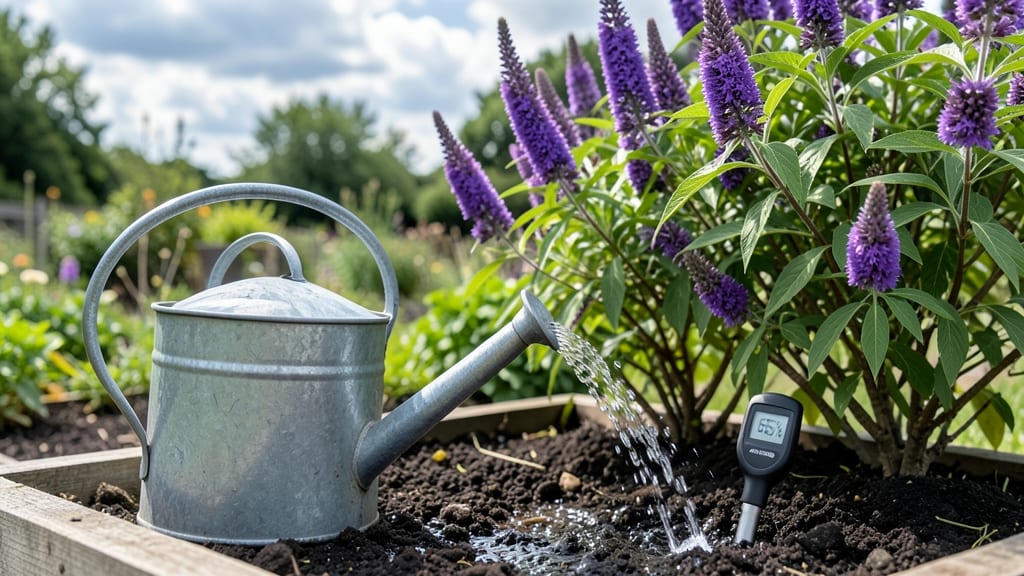
A butterfly bush 🦋 needs about 1 to 1.5 inches of water per week once established, but the real secret is deep, infrequent watering—not daily sips.
Picture this: You water lightly every day, and your bush’s roots stay shallow, desperate for moisture. Meanwhile, the soil dries out fast, and those vibrant blooms you love start wilting by afternoon. That’s the classic overwatering trap—one I’ve seen too many gardeners fall into.
But here’s the good news: Butterfly bushes are drought-tolerant once rooted. The key is adjusting for your climate, soil type (clay holds moisture longer than sand), and season. In summer heat, you might need to water twice a week, while winter dormancy could mean skipping water entirely.
Below, I’ll break down the exact schedule by season, how to check soil moisture without a guess, and the telltale signs your bush is thirsty or drowning—so you can keep those butterflies fluttering all season long.
Butterfly bush watering schedule by season: weekly deep dive
Butterfly bushes (Buddleia) are famously drought-tolerant once established, but their watering needs shift dramatically with the seasons. Too much water causes root rot, while too little stresses the plant—especially during peak bloom.
Let’s break down the weekly watering schedule for each season to keep your shrub thriving year-round.
Your watering frequency depends on soil type, container vs. in-ground planting, and local rainfall patterns. For example, sandy soil drains faster than clay soil, so adjustments are key. Always check soil moisture 2–3 inches below the surface before watering—if it’s dry, it’s time to hydrate.
| Season | Frequency | Depth | Notes |
|---|---|---|---|
| Spring | Every 2–3 days | 6–8 inches | Encourage root growth; reduce if rain exceeds 1 inch/week |
| Summer | Daily or every other day | 8–12 inches | Deep watering critical for blooms; mulch to retain moisture |
| Fall | Every 3–5 days | 4–6 inches | Reduce watering as temps drop; avoid soggy soil |
| Winter | Bi-weekly | 2–3 inches | Dormant season; water only if soil is bone-dry |
In spring, your butterfly bush is waking from dormancy, so consistent moisture is crucial for new growth. Water deeply 2–3 times per week, aiming for 6–8 inches of soil saturation. If your area gets 1+ inches of rain weekly, cut back to avoid overwatering.
Mulch with 2–3 inches of organic matter (like shredded bark) to lock in moisture and regulate soil temperature.
Summer is the most demanding season for water. Your bush needs daily or every-other-day watering, especially in USDA Zones 7–9 where heat intensifies.
Aim for 8–12 inches of deep watering—this encourages roots to grow deeper, making the plant more drought-resistant long-term. Morning watering is best to reduce fungal risks from evening dampness.
As fall approaches, reduce watering to every 3–5 days and shallow the depth to 4–6 inches. This helps the plant harden off before winter.
Watch for yellowing leaves, a sign of overwatering, and crispy edges, which indicate underwatering. Adjust based on rainfall—if storms roll in, skip watering until the soil dries slightly.
Winter care is minimal: water bi-weekly only if the soil is completely dry. No blooms or growth occur in winter, so the goal is to keep roots from drying out.
If you’re in a mild-winter zone (Zone 8+), you might water slightly more often, but always check soil moisture first. Avoid winter watering if the ground is frozen.
For container-grown butterfly bushes, watering needs are higher due to faster soil drying. Check soil moisture daily in summer—containers can dry out in half the time of in-ground plants.
Use well-draining pots with drainage holes and a moisture-retentive potting mix (like 60% peat/40% perlite). Terracotta pots dry out quicker than plastic, so adjust accordingly.
Pro tip: Use a soil moisture meter ($10 at garden centers) to avoid guesswork. Insert it 2–3 inches deep—if it reads "dry," water thoroughly. This tool saves butterfly bushes from both root rot and wilting.
Pair it with a rain gauge to track natural water input and fine-tune your schedule.
Remember, overwatering is the #1 killer of butterfly bushes. If you notice mushy stems, yellow leaves, or a sour smell from the soil, your plant is drowning. Adjust immediately by letting the soil dry
Signs your butterfly bush is overwatered or underwatered (and how to fix it)
Your butterfly bush (Buddleia) thrives on balance—too much or too little water sends it into distress. Yellowing leaves or drooping stems often signal trouble, but the fixes depend on whether your plant is drowning or thirsty. Let’s decode the visual cues and save your shrub before it’s too late.
First, check the soil moisture by sticking your finger 2-3 inches deep. If it’s soggy, you’re overwatering. If it’s bone-dry, it’s time to hydrate. Clay soil holds moisture longer than sandy soil, so adjust your watering schedule accordingly to avoid root rot or dehydration.
Butterfly bushes need 1-1.5 gallons of water per week during active growth (spring/summer). In containers, water when the top 1 inch of soil feels dry. For in-ground plants, deep water every 3-5 days unless rainfall exceeds 1 inch/week. Winter dormancy requires minimal water—only when soil is completely dry.
Key Tip: Always water at the base, not the leaves, to prevent fungal diseases. Morning watering (before 10 AM) is ideal to reduce evaporation.
Overwatered butterfly bushes show yellow leaves with mushy stems and may develop black spots from fungal growth. Pull back on watering immediately and improve drainage by adding perlite or compost to heavy soil. If the roots smell rotten, trim affected areas and repot if needed.
Underwatered plants, on the other hand, exhibit crispy brown edges on leaves and wilting despite soil being dry. To revive it, give a deep soak until water drains from the bottom.
For container-grown bushes, ensure pots have drainage holes and use well-draining potting mix. Mulch around the base to retain moisture.
In clay soil, water less frequently but deeply to prevent surface pooling. In sandy soil, water more often but lightly to encourage root growth.
Always adjust based on your local climate—humid areas need less water than dry, windy spots. A moisture meter can help track soil conditions accurately.
Pro tip: Prune back overwatered branches to redirect energy to healthier growth. For underwatered plants, trim dead leaves to reduce stress. With the right balance, your butterfly bush will reward you with vibrant blooms all season long. 🦋