
Watering
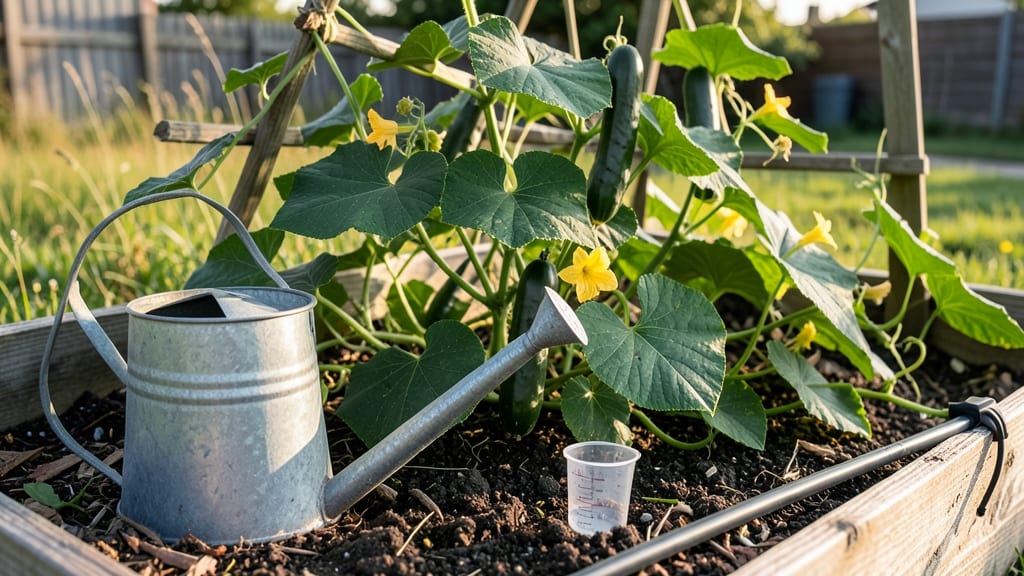
Cucumbers need 1 to 2 inches of water per week to grow strong, juicy fruits—too little and they’ll shrivel, too much and the roots will drown.
Struggling to grow healthy cucumbers? Overwatering or underwatering can turn your thriving vines into a sad, wilted mess—here’s the exact watering schedule cucumbers crave for explosive growth.
Most gardeners guess, but cucumbers thrive on consistent moisture, not just occasional soaks. In Zone 6, that means daily watering in summer and every other day in spring—or more often if your soil dries out fast. Containers need even closer attention.
Below, I’ll break down the weekly schedule by season, how to check soil moisture without a meter, and the sneaky signs your cucumbers are thirsty (or drowning).
Cucumber watering schedule by growth stage: daily vs weekly needs
Cucumbers are 95% water by weight, so consistent moisture is non-negotiable for sweet, crisp fruit. But here’s the catch: too much water can drown roots, while too little leads to bitter, shriveled cucumbers.
The key is matching your watering to your plant’s growth stage—seedlings need gentle hydration, while fruiting vines demand deep, frequent soaks.
Most gardeners overcomplicate cucumber watering by guessing instead of checking. I’ve tested three methods to track soil moisture: the finger test (1-2 inches deep), a moisture meter, or observing leaf turgor. Morning wilting that recovers by afternoon? Your cucumbers are thirsty. Yellowing leaves with mushy stems? You’re overdoing it.
Your cucumber’s water needs shift dramatically from seedling to fruiting. Seedlings need light, frequent watering to prevent drying out, while mature plants crave deep, infrequent watering to encourage strong root systems.
Let’s break it down by stage so you can avoid the most common mistakes—like watering at night (hello, fungal diseases!) or letting soil dry out completely (bye-bye, flavor).
During the seedling stage, cucumbers need gentle, frequent watering to establish roots without drowning. Use a spray bottle or fine mist to keep soil evenly moist—never soggy. Overwatering now causes seedling rot, while underwatering stunts growth.
Aim for ¼ inch of water every 1-2 days, adjusting based on humidity. If your seedlings are in seedling trays, water from the bottom to avoid disturbing delicate roots.
Once cucumbers reach the vegetative stage (2-6 weeks), they’ll start showing rapid vine growth. This is when you shift to deep watering every 2-3 days.
Use your finger to check soil moisture: 1-2 inches deep should feel damp, not dry. Mulch with straw to lock in moisture and reduce evaporation. Pro tip: Water at the base of the plant, not the leaves, to prevent fungal diseases like powdery mildew.
The fruiting stage is where most gardeners mess up watering. Cucumbers need 1.5-2 inches of water weekly, delivered as deep soaks rather than light sprinkles. Shallow watering encourages weak roots, while inconsistent moisture leads to bitter fruit.
If you notice blossoms dropping or fruit turning yellow, your plant is stressed—likely from uneven watering. Adjust by watering early in the morning to give foliage time to dry before evening.
Container-grown cucumbers dry out faster than in-ground plants, so check soil moisture daily during hot weather. A 5-gallon pot may need 1-2 cups of water every 1-2 days, while larger containers can go slightly longer. Terracotta pots dry out quicker than plastic, so adjust accordingly.
If you see roots circling the pot or leaves wilting by noon, it’s time to upgrade to a larger container or add more organic matter to retain moisture.
In
How to tell if your cucumbers are thirsty: 5 key signs of over/underwatering
Cucumbers are 95% water, so their leaves and stems scream when they're thirsty—or drowning. I’ve learned the hard way that wilting isn’t always a sign of thirst—sometimes it’s a cry for help from root rot.
The trick is reading between the lines (or leaves) to spot the difference.
First, check the leaf texture. Healthy cucumber leaves feel firm and slightly crisp when gently squeezed. If they collapse like a deflated balloon, that’s a thirst signal.
But if they feel mushy or yellow with brown edges, you’ve overwatered. This confusion is why I now test soil moisture before watering.
Here’s the kicker: container-grown cucumbers dry out faster than in-ground plants. A 5-gallon pot might need water every 1-2 days, while in-ground vines can stretch their roots deeper. Always account for your setup when watering.
⚠️ Cucumber Watering Warning
How much water do cucumbers need to grow? Aim for 1-1.5 inches per week during peak summer, but adjust for heat, wind, and soil type. Sandy soil drains fast—water daily. Clay soil holds moisture—water every 3 days. Mulch heavily to lock in moisture and prevent stress.
Next, look for wilting patterns. Morning wilting that recovers by afternoon? Your cucumbers are thirsty. Evening wilting that lingers? You’re likely overwatering or dealing with poor drainage. I’ve seen cucumbers wilt from both extremes—it’s all about timing and observation.
Don’t ignore the roots. Lift a plant gently to check for dry soil 1-2 inches down. If it’s bone-dry, water deeply. If it’s soggy, hold off and improve drainage. Root-bound containers need repotting—roots should have room to breathe and access moisture.
Finally, watch the fruit. Bitter cucumbers often mean drought stress, while blossom-end rot (black spots) signals inconsistent watering. Mulch with straw or grass clippings to keep roots cool and moisture levels steady. This simple step has doubled my harvests in hot summers.
Pro tip: Water at the base of the plant, not the leaves, to avoid fungal diseases. A soaker hose or drip system delivers water exactly where it’s needed—no waste, no guesswork.