
Watering
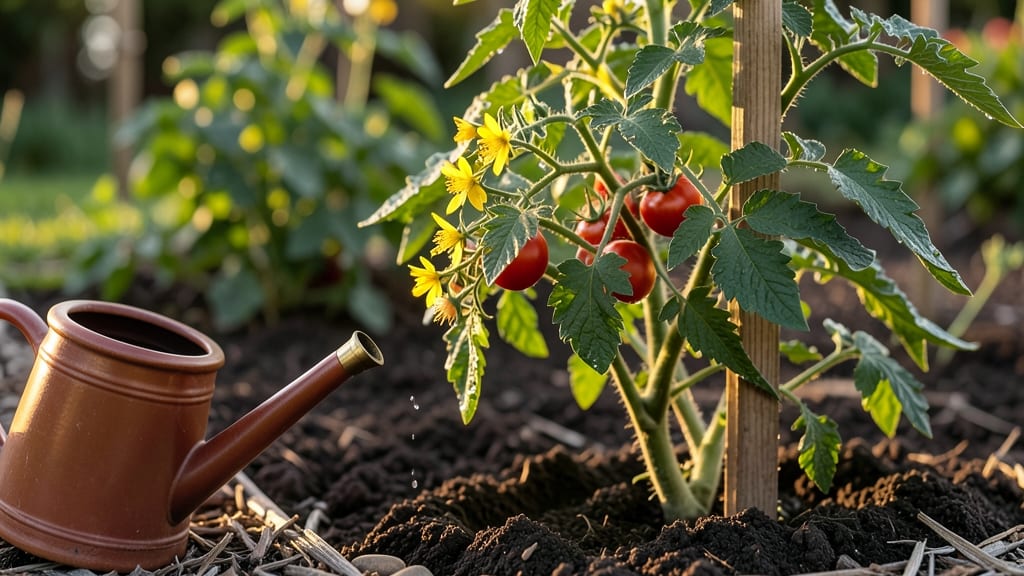
Watering tomatoes every day isn’t always the best move — in fact, it can backfire by drowning roots and inviting disease, while inconsistent moisture stresses plants and shrinks your harvest.
Here’s the truth: your 🍅 plants need deep, infrequent watering (usually 1-2 inches per week), not daily sprinkles. The key is matching their needs to their growth stage, soil type, and even the time of day you water.
Too much focus on frequency ignores the bigger picture — like how morning watering prevents fungal issues or why sandy soil drains faster than clay. Below, I break down the science-backed schedule by stage, from seedlings to fruiting, so you can water with confidence.
You’ll also learn how to spot overwatering (yellow leaves, blossom end rot) and underwatering (wilting, cracked soil), plus the best methods (drip irrigation vs. hand-watering) to keep your tomatoes thriving without the guesswork.
Tomato watering schedule by growth stage: when and how much
Watering tomatoes isn’t a one-size-fits-all task—it shifts dramatically from seedling to fruiting stage. Young plants need gentle moisture to prevent disease, while mature vines demand deep, consistent hydration to support heavy fruit loads. The key is understanding your plant’s unique needs at each phase and adjusting your routine accordingly.
I’ve grown tomatoes for over a decade, and I’ve learned that overwatering kills just as surely as underwatering—both lead to poor yields or plant death.
Your climate and soil type also play critical roles. Sandy soils dry out faster, requiring more frequent watering, while clay holds moisture longer. In hot, dry summers, tomatoes may need daily watering, but in cooler weather, every 2-3 days might suffice.
The goal is to keep the soil consistently moist but not soggy, especially around the root zone. Let’s break down the ideal watering schedule for each growth stage, so you can avoid common pitfalls and maximize your harvest.
During the seedling stage, your tomatoes are most vulnerable to disease from overhead watering. I recommend using a watering can with a narrow spout to deliver moisture directly to the soil. Aim for light, frequent watering—about ¼ inch every 2-3 days—while keeping the soil surface slightly damp.
Overwatering at this stage can cause damping-off, a fungal disease that kills young plants before they even get a chance to thrive.
When your seedlings are ready for transplanting, increase watering slightly to help them establish roots. Water every 2 days with about ½ inch per session, focusing on the root zone. Avoid wetting the leaves to prevent fungal infections like early blight.
Pro tip: Water in the early morning so foliage dries quickly, reducing disease risk. If your soil is sandy, you may need to water more often, while clay soils can hold moisture longer.
The vegetative growth stage is when your tomato plants focus on building leaves and stems. Here, aim for 1 inch of water per week, split into 2-3 watering sessions. Check soil moisture by sticking your finger 1-2 inches deep—if it feels dry, it’s time to water.
Mulching with straw or grass clippings helps retain moisture and keeps roots cool. I’ve found that drip irrigation works exceptionally well here, delivering water slowly and directly to the roots.
As your tomatoes enter the flowering stage, their water needs increase dramatically. This is when fruit begins to form, and consistent moisture becomes critical. In hot weather, you may need to water every 1-2 days, providing 1.5 inches of water per week.
Inconsistent watering here can lead to blossom drop, where flowers fall off before setting fruit. To prevent this, water deeply and evenly, avoiding wetting the flowers themselves.
The fruiting stage demands the most attention. With heavy fruit loads, your tomatoes need 2 inches of water per week, often requiring daily watering in hot climates. Deep watering encourages strong root systems and prevents cracked tomatoes, a common issue when plants experience fluctuating moisture levels.
I’ve had the best success using soaker hoses or drip lines buried slightly below the soil surface to deliver water efficiently without wetting leaves.
Signs of underwatering include wilting leaves, yellowing foliage, and fruit that’s small or misshapen. On the other hand, overwatering leads to mushy stems, yellow leaves, and a foul smell from the soil. Both extremes stress your plants and reduce yields.
The key is to adjust based on weather and soil type. For example, in summer heat, I water my tomatoes twice daily—once in the morning and once in the late afternoon—to keep up with evaporation.
Finally, always water at the base of the plant, never from above. This simple habit prevents fungal diseases and keeps your tomatoes healthy. If you’re unsure whether your plants need water, perform the finger test: Stick your finger 2 inches into the soil.
If it feels dry, it’s time to water. With this stage-specific approach, you’ll enjoy a bountiful harvest of juicy, flavorful tomatoes all season long.
Common watering mistakes that kill tomato plants (and how to fix them)
Even well-meaning gardeners can unintentionally sabotage their tomato plants with watering habits that seem harmless. I’ve seen blossom end rot from inconsistent moisture, fungal infections from wet leaves, and stunted growth from shallow watering—all from simple mistakes. The good news? These issues are completely fixable with the right adjustments.
Tomatoes need consistent moisture at the roots, not surface-level sprinkles. Many gardeners make the mistake of watering based on a rigid schedule rather than the plant’s actual needs. For example, daily watering in cool, humid climates can suffocate roots, while skipping water during heatwaves causes stress.
Let’s break down the five most common pitfalls and how to correct them.
⚠️ Should I Water Tomatoes Every Day?
No—unless you’re in extreme heat (90°F+) or growing in container pots. Daily watering in moderate climates leads to root rot and blossom end rot. Instead, aim for 1-2 inches of water per week, delivered deeply at the base. Check soil moisture by sticking your finger 2 inches down—if it’s dry, water thoroughly. Adjust for your climate: daily in summer, every 3-5 days in spring/fall.
One of the biggest culprits is watering the leaves rather than the soil. When water droplets linger on foliage, they create the perfect environment for fungal diseases like early blight and septoria leaf spot.
I’ve seen entire tomato plants collapse from these issues because gardeners used overhead sprinklers or hose-end sprayers. The fix? Use a soaker hose or drip irrigation system to deliver water directly to the roots.
Another mistake is shallow watering, which encourages roots to stay near the surface where they dry out quickly. This leads to weak root systems and small, flavorless fruits. To correct this, water deeply—until moisture reaches 6-8 inches down.
You can test this by pushing a screwdriver into the soil; if it goes in easily, you’ve watered enough. For container-grown tomatoes, ensure pots have drainage holes and water until it flows out the bottom.
Inconsistent watering is another silent killer. Tomatoes thrive on predictable moisture, so alternating between drought and overwatering stresses the plant. If your schedule varies (e.g., heavy watering one day, skipping the next), the roots can’t keep up.
Set a reminder or invest in a smart irrigation timer to maintain steady soil moisture. Mulching with straw or wood chips also helps retain moisture and regulate soil temperature.
Finally, many gardeners ignore the time of day they water. Watering at night leaves leaves damp overnight, increasing fungal risks. Instead, water in the early morning (6-9 AM) so foliage has time to dry.
If you must water in the evening, avoid getting leaves wet. For container tomatoes, water in the morning and again in the late afternoon during peak summer heat to prevent wilting.
By addressing these five mistakes—overwatering, wetting leaves, shallow watering, inconsistent schedules, and poor timing—you’ll give your tomato plants the stable conditions they need to produce healthy, flavorful fruit all season long. 🌱