
How To
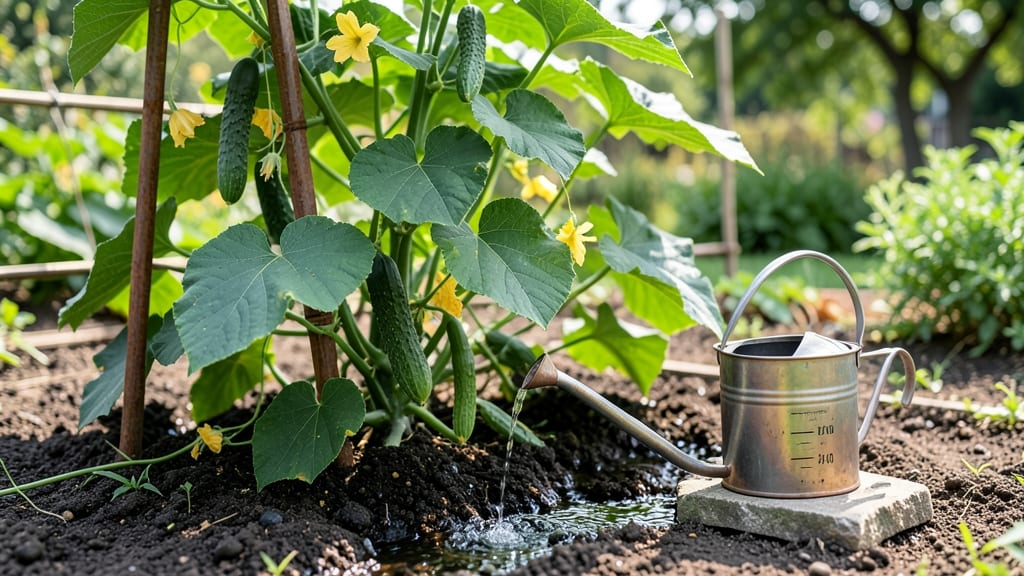
Cucumbers need at least 1 inch of water per week to stay hydrated and produce crisp, flavorful fruit 🥒 — but getting that right means more than just eyeballing your watering can.
Here’s the catch: too little water and your vines wilt, leaving you with bitter, seedy cucumbers. Overdo it, and you’ll drown the roots, inviting disease and rotting fruit. The key? Consistency—and knowing when to adjust for heat, soil, or containers.
In this guide, I’ll break down the 1-inch rule (and when to break it), how to spot underwatering vs. overwatering, and the best times to water for maximum yield. No more guesswork—just thriving cucumbers from seed to harvest.
Whether you’re growing in pots or garden beds, you’ll learn how to water like a pro, save time with smart irrigation tips, and keep your plants happy until September.
The 1-Inch watering rule: how much water cucumbers need daily
Cucumbers are thirsty plants that demand consistent moisture to produce crisp, flavorful fruits. The 1-inch watering rule is your golden metric—this means maintaining 1 inch of soil moisture at all times, about 1-1.5 gallons per plant during peak growth.
Without this, cucumbers suffer from stress cracks, bitter fruit, or even blossom-end rot. But how do you translate this rule into real-world watering? Let’s break it down.
First, understand that cucumbers have shallow root systems—most roots stay within the top 6 inches of soil. This means water must penetrate deeply but not pool at the surface. A simple test: stick your finger 1-2 inches into the soil.
If it feels dry, it’s time to water. Morning watering is ideal because it reduces evaporation and fungal risks like powdery mildew, which thrives in damp evening conditions.
Now, let’s address the biggest misconception: "More water = better cucumbers." Overwatering is just as harmful as underwatering. It leads to root rot, stunted growth, and even yellowing leaves.
The key is consistency—not flooding the soil and then letting it dry out completely. Think of cucumbers like a sponge: they need to stay moist, not soggy.
Your local climate plays a huge role in adjusting this rule. In hot, dry regions like Arizona or Texas, cucumbers may need daily watering during peak summer months, especially if grown in containers (which dry out faster).
Meanwhile, in cooler, humid climates like the Pacific Northwest, you might stretch watering to every 2-3 days. Always monitor the soil—don’t rely solely on a schedule.
Another critical factor is soil type. Sandy soil drains quickly and requires more frequent watering, while clay soil holds moisture longer. If you’re unsure about your soil, do a simple test: grab a handful and squeeze it.
If it crumbles easily, it’s sandy. If it forms a tight ball, it’s clay. Amend your soil with compost to improve water retention and drainage—this is a game-changer for cucumbers!
Watch for visual cues from your plants. Underwatered cucumbers show signs like drooping leaves, curling vines, or fruit that’s small and bitter. On the flip side, overwatered cucumbers develop yellowing leaves, mushy stems, or white fungal growth.
If you spot these, adjust your watering immediately. For example, if your cucumbers are wilting by midday, they need more water. If leaves turn yellow and feel squishy, you’re overdoing it.
Pro tip: Mulch around your cucumber plants with straw or wood chips to lock in moisture and reduce evaporation. A 2-3 inch layer of mulch can cut your watering needs by up to 30%.
Plus, it keeps soil temperatures stable and deters weeds—win-win! Pair this with a drip irrigation system for precision watering. These systems deliver water directly to the roots, minimizing waste and disease risks.
Remember, cucumbers are 95% water by weight, so their hydration needs are non-negotiable. Stick to the 1-inch rule, adjust for your conditions, and your plants will reward you with abundant, crisp cucumbers all season long.
The effort pays off—imagine pulling a cool, fresh cucumber straight from your garden on a hot summer day! 🥒
When and how to water cucumbers for maximum yield
Watering cucumbers isn't just about keeping the soil damp—it's about creating the right conditions for your plants to thrive and produce.
I've learned that timing, technique, and consistency make all the difference between a bumper crop and disappointing vines. Morning watering is my go-to because it gives the plants a full day to absorb moisture before evening evaporation.
Plus, wet leaves at night can invite fungal diseases like powdery mildew, which cucumbers are particularly prone to.
Another game-changer I discovered is mulching. A thick layer of organic mulch (like straw or shredded leaves) locks in moisture, reduces water loss, and keeps roots cool.
I apply 2-3 inches of mulch around my cucumber plants, making sure to keep it a few inches away from the stems to prevent rot. This simple step has cut my watering frequency by nearly 30% while keeping my plants healthier than ever.
- 1. Morning watering (6-8 AM) prevents evaporation and fungal risks
- 2. 1-2 inches of water per week (adjust for heat/drought)
- 3. Drip irrigation delivers water directly to roots (avoids leaf wetting)
- 4. Mulch heavily (2-3 inches) to retain moisture and suppress weeds
- 5. Water deeply—soak soil 6-8 inches down (not just surface watering)
For my drip irrigation system, I use soaker hoses placed at the base of the plants. This method delivers water slowly and directly to the roots, which is perfect for cucumbers.
I set the system to run for 30-45 minutes every morning, and it's transformed my watering routine from a daily chore into a set-it-and-forget-it solution. The best part? My cucumbers stay consistently hydrated without the risk of overwatering or fungal issues.
One common mistake I see (and made myself!) is watering at night. While it might seem logical to water when it's cooler, wet foliage overnight creates the perfect environment for diseases. Instead, I water early in the day so the leaves have plenty of time to dry.
If you must water in the evening, avoid getting the leaves wet—focus on the soil around the base of the plant.
Don't forget that container-grown cucumbers need more frequent watering than in-ground plants. Their roots have less access to moisture, so I water my potted cucumbers every 1-2 days, often twice daily in extreme heat.
A good rule of thumb is to check the soil moisture with your finger—if the top 1-2 inches are dry, it's time to water. For in-ground plants, you can stretch this to every 2-3 days, depending on your climate.
Finally, always water at the base of the plant, not from above. This prevents soil splashing onto leaves, which can spread diseases. If you're hand-watering, use a watering wand or hose with a gentle spray nozzle to direct water exactly where it's needed.
With these techniques, my cucumber plants stay happy, healthy, and produce like crazy all season long!