
Watering
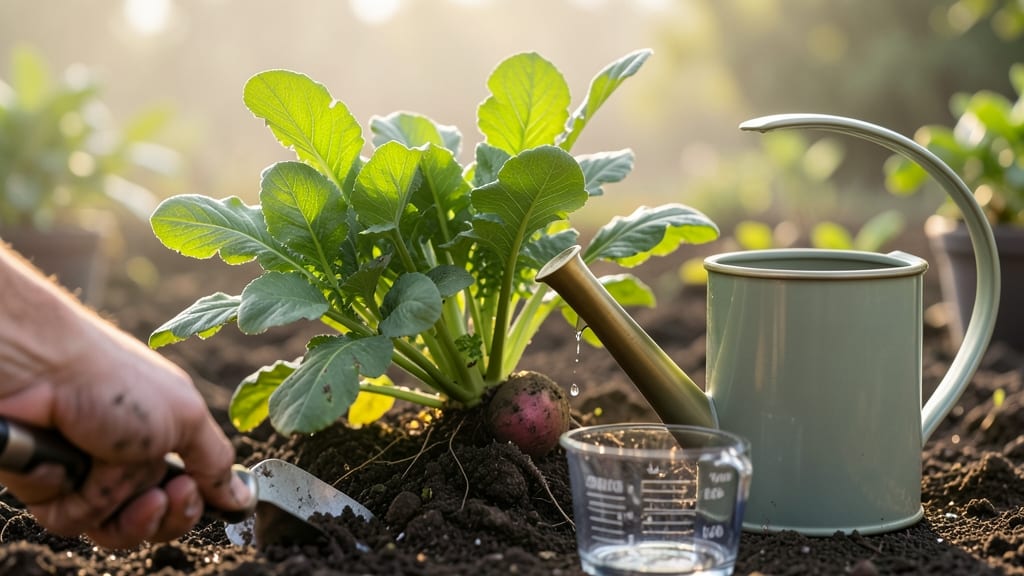
Radishes need about half an inch of water per week to stay crisp and sweet 🥕, but timing matters more than you’d think.
Skip a watering, and they’ll bolt or turn pithy. Overdo it, and you’ll end up with cracked roots. The key is keeping the soil evenly moist—not soggy, not dry—through every growth stage, from seedling to harvest.
Here’s the exact schedule you need: daily checks in hot weather, a simple finger test for soil moisture, and how to adjust for containers or clay-heavy soil. No guesswork, just consistent results.
By the end, you’ll know when to water, how much to give, and what to watch for so your radishes stay tender and ready to harvest in just three weeks.
Radish watering schedule by growth stage: daily vs weekly needs
Radishes thrive on consistent moisture, but their water needs change dramatically from seedling to harvest. Too little water causes cracked radishes or woody textures, while overwatering leads to rot. The key is predictable moisture—never letting the soil dry out completely but avoiding soggy conditions.
I’ve grown radishes in containers, raised beds, and garden plots, and this schedule ensures crisp, tender harvests every time.
Your radishes pass through three critical growth stages—germination, leafy growth, and bulb development—each requiring a slightly different approach. Soil moisture tests are your best tool: stick your finger 1 inch deep; if it feels dry, it’s time to water.
For container-grown radishes, check daily since they dry out faster than in-ground plants. Let’s break down the exact schedule stage by stage.
| Growth Stage | Water Frequency | Amount per Watering | Soil Moisture Goal | Key Signs |
|---|---|---|---|---|
| Germination (Days 1-7) | Daily (light misting) | ¼ inch (60ml) | Always damp, never soggy | Seeds sprout in 3-7 days; dry soil = failed germination |
| Leafy Growth (Days 8-20) | Every 2-3 days | ½ inch (1250ml) | Top 1 inch moist | Yellowing leaves = underwatering; wilting = overwatering |
| Bulb Development (Days 21-30) | Every 3-4 days | ½-¾ inch (1250-1875ml) | Consistently moist | Cracked radishes = uneven watering; pithy = drought stress |
| Harvest Ready | Reduce to every 4-5 days | ¼ inch (60ml) | Lightly moist | Pull when 1-2 inches wide for best flavor |
The germination phase is the most delicate—radish seeds need constant dampness to sprout. I use a spray bottle to mist seeds daily until they crack open (usually 3-7 days). Overwatering here causes rot, while underwatering means no sprouts.
Once seedlings emerge, switch to gentle watering at soil level to avoid disturbing tiny roots. A fine-mist setting on your hose works perfectly for this stage.
During the leafy growth phase (days 8-20), radishes need more frequent watering as their roots expand. Aim for ½ inch of water every 2-3 days, but adjust based on your climate. In hot, dry conditions, water daily in the early morning to prevent evaporation.
I test soil moisture by pressing my finger 1 inch deep—if it’s dry, water immediately. Yellowing leaves signal underwatering, while wilting or mushy stems mean you’re overdoing it.
When radishes enter bulb development (days 21-30), they need deep, consistent watering to prevent cracking. Water every 3-4 days with ½-¾ inch per session, focusing on the root zone. Uneven moisture causes cracks or hollow centers, ruining the crunch.
For container gardens, I water twice daily in extreme heat—once in the morning and once in the late afternoon—to maintain steady moisture.
Overwatering signs include yellowing leaves, mold on soil, or soft radishes. If you see these, reduce frequency and improve drainage. Underwatering shows as wrinkled leaves, stunted growth, or woody textures. The fix? Water deeply at the first sign of stress. I’ve learned the hard way—radishes forgive occasional dry spells but never recover from waterlogged soil. Always use well-draining soil mixed with compost or perlite to prevent rot.
For container-grown radishes, watering needs change dramatically. Small pots dry out 2-3x faster than garden beds, so check soil moisture daily. I use self-watering containers with drainage holes to maintain steady moisture.
In garden beds, mulch with straw or shredded leaves to retain moisture and reduce evaporation. This simple step cuts my watering time in half during hot summers.
As your radishes near harvest (25-30 days), reduce watering slightly to every 4-5 days. Overwatering at this stage can dilute flavor and cause pithy interiors. Pull radishes when they reach 1-2 inches in diameter—any larger, and they’ll turn bitter.
I harvest in the morning after watering for the crispest texture. Store unwashed radishes in the fridge for up to 2 weeks to preserve freshness.
Pro tip: Group radishes by maturity when planting. Fast varieties like Cherry Belle (25 days) need more frequent watering than Black Spanish (60 days). Adjust your schedule based on the days-to-maturity label on your seed packet. With this precise approach, you’ll avoid the
How to adjust watering for radishes in different climates and containers
Radishes thrive in consistent moisture, but their water needs shift dramatically between hot, dry climates and cool, moist regions. In my Zone 6a garden, I’ve learned that radishes in containers dry out 3x faster than those in garden beds—especially when temperatures climb above 85°F.
The key is adapting your watering routine to match your local weather and growing setup.
For container-grown radishes, I prioritize daily checks during summer heat. Smaller pots hold less moisture, so I water every 1-2 days in full sun, using 1/2 inch of water per session.
In contrast, radishes in loose, well-draining garden soil can stretch their watering to every 3-4 days in cooler weather. The secret? Mulching with straw or shredded leaves to lock in moisture.
Here’s where most gardeners go wrong: they assume one-size-fits-all watering works for radishes. In arid climates, I water early morning and late evening to reduce evaporation, while in humid regions, I cut back to every 4-5 days to prevent fungal issues like black rot.
Containers need extra attention—overwatering causes root rot, and underwatering leads to pithy, tough radishes.
⚠️ Radish Watering Red Flags
Overwatering signs: Yellowing leaves, mushy roots, or fungal growth on soil surface. Fix: Let soil dry slightly between waterings; improve drainage with perlite.
Underwatering signs: Wilting tops, cracked roots, or radishes that taste bland. Fix: Water deeply at soil level (not leaves) and mulch immediately.
Climate tip: In desert zones, use drip irrigation to deliver water slowly. In rainy climates, raise containers to prevent waterlogging.
In containers, I’ve found that self-watering pots with 10-inch depth work best—they mimic garden soil’s moisture retention. For 5-gallon buckets, I drill drainage holes and add coco coir to retain moisture without suffocating roots.
Pro tip: Use a moisture meter to check soil—radishes prefer 60-70% moisture but hate soggy conditions.
Adjusting for seasonal shifts is critical. During spring, I water every 2-3 days as radishes germinate, then reduce slightly in fall when growth slows. In summer’s peak heat, I switch to light, frequent watering (like a fine mist in the morning) to keep roots cool.
For winter harvests, I cut back to bi-weekly watering unless snow covers the soil.
Watch for early warning signs of water stress: leaf curl or purple streaks mean your radishes are thirsty, while soft stems signal overwatering. In containers, I also check the weight—a dry pot feels light, while a saturated one feels heavy.
By tailoring watering to your climate and containers, you’ll avoid woody textures and bitter flavors for perfectly crisp radishes every time.