
How To
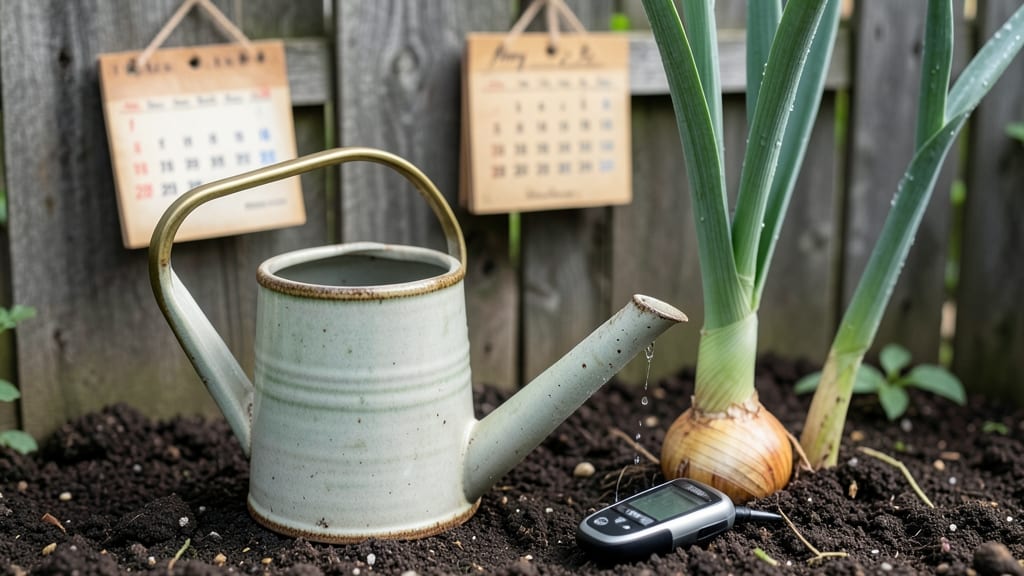
To water onions properly, you need to match their growth stage with the right frequency—too much or too little water ruins those plump, sweet bulbs you’re craving.
Picture this: you’ve planted your 🧅 in March, eager for a summer harvest, but by June, your onions are bitter or splitting. The culprit? Watering gone wrong. Whether you’re growing green onions or storage varieties, the timing makes all the difference.
Here’s the game-changer: seedlings need frequent, shallow watering, while mature bulbs prefer deep soaks every 5-7 days in dry spells. Container onions dry out faster, while in-ground plants hold moisture longer.
I’ll break down the exact schedule by stage, plus how to tell if your soil is too wet or too dry.
By the end, you’ll know when to water for perfect harvests—no guesswork, just science-backed tips that work for Zone 6a gardens and beyond.
Onion watering schedule by bulb size: exact timing for each stage
Watering onions isn't a one-size-fits-all task—it changes dramatically based on whether you're growing green onions, immature bulbs, or mature storage onions. Each stage demands a different hydration approach to prevent bolting or splitting while maximizing flavor and size.
Let's break down the exact schedule tailored to your onion's growth phase and bulb size.
For green onions (scallions), the watering game is simpler: keep the soil consistently moist but not soggy. These fast growers need frequent hydration—about every 2-3 days—because their shallow roots can't reach deep moisture.
Overwatering here leads to mushy necks, while underwatering causes bitter, tough stalks. Aim for 1/2 inch of water per week, adjusting for rainfall.
Now, let's dive into the comparison table below to visualize the precise watering schedules for each onion type, including seasonal adjustments and soil moisture tests:
When your onions reach the immature bulb stage (about 4-8 weeks after planting), they need slightly less frequent watering but deeper soaks. Aim for every 3-4 days, providing 3/4 inch of water per week.
This is when you'll see the bulb start to form—consistent moisture prevents hollow centers and encourages plump growth. Test soil moisture by sticking your finger 2 inches deep; if it's dry, it's time to water.
For mature storage onions (those left in the ground to cure), reduce watering to every 5-7 days and give them 1 inch of water per week. This stage is critical for preventing splitting and bolting. The goal is to slow down growth slightly so the bulbs can mature properly.
In hot, dry climates, you might stretch this to every 7-10 days, but always check the top 3 inches of soil first.
Seasonal adjustments are key—summer heat demands more frequent watering, while winter slows everything down. In drought conditions, deep watering every 5-7 days is better than shallow daily doses.
Always water in the early morning to reduce fungal risks. If your onions start to bolt (send up flower stalks), they're likely underwatered or stressed from inconsistent moisture.
Container-grown onions dry out faster, so check their soil daily during hot weeks. Use pots with drainage holes and consider adding organic mulch (like straw) to retain moisture.
If you notice the leaves turning yellow or limp, it's a sign of overwatering—let the soil dry out slightly before watering again. For storage onions, the final 2-3 weeks before harvest should see reduced watering to toughen the skins.
Pro tip: Use a moisture meter for accuracy, especially if you're new to onion care. These tools take the guesswork out of soil moisture tests. Remember, onions are forgiving plants, but consistency in watering is what turns good harvests into great ones.
With this schedule, you'll grow onions that are plump, flavorful, and perfect for storage.
5 Critical signs your onions need (or don’t need) water right now
Onions are surprisingly sensitive to water—too much or too little can ruin your harvest. The key is reading your plants' signals. Wilted leaves or dry soil crust are obvious clues, but subtle signs like yellowing tips or exposed roots also demand attention.
Ignoring these warnings often leads to hollow bulbs or bitter flavors, so let’s decode what your onions are really telling you.
Start by checking the soil moisture around your onions. Stick your finger 1-2 inches deep—if it feels dry, it’s time to water.
But if the soil stays clumpy or water pools on top, you’re overdoing it. Onions hate soggy roots, which can cause rot or fungal diseases like downy mildew. The goal is consistent moisture, not a swampy mess.
💧 How Often to Water Onions: Quick Guide
- Seedlings: Water every 2-3 days to keep soil damp but not soaked.
- Immature bulbs: Increase to 1 inch per week (adjust for rain).
- Mature bulbs: Reduce to every 5-7 days to harden skins for storage.
- Containers: Water daily in summer—pots dry out faster.
- In-ground: Water deeply 2x/week in dry climates.
🌱 Pro Tip: Always water at soil level, not the leaves, to prevent disease.
Watch for yellowing leaves, which often signal overwatering or nutrient deficiency. If the yellow starts at the leaf tips and moves inward, your onions are thirsty.
But if the entire leaf turns yellow and wilts, you’ve likely drowned the roots. Hollow bulbs are another red flag—this happens when onions get too much water late in the season, causing them to split or rot inside.
Exposed roots are a clear SOS from your onions. If you see white roots poking above soil, it’s time to add mulch or water more frequently. Mulch with straw helps retain moisture while keeping roots cool.
Avoid letting the soil crust over—this blocks water and oxygen, stunting growth. A light fluffing of the soil surface can make a big difference for young plants.
Common mistakes like watering at night or using overhead sprinklers can turn your garden into a disease hotspot. Always water early in the morning so foliage dries quickly.
And resist the urge to water just because it’s been a few days—check the soil first! Drought-stressed onions will bolt (send up flowers) instead of forming bulbs, wasting your efforts.
Create a simple troubleshooting checklist for your onion patch: Wilting leaves? Water deeply. Yellowing? Check for overwatering or pests. Soft bulbs? Reduce water immediately. By tuning into these signs, you’ll grow plump, sweet onions instead of sad, shriveled ones. Your future meals will thank you!