
Watering
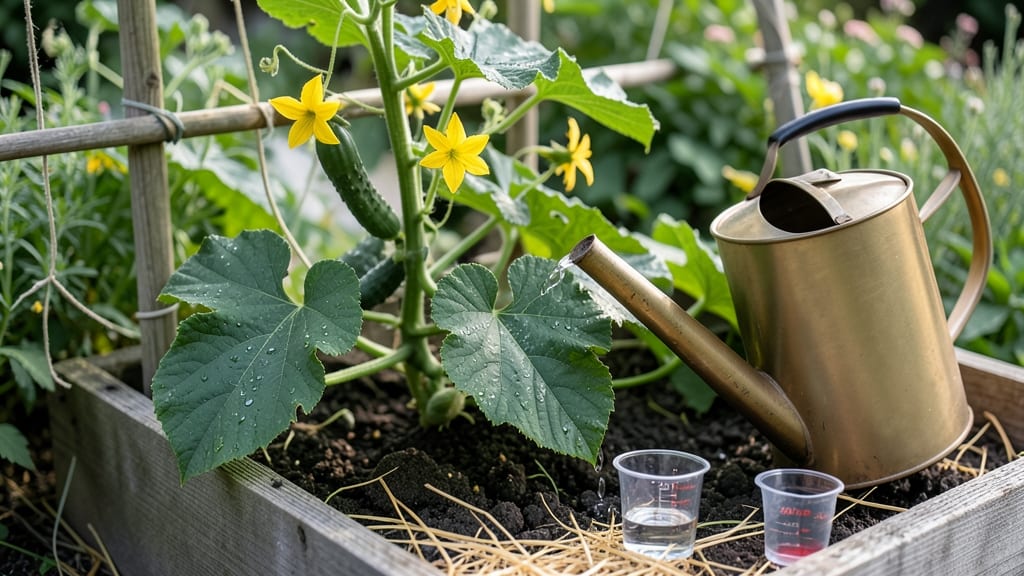
A cucumber plant needs how much water does a cucumber plant need per day—about 1-2 inches weekly—to thrive, but daily checks are the secret to avoiding both drought stress and root rot.
Picture this: your 🥒 vines are wilting by noon, or worse, the soil stays soggy and mold creeps in. Most gardeners swing between these extremes because they don’t account for heat, soil type, or growth stage.
The truth? Cucumbers are finicky about moisture—they need deep, consistent watering, not just a quick splash.
Here’s the game-changer: morning watering reduces evaporation, while mulch locks in moisture so you’re not stuck checking every hour. But even with these tricks, you’ll still spot the signs—yellowing leaves mean too much, crispy edges mean not enough.
I’ll walk you through the exact adjustments for your zone, soil, and weather.
By the end, you’ll know not just how much to water, but when to adjust, and how to fix common mistakes before they wreck your harvest. Let’s get those cucumbers growing strong.
Daily water requirements for cucumber plants: 1-2 inches weekly breakdown
Cucumber plants are thirsty vines that demand consistent moisture to thrive. Unlike drought-tolerant veggies, cucumbers wilt quickly when underwatered and suffer from root rot when overwatered. The golden rule? Aim for 1-2 inches of water weekly, delivered strategically to maximize root health and fruit production.
This weekly guideline translates to about ¼ to ½ inch daily in most climates, but your actual needs depend on soil type, temperature, and growth stage. For example, sandy soil drains faster than clay, so you’ll need to water more frequently in the former.
Meanwhile, hot summer days can double evaporation rates, requiring deeper watering sessions.
To avoid guesswork, I measure water depth using a simple clear plastic ruler or rain gauge placed near your plants. A 1-inch measurement equals roughly 2500 ml of water per square foot of garden bed.
For container-grown cucumbers, expect to water every 1-2 days since pots dry out faster than in-ground soil.
| Growth Stage | Daily Water Needs | Weekly Total | Key Notes |
|---|---|---|---|
| Seedling (0-2 weeks) | ¼ inch (6 mm) | ½ inch (1.3 cm) | Keep soil moist but not soggy to prevent damping-off. |
| Vegetative (2-6 weeks) | ½ inch (1.3 cm) | 1-1.5 inches (2.5-3.8 cm) | Focus on root zone—water at base, not leaves. |
| Fruiting (6+ weeks) | ¾ inch (1.9 cm) | 1.5-2 inches (3.8-5 cm) | Critical for cucumber development; avoid wetting foliage. |
| Hot/Dry Climate | 1 inch (2.5 cm) | 2-3 inches (5-7.6 cm) | Water early morning to reduce evaporation. |
| Cool/Humid Climate | ¼ inch (6 mm) | ½-1 inch (1.3-2.5 cm) | Monitor for fungal risks—avoid overhead watering. |
Morning watering is non-negotiable for cucumbers. Why? Because evening watering leaves foliage damp overnight, creating the perfect conditions for powdery mildew and bacterial diseases. I set a timer for 6-8 AM to ensure my plants get a deep drink before the sun peaks.
For container cucumbers, check soil moisture daily by sticking your finger 1 inch deep—if it’s dry, water thoroughly until it runs out the drainage holes.
Mulching with straw or wood chips can cut your watering needs by 30-50% by locking in moisture and reducing evaporation. I apply a 3-inch layer around my cucumber plants within a week of transplanting. This simple trick also suppresses weeds and keeps soil temperatures cooler during heatwaves.
Watch for wilting leaves by midday—a classic sign your cucumbers need water. However, don’t confuse heat stress (leaves droop but bounce back in evening) with true thirst.
For a quick test, gently tug on a leaf: if it snaps easily, you’re underwatering; if it resists, your plant is fine. Overwatering, meanwhile, shows as yellowing lower leaves or mushy stems.
Drip irrigation is my top recommendation for cucumbers because it delivers water directly to roots while avoiding fungal splashes. If you’re using a hose, opt for a soaker hose placed at the base of plants.
Never water from above, especially during hot afternoons, as this can scorch delicate leaves and attract pests like aphids.
Adjust your watering schedule monthly based on weather patterns. In July and August, I water my cucumbers daily with 1-1.5 inches of water, while in May or September, I reduce to every other day.
Always prioritize deep watering over frequent light showers—this encourages roots to grow deeper for better stability and nutrient uptake.
Signs your cucumber plants are overwatered vs. underwatered (with fixes)
Your cucumber plants might look healthy at first glance, but water stress often hides in subtle clues. Overwatering and underwatering both cause problems—yellow leaves, wilting, or even mold—but the fixes couldn’t be more different. The key? Learning to read your plants’ signals before damage sets in.
For example, yellowing leaves on older growth? That’s often a sign of too much water, while crispy edges on younger leaves scream thirst. I’ve seen gardeners waste weeks guessing which issue they’re dealing with, so let’s cut to the chase with clear, actionable signs and solutions.
🚨 PRO TIP: Stick your finger 1-2 inches into the soil—if it’s damp, hold off on watering. If it’s dry, it’s time to hydrate. This simple trick saves cucumbers from both extremes.
How Much Water Does a Cucumber Plant Need Per Day?
Overwatered cucumbers often show mushy stems or gray mold on leaves—this is root rot in action. The soil smells sour, and leaves turn yellow but stay crisp. To fix it, let the soil dry out completely between waterings, and improve drainage by adding perlite or sand to heavy clay soil.
On the flip side, underwatered plants wilt by midday, even when water is nearby. Their leaves curl at the edges, and the soil pulls away from the pot. The solution? Water deeply in the morning, and use drip irrigation to deliver moisture straight to the roots.
A quick check: if the soil is bone-dry 1 inch down, your cucumbers are thirsty.
Blossom-end rot—those black, sunken spots on fruit—is a classic underwatering red flag. It’s also linked to calcium deficiency, so pair your watering fixes with a calcium-rich fertilizer like crushed eggshells or lime. I’ve seen this issue disappear within a week of adjusting water and adding a side dressing of compost.
Remember, cucumbers are 90% water, so consistency is everything. If you’re still unsure, grab a moisture meter—it’s a game-changer for avoiding guesswork. Your plants will thank you with bushier vines and sweeter cucumbers by harvest time. 🌱