
Watering
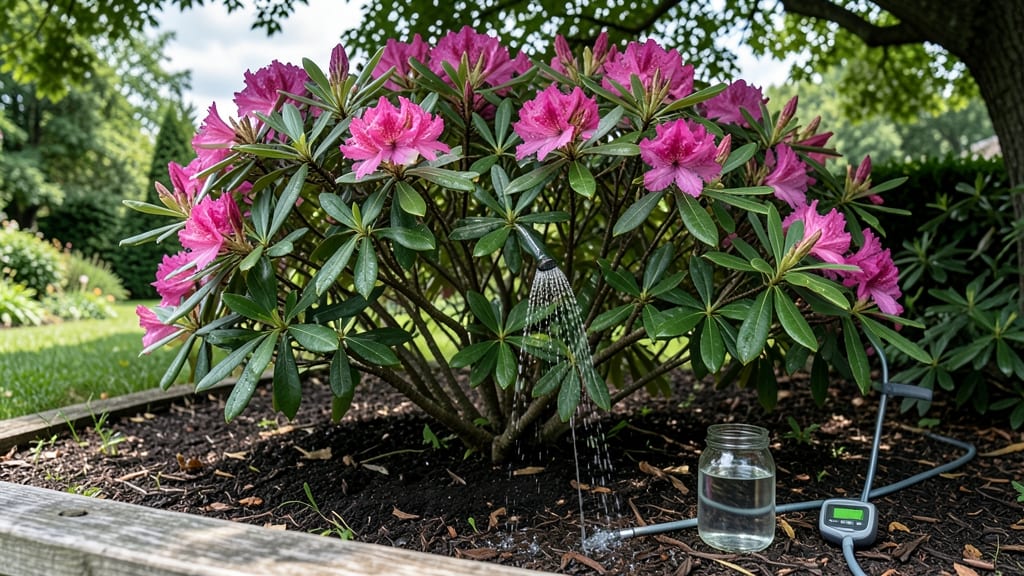
Rhododendrons need 1 to 1.5 gallons of water per plant weekly to thrive, but getting that right is trickier than you think—especially when the blooms depend on it.
Struggling to keep your rhododendrons blooming year after year? The secret often lies in mastering their watering needs—too much or too little can mean the difference between vibrant flowers and wilting disappointment.
These acid-loving shrubs 🌸 prefer consistently moist soil but hate soggy roots, which is why morning watering is key—it reduces evaporation and fungal risks before the heat of the day.
Below, I’ll break down the seasonal watering schedule, how to spot over- or under-watering, and pro tips to keep your rhododendrons happy without wasting a drop.
Optimal watering schedule for rhododendrons by season
Mastering your rhododendron watering schedule is essential for those stunning spring blooms and lush foliage. These acid-loving shrubs thrive on consistent moisture but despise soggy roots.
Your climate zone and soil type will dictate exact needs, but understanding seasonal shifts helps prevent common mistakes like leaf scorch or root rot. Let's break down how to adjust your watering routine month by month.
In spring, your rhododendrons need regular watering to support new growth and flower buds. Summer brings intense heat that increases evaporation, requiring deeper, less frequent watering.
Fall transitions gently, while winter calls for minimal watering to protect dormant roots. Mulching with organic material like pine bark helps retain moisture and regulate soil temperature year-round.
Here's a quick comparison of how much water rhododendrons need based on their life stage and seasonal demands:
For container-grown rhododendrons, watering needs shift dramatically. Potted plants dry out 3x faster than in-ground shrubs, so check soil moisture every 5-7 days in summer. Use a moisture meter to avoid guesswork—insert it 2 inches deep in the soil.
If it reads dry, water thoroughly until water runs from the drainage holes.
Your local climate zone plays a crucial role. In USDA Zone 7 or warmer, summer watering may require drip irrigation for consistency. Cooler zones like Zone 5 can reduce summer watering slightly since evaporation is slower.
Always water early morning to prevent fungal diseases like powdery mildew, which thrives in damp foliage.
Pay attention to your soil type—sandy soils drain quickly and need more frequent watering, while clay soils retain moisture longer. Amend heavy clay with organic matter like compost or peat moss to improve drainage.
A simple test: Grab a handful of moist soil—if it crumbles easily, it's well-draining; if it forms a tight ball, it's too compacted.
Newly planted rhododendrons demand extra care during their first two growing seasons. Water deeply every 3-4 days until established, then gradually taper off. Mulch heavily (3-4 inches) with pine bark or wood chips to lock in moisture and protect roots from temperature swings.
Avoid mulching too close to the stem—keep it 2-3 inches away to prevent rot.
Watch for signs your rhododendrons are thirsty: Wilting leaves, dull foliage, or curling leaf edges all signal underwatering. Overwatering shows as yellowing leaves, mushy stems, or root rot. Adjust your schedule based on these cues—rhododendrons prefer consistency over occasional deep soakings.
In drought-prone areas, consider installing a soaker hose near the root zone. Set it to run for 1-2 hours every 10 days during summer to simulate natural rainfall.
Grouping rhododendrons together also creates a microclimate that retains moisture better than isolated plants. Just ensure they're spaced 3-5 feet apart for airflow.
Remember, rainwater is ideal for rhododendrons because it's naturally acidic. Collect rainwater in barrels and use it during dry spells. If using tap water, let it sit 24 hours to off-g
Signs of overwatering vs underwatering in rhododendrons
Rhododendrons thrive with consistent moisture, but their delicate roots suffer from extremes. Yellowing leaves or stunted growth often signal watering problems. The key lies in observing leaf color, soil texture, and growth patterns—each tells a different story about your plant's hydration health.
Overwatering is the stealthy villain that chokes roots by starving them of oxygen. Look for yellowing leaves that stay soft to the touch, or mushy stems near the soil line.
These signs scream "drowning roots!"—a common mistake when well-meaning gardeners assume more water equals happier plants. Fungal growth on the soil surface is another red flag.
Underwatering, meanwhile, reveals itself through crispy leaf edges and drooping foliage that doesn't bounce back after watering. The soil pulls away from the pot edges, and leaves may curl inward like taco shells. These plants are begging for hydration but often get ignored until it's too late.
How Much Water Do Rhododendrons Need?
- Vibrant flower blooms year after year
- Healthy root development for stability
- Reduced risk of pests and diseases
- Consistent leaf color (dark green)
- Overwatering causes root rot
- Underwatering leads to leaf scorch
- Both extremes stress plants and reduce blooms
- Poor watering = weakened immunity to pests
- Morning watering (before 10 AM)
- 1-1.5 gallons per plant (deep soak)
- Weekly in summer, bi-weekly in spring/fall
- Minimal watering in winter (monthly)
To fix overwatered rhododendrons, start by letting the soil dry slightly between waterings. Improve drainage by amending the soil with organic matter like peat moss or compost.
For severely affected plants, trim back mushy roots and repot with fresh, well-draining mix. Avoid watering until the top 2 inches of soil feel dry.
Reviving underwatered rhododendrons requires a gentler approach. Water deeply until it runs out the drainage holes, then reduce frequency to prevent shock. Apply mulch around the base to retain moisture, and move potted plants to a shadier spot to reduce water loss.
Monitor soil moisture with your finger—it should feel damp but not soggy.
Remember, rhododendrons prefer their soil consistently moist but never waterlogged. The secret to success? Observe your plant regularly and adjust your watering routine based on what you see. With the right balance, your rhododendrons will reward you with show-stopping blooms for years to come. 🌸