
How To
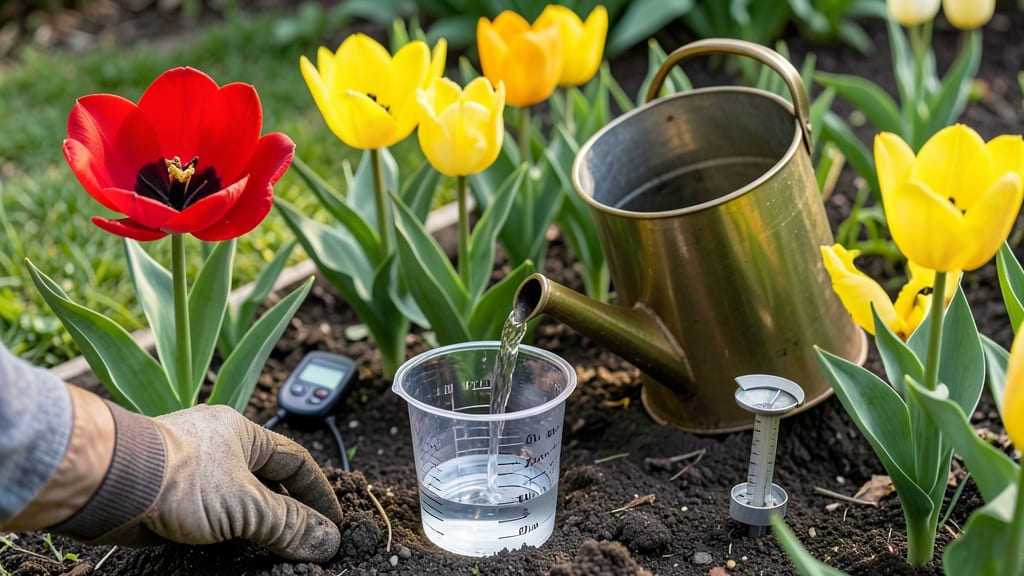
How much water do tulips need to thrive? The answer is simple: give them just enough to keep their roots happy without drowning them—about 1 to 2 cups per bulb each week, depending on the season.
Struggling to keep your 🌷 vibrant without drowning their roots? The right watering routine can mean the difference between stunning blooms and sad, wilted stems—here’s your science-backed guide.
Too little water and your tulips wilt; too much and you risk rot. In Zone 6a, where many gardeners grow tulips, the key is adjusting for spring’s steady rain and summer’s dry spells.
Below, I break down exactly how much water tulips need at each stage—from planting in fall to flowering in spring—and how to spot the signs of over- or under-watering before it’s too late.
Tulip watering schedule by growth stage: bulbs to blooms
Tulips thrive on a precise watering schedule that changes with each growth stage. Overwatering can rot bulbs, while underwatering stunts blooms—both are easy to avoid with the right approach. The key is consistent soil moisture without soggy conditions, especially during critical phases like bulb planting and flowering.
Your climate zone plays a huge role: arid regions need deeper, less frequent watering, while humid areas require lighter, more frequent touches. Even the soil type matters—sandy soil drains fast, while clay soil holds moisture longer.
Let’s break down exactly how much water tulips need at every stage, from dormant bulbs to vibrant blooms.
When planting tulip bulbs in fall (September-November), the goal is to establish roots before winter. Water lightly every 2-3 weeks—just enough to keep the soil 1 inch deep moist.
In arid climates, a single deep watering at planting may suffice, while humid zones might need none unless the soil feels dry. The bulbs will store moisture for spring growth.
During dormancy (winter), tulips need almost no water. Only water monthly if there’s no snow cover, and always check that the soil isn’t soggy. Overwatering in winter is the #1 killer of tulip bulbs—it causes rot before they even sprout.
In snowy regions, snow acts as natural insulation and moisture, so skip watering entirely unless the ground is exposed and dry.
As soon as you see green shoots in early spring, it’s time to ramp up watering. Aim for 1 inch of water per week, delivered consistently. Use a moisture meter or the "squeeze test"—grab a handful of soil; if it crumbles when dry, it’s time to water.
In humid climates, reduce to every 10 days to avoid fungal diseases like gray mold, which thrives in damp conditions.
The flowering stage (April-May) is when tulips demand the most attention. Increase watering to 1.5 inches per week, splitting it into two sessions: once mid-morning and once mid-afternoon.
This mimics natural rainfall and prevents stress. Mulch with 2-3 inches of straw or shredded leaves to lock in moisture and keep roots cool. In arid zones, water deeply every 5 days, while humid areas may only need watering every 7-10 days.
After blooms fade, tulips enter their post-bloom phase, where they focus on replenishing their bulbs for next year. Reduce water
Signs of overwatering vs. underwatering tulips (with fixes)
Tulips are surprisingly resilient, but their bulbs and roots can suffer silently when watered incorrectly. Overwatering and underwatering both trigger stress signals—learn to spot them early to save your blooms. The key lies in soil texture and moisture balance, especially in clay-heavy or sandy soils.
For clay soil, water penetrates slowly, increasing root rot risks, while sandy soil drains too fast, leaving bulbs thirsty. Both extremes stunt growth and yellow leaves. Let’s decode the warning signs so you can adjust your watering routine before it’s too late.
Overwatering vs. Underwatering Tulips
Overwatering
- 💧 Mushy bulbs when dug up
- 🌿 Yellow leaves with brown edges
- ⚠️ Foul odor near soil surface
- 🍄 Fungal growth on stems
Fix:
- ✅ Reduce frequency to every 10-14 days
- ✅ Improve drainage with perlite or compost
- ✅ Avoid evening watering to prevent fungal spread
Underwatering
- 🌱 Wrinkled leaves that feel dry
- 🌿 Slow growth or stunted stems
- 🔴 Dry, crispy edges on foliage
- 💧 Soil pulls away from pot edges
Fix:
- ✅ Water deeply 1-2 times per week
- ✅ Mulch heavily to retain moisture
- ✅ Use soaker hoses for even distribution
If your tulips show yellowing leaves but no mushy bulbs, you’re likely dealing with overwatering. Dig up one bulb to check: if it smells rotten or feels squishy, cut back immediately.
For underwatered tulips, focus on deep watering—aim for 1-2 cups per bulb until water drains through the soil.
Adjust your routine based on soil type: Clay soil needs more frequent but lighter watering, while sandy soil benefits from deeper, less frequent sessions. Always water at morning to let foliage dry before nightfall, reducing fungal risks.
Pro tip: Use a moisture meter to track soil conditions. Aim for 60% moisture in the top 6 inches—any higher risks rot, and lower means thirsty bulbs. With these fixes, your tulips will bounce back with vibrant blooms next season.
Remember, tulips store energy in their bulbs, not leaves. If leaves yellow after blooming, resist the urge to trim—they’re feeding next year’s flowers. Balance is everything!