
Watering
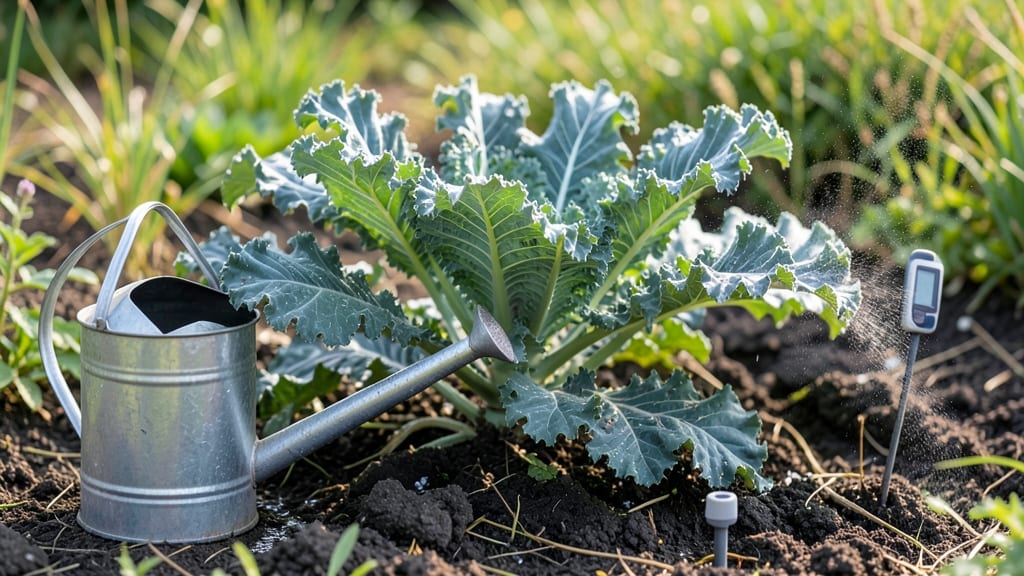
Kale needs about 1 to 1.5 inches of water per week to thrive, but getting it right makes all the difference between crisp, restaurant-worthy leaves and sad, wilted greens.
Struggling to keep your 🥬 healthy? Overwatering or underwatering can turn your hard work into a soggy mess or brittle disappointment. The key is consistency—too much water stresses roots, while too little sends your plant into survival mode, stunting growth.
Young seedlings need frequent, shallow watering to keep soil moist but not soggy, while mature plants can handle deeper soaks every few days. Climate plays a role too: hot summers demand more water, while cooler fall days let you ease up.
Below, I break down the exact weekly schedule, how to read your soil and leaves for clues, and how to adjust for rain, heatwaves, or your local Zone 6a conditions—so you can harvest lush, flavorful kale all season long.
Kale watering requirements by growth stage: seedlings vs mature plants
Growing crisp, vibrant kale starts with understanding its watering needs at every stage. Kale is a cool-season crop that thrives with consistent moisture, but its requirements change dramatically from seedlings to mature plants.
Too much or too little water can cause yellowing leaves, bolting, or stunted growth—so let’s break it down by phase.
For seedlings and young plants, the stakes are highest. Their shallow roots can’t access deep moisture, making them vulnerable to drought stress or root rot. Meanwhile, mature kale plants develop deeper roots and become more drought-tolerant—but they still need regular hydration to stay crisp and flavorful.
Let’s dive into the exact watering schedule for each stage.
🌱
During the seedling stage (0-2 weeks), kale needs daily or every-other-day watering to prevent wilting. Use a spray bottle or fine mist to avoid disturbing delicate soil. Let the top ¼ inch dry between waterings—this prevents fungal diseases while keeping roots hydrated.
As kale transitions to young plants (2-6 weeks), increase watering depth to ½ inch every 2-3 days. This encourages deeper root growth and prevents shallow root syndrome. Test soil moisture by sticking your finger 1 inch deep—if it feels dry, it’s time to water.
Once kale reaches maturity (6+ weeks), its deep roots allow it to store more water. Here, 1-1.5 inches of water every 3-5 days is ideal. Water deeply to encourage root expansion and maintain crisp leaves. Avoid shallow puddling, which can cause bolting (flowering prematurely).
For harvest-stage kale, consistency is key. Water 1 inch every 4-7 days to keep leaves plump and tender. Harvest outer leaves first to avoid stressing the plant—this preserves moisture retention in remaining foliage. Mulch with straw or shredded leaves to lock in humidity.
💧
One of the biggest mistakes gardeners make is watering kale at night. This traps moisture on leaves, creating ideal conditions for downy mildew. Always water in the early morning (6-9 AM) so foliage dries quickly.
If you’re in a hot, dry climate, consider drip irrigation to deliver water directly to roots without wetting leaves.
Finally, adjust your watering based on seasonal changes. In summer heat, kale may need watering every 2-3 days, while winter dormancy reduces needs to every 7-10 days. Monitor soil moisture closely—kale hates soggy roots but also suffers from drought stress.
The 7-Day kale watering schedule: when, how much, and how to tell if you’re overdoing it
Kale thrives on consistent moisture but despises soggy soil—finding that sweet spot is key to crisp, flavorful leaves. As a cool-season crop, it needs 1-1.5 inches of water per week, but your exact schedule depends on soil type, climate, and plant age.
Too much water causes yellowing leaves, while too little leads to bitter, tough greens. Let’s break down the perfect weekly rhythm to keep your kale happy without drowning its roots.
Start by checking your soil moisture before watering—stick your finger 1-2 inches deep. If it feels dry, it’s time to water. For container-grown kale, soil dries faster, so you’ll need to water every 2-3 days, while in-ground plants can go 4-5 days between waterings.
Morning watering is ideal—it gives leaves time to dry, reducing fungal risks like downy mildew. Avoid evening watering, which keeps foliage damp overnight and invites pests.
- Day 1-2: Water deeply (1 inch) if soil is dry. Focus on the root zone—avoid wetting leaves.
- Day 4-5: Check soil again. If top 1-2 inches are dry, add ½ inch of water. Use a soaker hose for even distribution.
- Day 7: Light rain counts as watering! If dry, give ½ inch to maintain moisture. Mulch helps retain water.
- Every 7 days: Adjust for weather: hotter days? Water every 2-3 days. Cooler/rainy? Extend to 5-7 days.
- Signs of overwatering: Yellow lower leaves, mushy stems, or water pooling around the base.
- Signs of underwatering: Wilting, crispy leaf edges, or leaves curling inward.
- Pro tip: Use a moisture meter for accuracy—kale prefers soil that’s damp but not soggy.
Your kale’s leaf texture is the best indicator of hydration. Healthy leaves should feel firm and slightly crisp, like the back of your hand. If they’re soft or mushy, you’re overwatering—cut back immediately. Conversely, dry, brittle edges mean it’s thirsty.
Pay attention to the soil’s color and smell: dark, damp soil with a musty odor signals overwatering, while light, dry soil needs a drink. Adjust your schedule based on these cues rather than sticking rigidly to the 7-day plan.
Seasonal adjustments are crucial. In summer heat, increase watering to every 2-3 days and water earlier in the morning to reduce evaporation. During fall and spring, when temperatures are milder, every 4-5 days is usually sufficient.
Winter slows growth, so reduce watering to once a week unless your region experiences freezing temperatures—then, let the soil dry out slightly between waterings to prevent root rot. Always water at the base of the plant, not overhead, to keep leaves dry and disease-free.
One common mistake is assuming "more water = better growth." Kale roots need oxygen, and waterlogged soil suffocates them. If your kale starts looking sad, don’t double down on water—instead, check for proper drainage in your garden beds or containers.
Amend heavy clay soil with compost or perlite to improve aeration. For container kale, ensure pots have drainage holes and avoid saucers that trap excess water. With these tweaks, your kale will stay hydrated without the risk of root rot.
By following this 7-day schedule and tuning in to your kale’s visual cues, you’ll harvest vibrant, tender leaves all season long. Remember, consistency is key—kale prefers steady moisture over sporadic deep soakings.
Soon, your garden will be the envy of the neighborhood, and your salads will never look (or taste) better. Happy growing! 🥬