
Watering
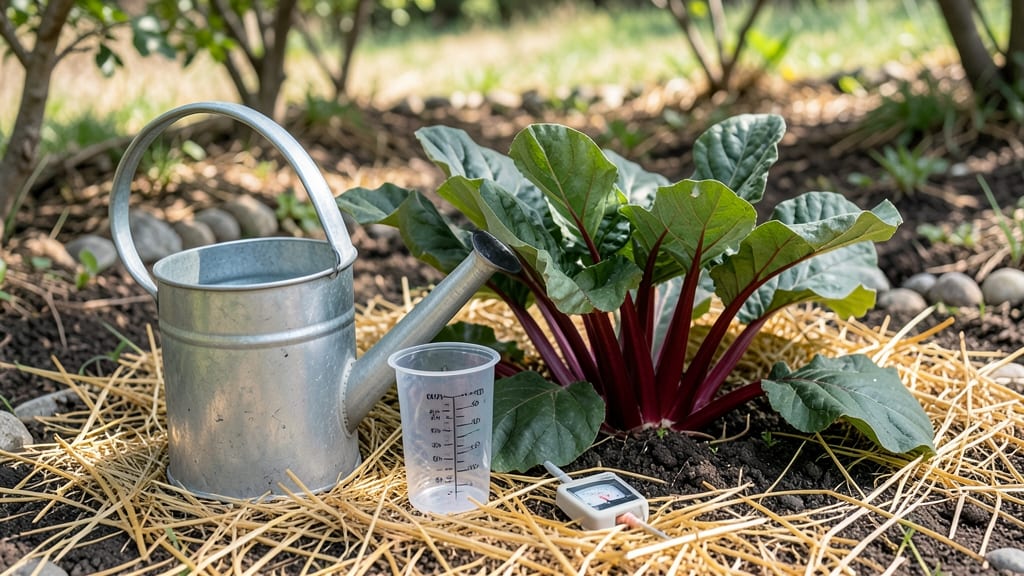
To keep rhubarb thriving, how much water does rhubarb need? The answer is simple: water it deeply when the top 1 inch of soil feels dry—this test ensures strong stalks and healthy roots 🍃.
Struggling to keep your rhubarb plants lush and productive? Overwatering or underwatering can turn your vibrant stalks into a sad, wilted mess—here’s the exact watering strategy to grow rhubarb that thrives all season.
Rhubarb needs about 1–2 inches of water per week, but the key is consistency. Too much water drowns the roots, while too little causes leaf scorch and stunted growth. The trick is checking soil moisture before watering—especially in summer when heat dries out the soil faster.
Below, I’ll break down the 1-inch soil test, seasonal adjustments, and signs your rhubarb is getting just the right amount of moisture—no guesswork, just thriving plants.
The 1-Inch soil test: perfect watering schedule for rhubarb growth
Rhubarb thrives when its roots stay in a consistently moist but never soggy environment. The 1-inch soil test is my go-to method to determine when to water, ensuring your plants get just the right amount without wasting resources or risking root rot.
This simple technique works year-round, but seasonal adjustments are key to keeping your rhubarb productive from spring through fall.
To perform the test, stick your finger about 1 inch deep into the soil near the base of the plant. If the soil feels dry at this depth, it’s time to water.
If it’s still damp, wait another day or two. This method prevents both overwatering and underwatering, two common pitfalls that stunt growth or invite pests.
| Season | Watering Frequency | Soil Moisture Goal | Signs of Overwatering |
|---|---|---|---|
| Spring (March-May) | Weekly (deep soak) | 1 inch deep, moist | Yellowing leaves, mushy stalks |
| Summer (June-August) | Bi-weekly (deep watering) | 1-2 inches deep, slightly dry at surface | Wilting despite wet soil |
| Fall (September-November) | Bi-weekly (reduce as temps drop) | 1 inch deep, moist but not soggy | Stunted growth, brown leaf edges |
| Winter (December-February) | Monthly (light watering) | Top 1 inch dry; roots dormant | None (plant is dormant) |
In spring, rhubarb plants are ramping up growth after dormancy, so they need weekly deep waterings to support new stalk development. Aim for about 1-2 gallons per plant each time, delivered slowly to encourage deep root penetration.
Mulch with 2-3 inches of straw to retain moisture and regulate soil temperature.
Summer brings hotter temperatures and increased evaporation, so I adjust to bi-weekly deep waterings instead. The key here is to water early in the morning to reduce fungal risks from prolonged leaf wetness.
If your rhubarb’s leaves start curling or turning yellow, it’s often a sign of underwatering during peak heat.
As fall approaches, reduce watering frequency to bi-weekly and monitor soil moisture closely. Overwatering in cool weather can lead to root rot, while underwatering may cause stalks to become tough and fibrous. Aim to keep the soil consistently moist but never waterlogged during this transition period.
During winter, rhubarb enters dormancy, and water needs drop dramatically. A monthly light watering is sufficient to prevent the soil from drying out completely. Avoid heavy watering, as the plant’s roots are less active and can’t absorb excess moisture efficiently.
This is also the perfect time to plan next year’s care, including soil amendments.
One of my biggest lessons? Never water rhubarb at night. Evening watering increases humidity around the leaves, creating ideal conditions for fungal diseases like leaf spot. Stick to morning watering for healthy, disease-resistant plants.
If you notice yellowing leaves or mushy stalks, these are red flags for overwatering—cut back immediately and improve drainage.
For container-grown rhubarb, the rules are slightly different. Potted plants dry out faster, so I water every 5-7 days in summer, checking the soil daily if temperatures exceed 85°F.
Use containers with drainage holes and a well-draining potting mix to prevent waterlogging, which can be fatal for rhubarb roots.
Pro tip: If your rhubarb’s stalks are thinner than a pencil or the leaves are small and sparse, it’s often a sign of underwatering. On the flip side, if the leaves turn yellow and mushy, you’re likely overwatering.
Adjust your schedule based on these visual cues, and your rhubarb will reward you with plump, vibrant stalks all season.
By mastering the 1-inch soil test and adjusting for seasonal changes, you’ll create the perfect conditions for your rhubarb to thrive. Happy gardening—your future rhubarb pies will thank you! 🍃
Common watering mistakes that kill rhubarb plants (and how to fix them)
Even with the right soil conditions and sunlight exposure, rhubarb plants can suffer if you don’t water them correctly. Overwatering causes root rot, while underwatering leads to stunted growth and leaf scorch. I’ve seen both mistakes destroy otherwise healthy plants—here’s how to spot them and fix them fast.
One of the biggest red flags is yellowing leaves that feel mushy when touched. This usually means your rhubarb is drowning in water, suffocating its roots.
On the flip side, crispy leaf edges or wilting stalks signal thirsty roots. Both issues stem from ignoring the plant’s moisture needs during critical growth stages.
⚠️ How Much Water Does Rhubarb Need?
1 inch per week is the golden rule, but adjust for your climate. Morning watering prevents fungal issues, while deep soaking (2-3 inches down) encourages strong root growth. Mulch with straw to retain moisture and regulate soil temperature.
Signs of overwatering: Yellow leaves, moldy soil, or stalks that flop. Signs of underwatering: Crispy edges, wilting, or soil pulling away from pot edges.
If your rhubarb shows signs of root rot, act immediately. Stop watering for a week to dry the soil, then improve drainage by adding perlite or sand to heavy clay soil. For underwatered plants, give them a thorough soak and apply organic mulch to lock in moisture.
Another common mistake is inconsistent watering. Rhubarb roots need steady moisture, so stick to a schedule. During hot summer months, water every 5-7 days, while spring and fall require less frequent watering. Always check the top 2 inches of soil—if it’s dry, it’s time to water.
For container-grown rhubarb, drainage is key. Ensure pots have drainage holes and use a mix of potting soil and compost. Water when the top inch feels dry, but never let the plant sit in standing water. Terracotta pots help wick away excess moisture better than plastic.
Finally, avoid watering the leaves—focus on the soil base to prevent fungal diseases like powdery mildew. If you notice white powdery spots, trim affected leaves and treat with neem oil. With these fixes, your rhubarb will bounce back stronger than ever.