
How To
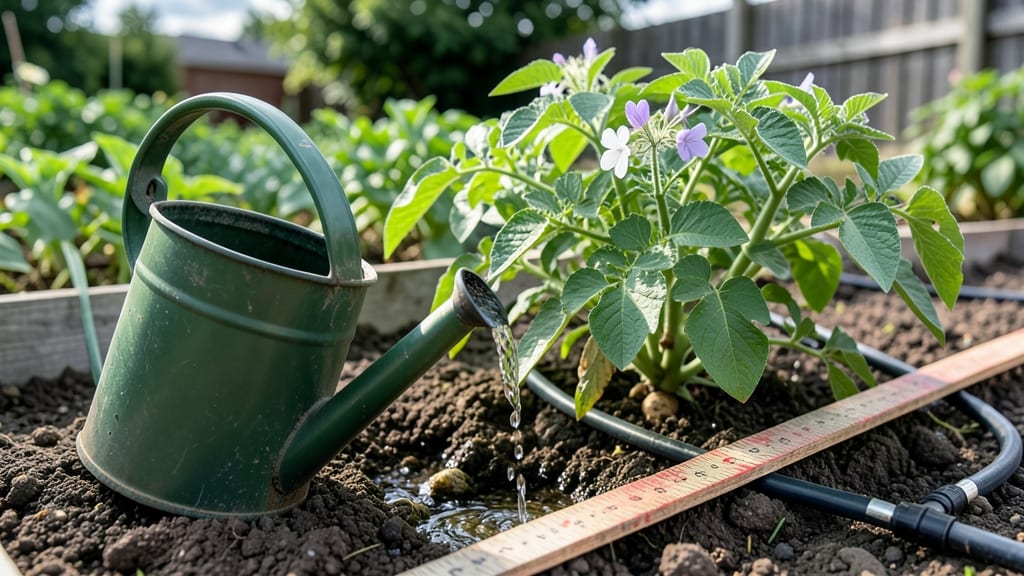
To answer the question how often should potatoes be watered, aim for about 1-2 inches per week while keeping the soil consistently moist but never soggy — the key to avoiding rot and maximizing those 🥔 harvests.
Picture this: you’ve just planted your seed potatoes, and now you’re staring at your garden, wondering if that extra sprinkle last night was too much or not enough. Overwatering drowns roots, while underwatering stunts tuber growth, and there’s no middle ground that doesn’t require a little strategy.
Most gardeners get this wrong because they assume "watering" means dumping buckets of water near the plants. But potatoes need deep, even moisture—especially during tuber formation—without turning the soil into a swamp. The secret? A simple soil dry test that tells you exactly when to water, no guesswork involved.
In this guide, I’ll break down the exact watering schedule for each growth stage, how to spot over- or under-watering before it’s too late, and even hacks for drought-prone areas or heavy clay soils.
By the end, you’ll know when to water, how much, and why timing matters more than you think.
The ideal potato watering schedule by growth stage (with soil test method)
Potatoes need consistent moisture to grow those perfect tubers, but too much water leads to rot while too little stunts development. The key is adjusting your watering schedule based on the plant's growth stage and soil conditions.
I'll break it down into simple stages—plus a foolproof soil test method—so you never guess again about when to water.
Start by planting your seed potatoes 4-6 inches deep in loose, well-draining soil. During the first 2-3 weeks (pre-sprout stage), keep the soil lightly moist but not soggy.
This encourages roots to establish without inviting fungal diseases. Think of it like a damp sponge—not dripping wet, just slightly damp to the touch.
Here’s the breakdown of watering needs by stage, including the finger test for perfect moisture levels:
The finger test is your best friend. Stick your index finger into the soil to the depth listed above. If it feels dry but not powdery, water is needed. If it’s sticky or cool, you’ve overwatered. Aim for soil that’s moist like a wrung-out sponge—not bone-dry or muddy.
During the tuber formation stage (weeks 4-6), potatoes need the most attention. This is when tubers start forming, and inconsistent moisture can lead to small, misshapen potatoes. Water deeply in the morning to encourage roots to grow downward, and avoid wetting the leaves to prevent diseases like blight.
A drip irrigation system or soaker hose works best for even moisture.
In the bulking phase (weeks 7-10), your potatoes are growing rapidly, and they’ll drink up to 2 inches of water per week. If you’re in a hot, dry climate, you might need to water daily.
Pay attention to the soil color: dark, rich soil holds moisture longer than sandy soil. Adjust your schedule based on your local conditions—container-grown potatoes dry out faster than in-ground plants.
As harvest approaches (weeks 11-12), it’s time to tap the brakes on watering. Reduce frequency to let the soil dry out slightly. This toughens the potato skins and prevents them from splitting when you dig them up.
Stop watering entirely 1 week before harvest to ensure the tubers are firm and ready to store.
Pro tip: Mulch around your potato plants with straw or grass clippings to retain moisture and suppress weeds. This reduces how often you need to water while keeping the soil consistently moist. Just be sure to pull back the mulch when harvesting to avoid damaging the tubers.
Remember, every garden is unique. Factors like climate, soil type, and container vs. in-ground planting will tweak your schedule. But by following this stage-by-stage guide and mastering the finger test, you’ll grow plump, disease-free potatoes every time.
Signs of overwatering vs underwatering potatoes (and how to fix it)
Potatoes are surprisingly sensitive to water—too much causes root rot while too little stunts those tuber-forming roots. The key is keeping soil consistently moist (not soggy) during the bulking phase.
I’ve seen firsthand how yellowing leaves can mean either drowning or drought, so let’s decode the clues your plants give.
Start by checking the soil moisture with your finger: stick it 2-3 inches deep. If it feels damp but not wet, you’re golden. If it’s bone-dry, your potatoes are thirsty. If it’s sticky and smells sour, you’ve got overwatering issues. This simple test saves countless plants every season!
Watering Potatoes: Pros & Cons
DO:
- Water deeply 2-3x/week
- Keep soil 2-3 inches moist
- Use morning watering only
- Mulch to retain moisture
DON'T:
- Water at night (fungus risk)
- Let soil dry completely between waterings
- Use flood irrigation (causes rot)
- Ignore container drainage
When your potato leaves yellow but stay firm, it’s usually underwatering. The edges may crisp slightly, and new growth slows. My fix? Water deeply until moisture reaches 6 inches down, then mulch with straw to lock in humidity.
For container-grown potatoes, I switch to self-watering pots—they’re a game-changer for busy gardeners!
Overwatered potatoes show soft, mushy stems and leaves that yellow then turn brown and wilt. The soil smells like wet socks. Pull up a plant—if the roots are black and slimy, you’ve got root rot.
The cure? Stop watering immediately, improve drainage with perlite, and consider repotting if using containers. Prevention is easier: always use pots with drainage holes!
For in-ground potatoes, I dig small trenches around plants to check drainage. If water pools after 30 minutes, amend with compost or sand. During tuber formation (4-6 weeks after sprouting), I cut back to 1 inch of water weekly—this prevents scabby skin while keeping roots happy.
The goal is consistent moisture, not soggy soil!
Remember: Container vs in-ground makes all the difference. Containers dry out faster, so I water mine every 2-3 days in summer. In-ground? Every 5-7 days unless it’s a heatwave. And always water at the base, never the leaves—this prevents diseases like blight that turn foliage into brown slime.