
Watering
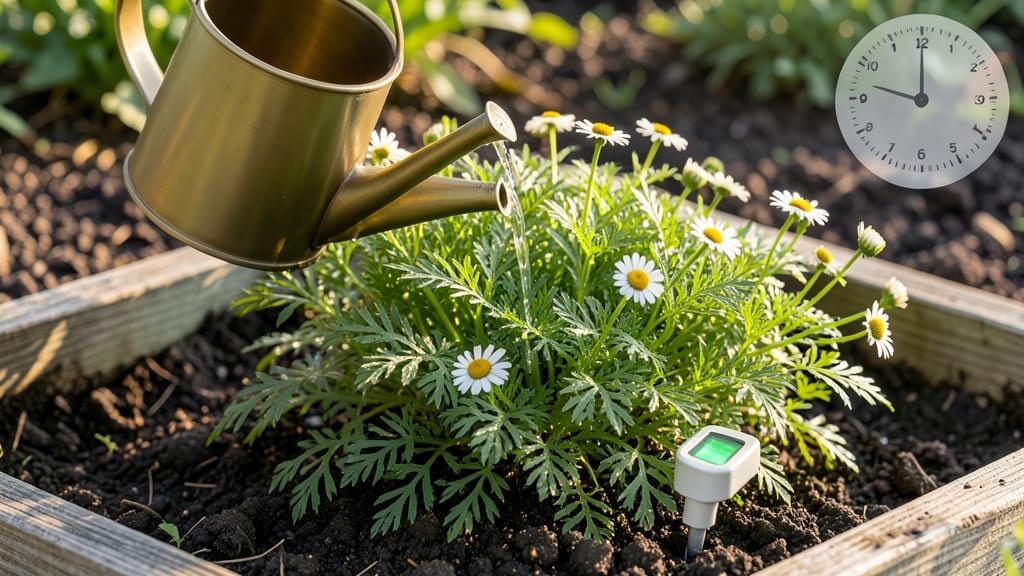
Watering chamomile the right way keeps your 🌼 plants happy and blooming all season long.
Struggling to keep your chamomile thriving? Overwatering or underwatering can turn your delicate blooms into a sad, wilted mess—here’s the exact watering schedule you need for lush, fragrant chamomile at every growth stage.
Chamomile doesn’t like soggy roots, but it also hates dry soil. The key is checking moisture before you water—stick your finger an inch deep, and if it feels dry, it’s time.
For seedlings, water lightly every 2-3 days, while mature plants can handle a deep soak every 5-7 days.
In this guide, I’ll break down the perfect watering routine for each stage, plus how to adjust for your climate and soil. No more guesswork—just thriving chamomile!
Chamomile watering schedule by growth stage: seedlings vs. mature plants
Chamomile thrives on consistency, but its watering needs change dramatically from tiny seedlings to flowering plants. Too much water drowns delicate roots, while too little stunts growth—so understanding stage-specific hydration is key to lush, fragrant blooms.
I’ve grown chamomile for years and learned the hard way that seedlings need daily checks, while mature plants can handle weekly deep soaks once established.
Your watering routine should mirror chamomile’s natural growth cycle: frequent shallow watering for young plants, then infrequent deep watering for mature ones. The secret lies in soil moisture triggers—not just days passed.
Stick your finger 1 inch deep; if it feels dry, it’s time to water. This method prevents root rot while keeping leaves crisp and vibrant.
Environmental adjustments are just as critical. Hot summers demand daily morning watering, while winter slows growth, reducing needs to bi-weekly checks. Below, I’ve broken down the exact schedule for each stage, so you’ll never guess again.
| Growth Stage | Watering Frequency | Soil Moisture Trigger | Environmental Adjustments |
|---|---|---|---|
| Seedlings (0-4 weeks) | Every 1-2 days | Top ½ inch dry | Use humidity dome; avoid overhead watering |
| Vegetative (4-8 weeks) | Every 3-4 days | Top 1 inch dry | Water at soil level; mulch to retain moisture |
| Flowering (8+ weeks) | Every 5-7 days | Top 2 inches dry | Deep water in early morning; reduce in heatwaves |
| Mature (Established) | Every 7-10 days | Top 3 inches dry | Drought-tolerant; water only during extreme dry spells |
For seedlings, I use a spray bottle to mist soil lightly twice daily, keeping humidity high with a clear plastic dome. This mimics their natural environment and prevents damping-off disease, a fungal killer of young chamomile.
Once they’ve developed 2-3 true leaves, switch to gentle watering at the base to avoid fungal spores on foliage.
During the vegetative stage, chamomile roots expand rapidly, so deep watering encourages strong stems. I dig a finger 1 inch deep—if it’s dry, water thoroughly until moisture reaches 4-6 inches down.
This stage is where many gardeners overcorrect, thinking more water equals better growth. Root rot is sneaky; yellowing leaves or mushy stems are red flags to cut back immediately.
When chamomile enters flowering mode, its water needs drop slightly, but consistency is critical. Skipping water can cause buds to abort, while overwatering dilutes flavor. I water deeply every 5-7 days, always in the early morning to prevent evening moisture from inviting pests.
A mulch layer of straw helps retain soil moisture while keeping roots cool.
Mature chamomile plants are drought-tolerant once established, but they still need occasional deep drinks. I test soil moisture by pushing a finger 2-3 inches deep—if it’s bone-dry, it’s time to water.
In hot climates, I increase frequency to every 3-4 days, while cool seasons allow me to stretch watering to 10-day intervals. Always water at the base, never overhead, to protect delicate blooms.
One common mistake is assuming all chamomile varieties have identical needs. German chamomile (Matricaria chamomilla) is more drought-tolerant than Roman chamomile (Chamaemelum nobile), which prefers even moisture. Always check your variety’s specific care guide—this small detail can mean the difference between thriving plants and wilted disappointment.
Pro tip: Use a moisture meter for precision, especially in containers where soil dries faster. I’ve found that chamomile in pots needs watering 2-3x more often than in-ground plants. Group containers together to create a microclimate
The soil dry test method: how to check moisture without overwatering chamomile
Watering chamomile correctly can feel like walking a tightrope—too much and you risk root rot, too little and your plants wilt. The soil dry test is my go-to method to strike the perfect balance.
Unlike rigid schedules, this hands-on approach lets you adjust based on real-time conditions, ensuring your chamomile thrives without guesswork.
Instead of relying on a fixed watering schedule, I check soil moisture before each watering. Chamomile prefers moderately moist soil, but it hates soggy conditions. The key is understanding when the top inch of soil feels dry enough to signal it's time to water.
This method works for both container-grown and in-ground chamomile.
Many gardeners water chamomile every 3-5 days without checking soil moisture. This leads to overwatering in humid climates or underwatering in hot, dry spells. Chamomile's water needs change with season, soil type, and container size. Always test soil moisture first!
Start by inserting your finger about 1 inch deep into the soil near your chamomile's base. If the soil feels dry and crumbly, it's time to water. For sandy soil, the top inch may dry faster—check daily during heatwaves.
In clay soil, moisture lingers longer, so you might only need water every 5-7 days.
Visual cues are just as important as the finger test. Look for slight wilting in the leaves or a dull gray-green color—these are early signs your chamomile needs water.
However, deep wilting or yellowing leaves mean you've waited too long. Chamomile's delicate blooms will also droop if thirsty, but they perk up quickly after a good drink.
For extra precision, I use a moisture meter (like the XLUX Soil Moisture Meter) during extreme weather. These tools give a digital reading of soil moisture levels, which is ideal for container gardens where soil dries out faster.
Aim for a reading between 40-60%—any lower means your chamomile is thirsty, and anything higher risks waterlogging.
Remember, morning watering is best—it allows excess moisture to evaporate during the day and prevents fungal diseases. Avoid watering at night, as damp foliage can attract pests. With practice, you'll develop a feel for your chamomile's needs, ensuring healthy growth and abundant blooms all season long.