
How To
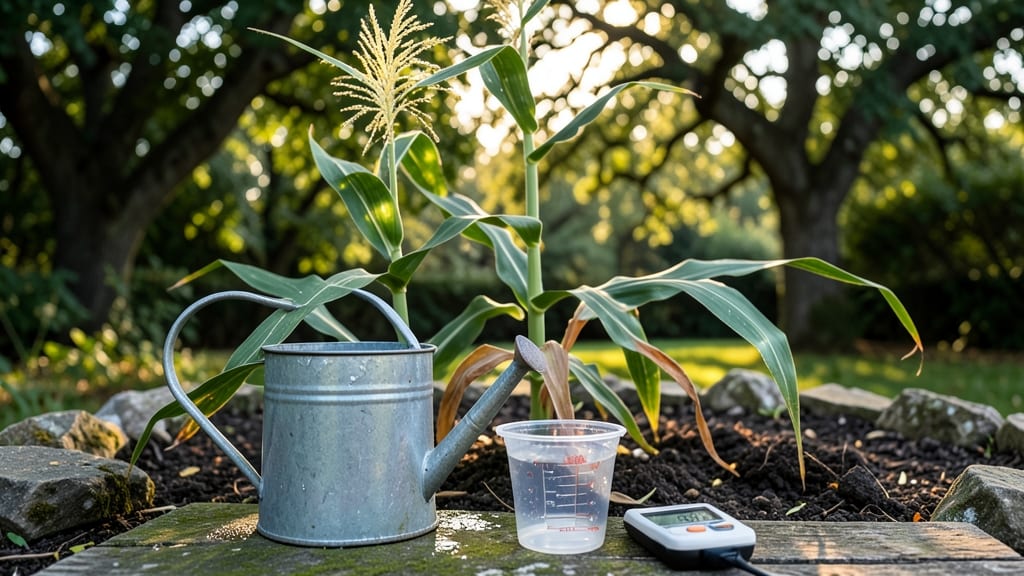
Watering corn the right way determines whether your 🌽 stalks grow tall and strong or struggle to produce ears. The key is knowing how often to water corn at each stage—from seedlings to tasseling—because too much or too little can ruin your harvest.
Picture this: you’ve just planted your seeds in late April, and the soil feels dry by midday. Should you water every morning, or will that drown the roots? The answer depends on your zone, soil type, and whether you’re growing in containers or in the ground.
In USDA Zone 6a, where spring rains taper off by May, most gardeners water corn daily for the first two weeks to keep the soil moist but not soggy. After that, you’ll adjust based on heat waves, drought alerts, and how fast the plants drink up water.
Below, I break down the exact watering schedule by growth stage—plus the telltale signs (like wilting leaves or yellowing stalks) that mean you’re over- or under-watering. By the end, you’ll know exactly when to reach for the hose or hold off.
Corn watering schedule by growth stage: critical timing for maximum yield
Corn thrives on consistency, but its water needs change dramatically from seedling to ear development. During the seedling stage, shallow roots mean frequent but light watering, while the vegetative stage demands deeper hydration to support rapid growth.
Skipping this balance risks stunted plants or fungal diseases like corn smut. I’ve grown corn for years, and I’ve learned that timing matters more than volume—especially during critical stages like tasseling when pollen production depends on steady moisture.
Your watering routine should adapt to each growth phase, not just the weather. For example, young corn plants need moisture daily, but mature plants can handle slightly longer gaps between waterings—provided the soil stays evenly moist but never soggy.
The key is monitoring soil moisture 2-3 inches deep, where the roots actively absorb water. Overwatering here leads to root rot, while underwatering causes silk desiccation, which means no pollination and no ears.
Here’s the breakdown of how often to water corn at each stage, including soil moisture targets and environmental adjustments to maximize your yield:
| Growth Stage | Watering Frequency | Soil Moisture Target | Key Adjustments |
|---|---|---|---|
| Seedling (0-3 weeks) | Daily (light misting) | Top 1-2 inches moist | Use a spray bottle; avoid wetting leaves to prevent disease. |
| Vegetative (3-6 weeks) | Every 2-3 days (deep water) | 3-4 inches moist | Water at soil level; aim for 1-2 inches per week. |
| Tasseling (6-8 weeks) | Every 1-2 days (critical) | 4-6 inches moist | Increase frequency during dry spells; drought stress kills pollen. |
| Ear Development (8-12 weeks) | Every 2-3 days (steady) | 4-5 inches moist | Reduce slightly if rain occurs; monitor silk dryness. |
During the seedling stage, I focus on keeping the soil surface damp but never soggy. Young corn roots are delicate, and excessive moisture can lead to seedling blight. A light misting with a spray bottle in the morning ensures even moisture without disturbing the soil.
If your seedlings look yellow or wilted, it’s a sign of either overwatering or underwatering—check the soil 1 inch deep with your finger.
The vegetative stage is when corn plants start growing rapidly, and their roots deepen. This is where deep watering comes into play. Aim to water 1-2 inches per week, but adjust based on rainfall.
For example, if you get 0.5 inches of rain, supplement with 1 inch of water from your hose or irrigation system. Mulching with straw helps retain moisture and reduces evaporation, which is especially helpful in hot, dry climates.
When corn enters the tasseling stage, it’s a race against time. Pollination depends on healthy tassels and silks, both of which require consistent moisture. This is the most critical watering period—I’ve seen entire crops fail due to drought stress during tasseling.
If the silks dry out before pollination, you’ll end up with barren ears. To prevent this, water deeply every 1-2 days during dry spells, and always in the morning to allow foliage to dry quickly and reduce fungal risks.
Finally, during ear development, the goal shifts to maintaining steady moisture without overdoing it. Too much water now can cause ear rot, while too little leads to shrunken kernels. I recommend watering every 2-3 days, but always check the soil first.
Stick your finger 4-5 inches deep—if it feels dry, it’s time to water. If the topsoil is moist but deeper layers are dry, focus on deep watering to encourage root growth.
Environmental factors like temperature and humidity also play a role. In high-heat conditions, corn evaporates moisture faster, so you may need to water daily. Conversely, in cool, humid climates, you can stretch watering intervals slightly.
Always prioritize morning watering to minimize disease risk and maximize absorption. With the right schedule, you’ll see plump, sweet kernels ready for harvest in 75-100 days.
Pro tip: Use a moisture meter or the "squeeze test" to check soil moisture. Gently squeeze a handful of soil—if it crumbles, it’s dry; if it sticks together, it’s moist enough. Adjust your watering routine based on these checks, and your corn will reward you with a bountiful harvest.
Signs your corn needs water (and when to adjust your routine)
Corn plants are surprisingly sensitive to water fluctuations—too little causes wilting and stunted growth, while too much leads to root rot and fungal diseases. As your corn transitions from seedlings to tasseling, its water needs shift dramatically.
The key is learning to read your plants' signals before they show distress.
Start by checking the soil moisture 2-3 inches below the surface. Stick your finger in—if it feels dry, it's time to water. For sandy soil, this check should happen daily, while clay soil may hold moisture longer.
Pay attention to the leaf color too: healthy corn leaves are deep green, not yellow or limp.
🌽
⚠️ Watering Corn Warning Signs
Corn's water needs change with growth stages and weather conditions. Overwatering is just as dangerous as underwatering—adjust your routine based on these visual cues:
- 🔴 Underwatered: Leaves curl downward, silks dry out prematurely, soil pulls away from pot edges
- 💧 Ideal: Soil stays moist but not soggy, leaves stay upright with slight morning dew
- 🟢 Overwatered: Yellowing lower leaves, mushy stems, white mold on soil surface, roots smell foul
Adjustment Tip: In hot weather, water every morning (1-2 inches total). In cool weather, every 2-3 days suffices. Drip irrigation is ideal—it delivers water directly to roots without wetting foliage.
During the ear development stage (6-8 weeks after planting), corn becomes particularly thirsty. Look for silk dryness—if the silks (those thread-like strands) turn brown and crispy before the kernels are formed, your plant is begging for water.
This is also when ear rot risks spike, so avoid watering at night when humidity lingers.
Your irrigation method matters too. Hand watering at the base is best for small patches, but larger gardens benefit from soaker hoses or drip systems. These deliver water slowly, keeping roots consistently moist without surface evaporation.
If you notice uneven growth in your corn patch, it might mean some plants are getting more water than others—check your irrigation setup.
Don't forget to mulch around your corn (2-3 inches of straw or grass clippings) to lock in moisture. This simple step can reduce your watering frequency by 30-40% while preventing soil crusting that blocks young roots.
In container-grown corn, check soil moisture daily—pots dry out much faster than in-ground beds.
When in doubt, water deeply but infrequently. A thorough soaking once every 2-3 days (depending on weather) encourages deep root growth, making your corn more drought-resistant over time. The goal is consistent moisture, not a daily sprinkle that only wets the surface.