
Watering
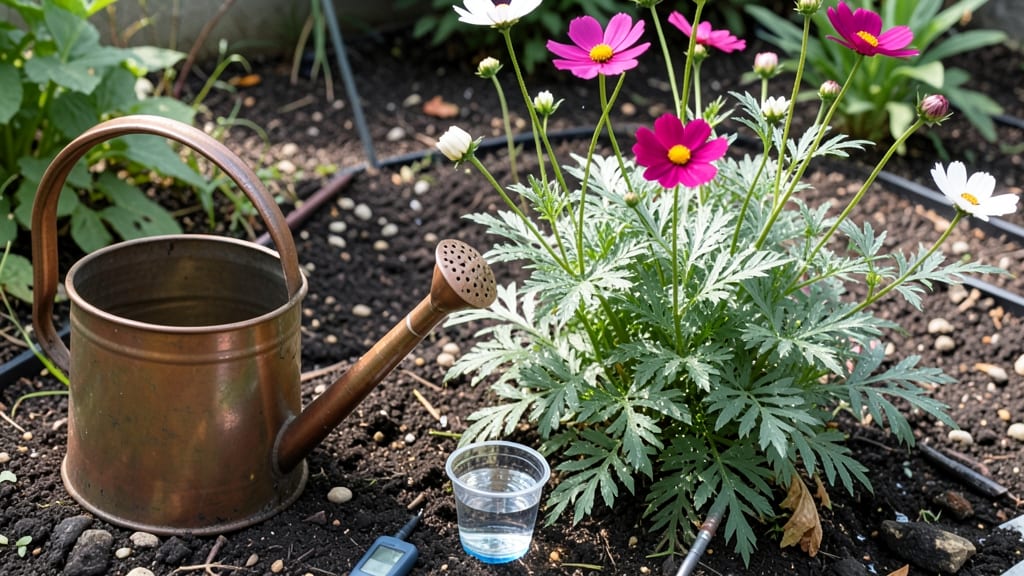
To water cosmos properly, aim for deep soaks every 3 to 5 days—but timing depends on your soil and climate, not just a calendar.
Struggling to keep your cosmos flowers thriving without overwatering? These drought-tolerant beauties can wilt just as fast from too much love as from neglect—and knowing the exact watering schedule makes all the difference.
Your cosmos 🌸 thrives when the top inch of soil feels dry to the touch, but sandy soil dries faster than clay, and summer heat demands more frequent watering than spring showers. One misstep, and you risk root rot or drooping blooms.
Below, I break down the science-backed schedule for different climates and soil types, plus how to spot when your plants are thirsty versus drowning—so you can enjoy those long-lasting blooms all season.
Optimal watering frequency for cosmos based on soil and climate conditions
Cosmos flowers are famously drought-tolerant, but their watering needs shift dramatically based on your local climate and soil type. Overwatering causes root rot, while underwatering leads to droopy blooms—both are easy to avoid with the right schedule.
Let’s break down the science-backed intervals to keep your cosmos thriving without waste.
In arid climates (like Arizona or Nevada), cosmos roots can stretch 2-3 feet deep to access moisture, reducing watering needs. Meanwhile, humid regions (such as Florida or Louisiana) require more frequent watering to prevent fungal diseases. Temperate zones (like the Pacific Northwest) fall in between, needing balanced care.
Your soil type also plays a critical role—sandy soil drains fast, while clay holds moisture longer.
Key rule: Always water deeply—1-2 inches per session—to encourage strong root systems. Shallow watering leads to weak stems and fewer blooms. The table below maps out your perfect watering rhythm based on where you live and what your soil looks like.
| Climate Zone | Soil Type | Watering Frequency | Depth per Watering | Notes |
|---|---|---|---|---|
| Arid (e.g., Desert) | Sandy | Every 7-10 days | 1.5-2 inches | Driest zone; mulch heavily |
| Arid | Clay | Every 5-7 days | 1 inch | Clay retains moisture; avoid soggy soil |
| Temperate (e.g., Midwest) | Loamy | Every 3-5 days | 1-1.5 inches | Ideal balance; monitor leaf color |
| Humid (e.g., Southeast) | Sandy | Every 2-3 days | 1 inch | High humidity increases fungal risk |
| Humid | Clay | Every 4-6 days | 0.75 inch | Water at soil surface, not leaves |
For sandy soil, water more frequently but shallower—these soils drain like a sieve.
In clay soil, let the top inch dry out before watering again to prevent waterlogging. Loamy soil (the gold standard) holds moisture just right, giving you flexibility to water every 3-5 days during peak bloom season (June-August).
Adjust your schedule in extreme heat (above 90°F). Cosmos in containers dry out faster—check soil moisture daily by sticking your finger 1 inch deep. If it’s dry, water immediately. Mulch with straw or shredded leaves to lock in moisture and reduce evaporation by up to 30%.
This is especially critical in arid climates where summer temps can exceed 100°F.
Newly planted cosmos need daily watering for 2 weeks to establish roots, regardless of climate. After that, taper off to your zone’s schedule. Overwatering signs include yellowing leaves and mushy stems, while underwatering causes wilting even when soil is moist.
The key is consistency—cosmos reward steady care with non-stop blooms from summer to frost.
Pro tip: Use a moisture meter for accuracy, especially in clay soil where visual cues can be misleading. Aim for 60-70% soil moisture at the root level.
In humid climates, water in the early morning to let foliage dry before evening humidity sets in—this prevents powdery mildew, a common fungus in damp conditions.
Seasonal tweaks matter too. In spring, water every 3-4 days as roots establish. By
Signs your cosmos plants need water (vs. overwatering) and fixes
Cosmos plants are famously drought-tolerant, but even they need your attention to avoid wilting or root rot. The key is learning how to read their visual cues—drooping leaves can mean thirst or too much water!
Let’s decode the signs so you can adjust your watering routine like a pro.
Start by checking the soil moisture with your finger. Stick it about 1 inch deep—if it feels dry, your cosmos is thirsty. For potted cosmos, lift the pot: if it’s light, water immediately.
Overwatered plants often feel heavy due to soggy soil, while thirsty plants feel dry and crumbly.
⚠️ WARNING: Overwatering vs. Underwatering Cosmos
Overwatering: Yellowing leaves, mushy stems, and drooping flowers that don’t perk up even after watering. Root rot sets in fast in clay soil or pots without drainage.
Underwatering: Crispy leaf edges, wilted foliage that stays droopy even after watering, and stunted growth. Cosmos may also drop buds before blooming.
Fix: Adjust watering to every 2-3 days in summer and every 5-7 days in fall. Use well-draining soil and mulch to retain moisture without drowning roots.
Watch for leaf color changes—healthy cosmos leaves are deep green, while underwatered ones turn grayish-green or yellow at the edges. Overwatered leaves, however, may develop yellow patches or black spots from fungal issues like powdery mildew.
Your cosmos’s growth rate is another clue. If new leaves are smaller than usual or growth has halted entirely, it’s likely thirsty. Overwatered plants, on the other hand, may show slow, weak stems or mushy roots when gently pulled from the soil.
For container-grown cosmos, check the weight of the pot daily. A light pot signals it’s time to water, while a heavy one means the soil is still damp. Morning watering is best—it prevents fungal growth and gives leaves time to dry before evening.
If you’ve already overwatered, don’t panic! Stop watering immediately and let the top 2 inches of soil dry out before resuming. For severely soggy soil, transplant the cosmos into fresh, dry soil with perlite or sand to improve drainage.
With the right adjustments, your cosmos will bounce back and reward you with vibrant blooms all season long. 🌸