
Watering
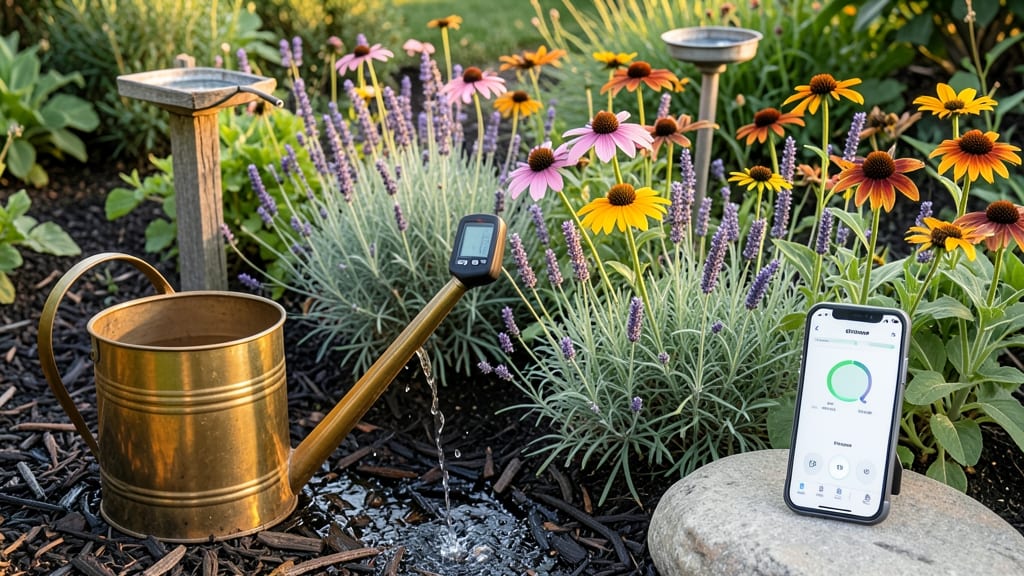
To water flower beds properly, check soil moisture 1–2 inches deep—not just the surface—because most gardeners overwater without realizing it, leading to weak roots and wasted resources.
Overwatering kills more flower beds than drought—yet most gardeners guess their watering schedule instead of checking soil conditions, leading to wasted water and stunted blooms.
This guide replaces guesswork with a simple soil-check method tailored to your climate and plant types, so you can keep your 🌸 thriving without drowning the roots.
You’ll learn how to adjust watering by season, spot signs of over- or under-watering, and use the right tools for efficient moisture control—no more muddy puddles or crispy petals.
The 3-Zone soil check method to water flower beds perfectly
Overwatering kills more flower beds than drought—yet most gardeners guess their watering schedule instead of checking soil conditions. The 3-zone soil check method replaces guesswork with science-backed moisture testing to determine when your annuals, perennials, and shrubs truly need water.
This method targets surface moisture, root depth, and drainage zones for precise care tailored to your climate and plant types.
Why does this method work? Because surface dryness ≠ root dryness. A dry top layer can hide soggy soil below, while deep roots may still be thirsty even if the surface feels damp.
By testing all three zones, you’ll water deeply but infrequently, encouraging strong roots and vibrant blooms while avoiding root rot and fungal diseases.
Start by gathering your tools: a soil probe, trowel, or clean screwdriver for digging, and a notebook to track moisture levels.
Test your flower bed in the morning (6–9 AM) when evaporation is lowest for accurate readings. Clay soils hold moisture longer than sandy soils, so adjust your checks accordingly—clay may need testing every 3–4 days, while sand can dry out in 1–2 days.
Here’s how to apply the 3-zone method step by step:
-
Zone 1: Surface Check (0–1 inch)
Test with your finger or trowel. If the top layer is dry, this indicates evaporation loss but doesn’t reflect root moisture. Annuals like petunias may need water if this zone is bone-dry, but perennials like lavender can tolerate slightly drier surfaces. -
Zone 2: Root Depth Check (1–3 inches)
Use a soil probe to check 1–2 inches deep for shallow-rooted plants (e.g., marigolds, pansies) or 2–3 inches for deeper-rooted perennials (e.g., roses, coneflowers). If this zone feels dry, it’s time to water. This is your primary indicator for most flower beds. -
Zone 3: Drainage Check (3–6 inches)
Dig deeper to check for waterlogging or poor drainage. If this zone is soggy, your plants are at risk of root rot. If it’s bone-dry, your watering isn’t reaching deep enough—adjust to deep watering 2–3 times per week instead of light daily sprinkles.
Adjust your watering schedule based on climate zones and plant types.
In arid regions (USDA Zones 8–11), water deeply every 2–3 days in summer, while temperate zones (Zones 4–7) may only need watering every 5–7 days. Humid climates (Zones 6–9) often require less frequent but deeper watering to prevent fungal issues.
For annuals like impatiens or zinnias, focus on keeping the top 1–2 inches of soil moist—they have shallow roots and dry out faster. Perennials like black-eyed Susans or daylilies, however, thrive with drier soil between waterings once established.
Always water at the base of plants to avoid wetting leaves, which reduces fungal diseases like powdery mildew.
Track your soil checks for a week to establish a personalized watering routine. Note how quickly each zone dries out and adjust for rainfall, wind, or heatwaves. For example, after a 1-inch rain, skip watering for 3–5 days in most climates.
In containers or raised beds, soil dries out 2–3x faster—check these zones daily in summer.
Signs you’re overwatering include yellowing leaves, mold at the soil line, or plants that wilt despite wet soil. Underwatering shows as crispy leaf edges, wilting that doesn’t recover after watering, or dry soil at all three zones.
Use these cues to fine-tune your schedule. With the 3-zone method, you’ll water efficiently, save resources, and keep your flower beds thriving.
🌱
Watering frequency chart: how often to water flower beds by season and plant type
Finding the perfect watering balance for your flower beds can feel like solving a puzzle—too much water drowns roots, while too little stunts growth. The key lies in understanding seasonal needs and plant-specific requirements.
For example, petunias need consistent moisture, while lavender thrives with less frequent but deep watering. Let’s break down the science behind watering so you can keep your blooms happy without wasting a drop.
Most gardeners overestimate how often flowers need water, especially during hot summers or dry spells. A quick soil check—inserting your finger 1–2 inches deep—reveals the truth. If the soil feels dry, it’s time to water; if it’s damp, hold off.
This simple test replaces guesswork with precision, ensuring your roses, marigolds, and dahlias get just the right amount of moisture.
Notice how mulch extends watering intervals by 1–3 days? A 2–3 inch layer of organic mulch (like shredded bark or straw) locks in moisture and regulates soil temperature.