
Watering
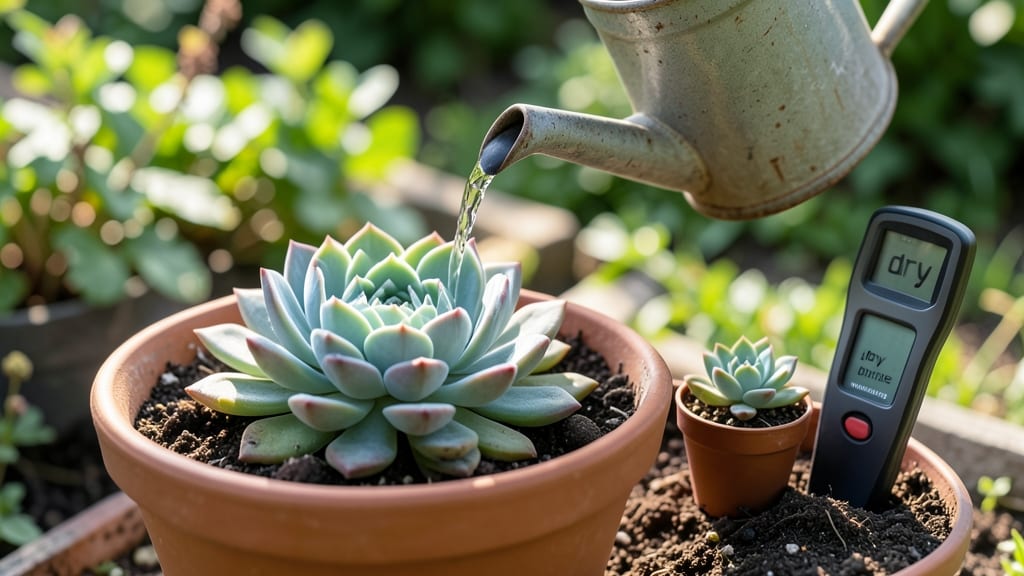
Watering hens and chicks 🌱 the right way means checking soil moisture—not sticking to a rigid schedule—because their drought tolerance hides a sneaky weakness: soggy roots.
Struggling to keep your hens and chicks thriving? Overwatering or underwatering can turn your succulent garden into a sad, mushy mess—or worse, a crispy wasteland. The secret to perfect hydration lies in understanding their unique water needs, not just guessing by schedule.
Unlike thirsty annuals, these hardy plants store water in their plump leaves, but that doesn’t mean they’re bulletproof. A quick soil test—just stick your finger an inch deep—tells you everything you need to know. Too dry? Water deeply. Still damp? Wait a week.
Below, I’ll break down the exact soil-dry test method, seasonal tweaks for 6a climates, and the 3 signs your watering is off—so you can finally stop second-guessing and start growing confidently.
How often to water hens and chicks: the soil dry test method
Hens and chicks (Sempervivum spp.) thrive on infrequent but deep watering, but guessing can lead to soggy roots or dehydration. The soil dry test method ensures you water only when truly needed—saving time and preventing common mistakes like overwatering in winter or underwatering during heatwaves.
Unlike thirsty annuals, these succulents store moisture in their leaves, so timing matters more than frequency.
Start by checking the soil moisture at the root zone, not the surface. Surface soil dries faster and gives a false sense of drought. Instead, dig your finger 1-2 inches deep—this is where the roots actively absorb water.
If the soil feels completely dry at this depth, it’s time to water. If even slightly damp, wait another 3-5 days before checking again.
Here’s how to master the soil dry test method with precision, avoiding the pitfalls that turn vibrant rosettes into mushy or crispy casualties:
- Step 1: Choose a calm morning (after dew has evaporated) to avoid misleading dampness.
- Step 2: Use a clean finger or a wooden skewer to check soil 1-2 inches deep near the plant’s base.
- Step 3: If soil feels bone-dry, water until it drains from the bottom of the pot (or seeps into the ground).
- Step 4: Wait until the top 1 inch of soil dries again before retesting.
- Step 5: Adjust frequency by season: water weekly in spring, every 10-14 days in summer, and monthly in winter.
Seasonal adjustments are critical. In spring and fall, when growth is active, your hens and chicks need more frequent checks—every 5-7 days if the weather is mild. But in summer’s peak heat, the soil may dry faster, so monitor daily if temperatures exceed 90°F.
Conversely, winter watering should be minimal; these plants enter dormancy and rot easily when overwatered.
Watch for visual cues that confirm your soil test results. Healthy leaves should be plump and firm, not wrinkled or translucent. If the leaves start puckering or turning yellow, you’ve underwatered.
Conversely, soft, mushy leaves or brown tips signal overwatering. These signs often appear after the damage is done, so the soil test is your best early warning system.
For container-grown hens and chicks, the rules change slightly. Pots dry out faster, so check soil every 5-7 days in summer, regardless of how it feels. Use pots with drainage holes and avoid saucers that trap excess water.
If your containers are terracotta or unglazed, they’ll dry out more quickly than plastic or glazed pots—adjust your testing frequency accordingly.
Timing your watering is just as important as how much you give. Always water in the early morning (between 6-9 AM) to allow leaves to dry before nightfall. This prevents fungal diseases like powdery mildew, which thrives in damp conditions.
Avoid evening watering, even if the soil feels dry—overnight moisture on leaves can lead to rot within days.
If you’re new to succulents, start a watering journal to track your plant’s needs. Note the date, soil moisture depth, and weather conditions each time you water. Over a month, you’ll spot patterns—like how your hens and chicks handle humid vs. dry days or sunny vs. cloudy weeks.
This personalized approach beats generic schedules and helps you tailor care to your specific climate.
Remember, hens and chicks are drought-tolerant, not drought-loving. While they can survive weeks without water, they’ll grow more slowly and look less vibrant. The goal is to strike a balance: enough water to keep them thriving, but not so much that you drown their roots.
With the soil dry test method, you’ll master this balance in no time.
🌱
Seasonal watering schedule for hens and chicks: month-by-month guide
Mastering the seasonal watering schedule for your hens and chicks ensures they thrive year-round. These hardy succulents need less water than most plants, but their needs shift dramatically with temperature and humidity.
In spring, they wake from dormancy and crave moisture, while summer heat demands caution to avoid root rot. Let's break it down month-by-month for your climate zone.
Your local climate plays a huge role in their water needs. Desert regions may need watering every 2-3 weeks in summer, while humid climates might require more frequent checks. Even temperate zones see shifts between seasons—spring and fall are moderate, but winter often means minimal watering.
Always use the soil dry test (insert finger 1-2 inches deep) before watering to avoid guesswork.
| Season | Months | Watering Frequency | Climate Notes |
|---|---|---|---|
| Spring | March-May | Every 7-10 days | Increase water as temps rise; new growth needs moisture |
| Summer | June-August | Every 10-14 days | Desert: every 3 weeks; Humid: weekly checks |
| Fall | September-November | Every 2-3 weeks | Reduce as temps drop; avoid soggy soil |
| Winter | December-February | Every 4-6 weeks | Dormant; water only if soil is bone-dry |
In spring, your hens and chicks will show new growth as temperatures rise. Water deeply once a week in March, then adjust to every 7-10 days by May.
Look for wrinkled leaves as a sign they need hydration. Mulch with gravel to retain moisture without smothering roots—this is especially helpful in humid climates where fungal risks rise.
Summer is the trickiest season for these succulents. Overwatering causes rot, while underwatering leads to shriveled leaves. In desert regions, stretch watering to every 2-3 weeks, while humid areas may need weekly checks.
Always water in the early morning to prevent evaporation and fungal growth. If your plants look plump and firm, they're storing enough water.
As fall arrives, reduce watering to every 2-3 weeks. The cooler temps signal your hens and chicks to slow growth, so they need less moisture. This is the perfect time to divide offsets—just water lightly for a week afterward to help them establish.
In temperate zones, watch for early frosts and adjust your schedule accordingly.
Winter care is minimal but critical. Dormant hens and chicks store water in their leaves, so only water if the soil is completely dry—typically every 4-6 weeks. In freezing climates, protect them with a light layer of mulch or move pots to a sheltered spot.
Never let water sit in the rosettes, as this can cause rot during cold snaps.
Pro tip: Group your hens and chicks by climate zone and adjust watering schedules accordingly. A desert variety like Sempervivum tectorum may need half the water of a humid-adapted type like Sempervivum arachnoideum. Always observe your plants—they’ll tell you what they need through their leaves! 🌱