
Watering
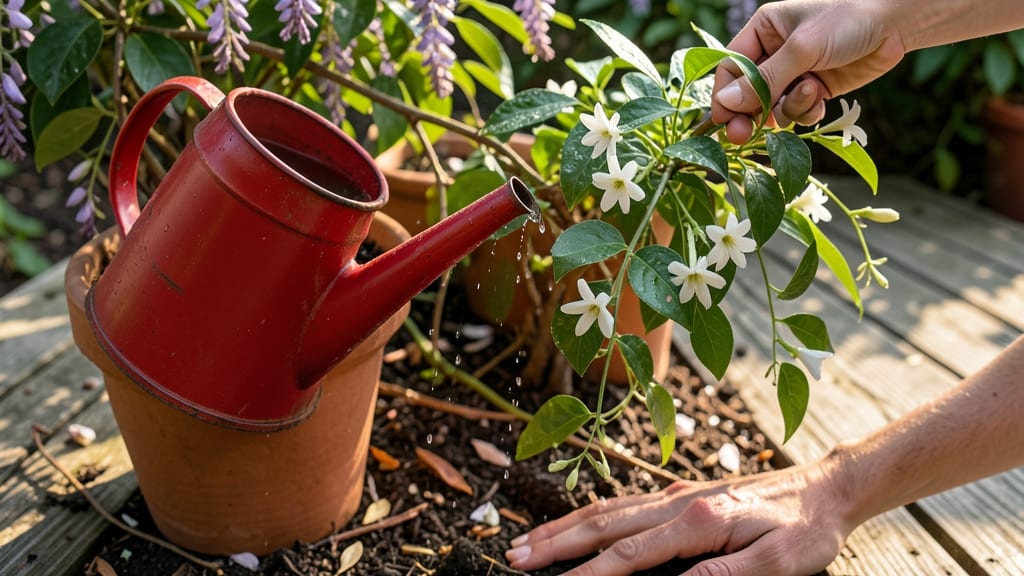
Watering your jasmine plant the right way keeps it thriving with fragrant blooms year-round, but too much or too little water can turn those vines into a sad, crispy mess.
Struggling to keep your jasmine lush? Most gardeners overwater by default, drowning the roots and inviting root rot. The trick is deep, infrequent watering—not a daily sip.
In this guide, I’ll break down the exact watering schedule for every season, from weekly soaks in summer to light touches in winter, plus how to read your plant’s thirst signals.
You’ll learn when to water, how much to give, and the one simple trick that saves potted jasmines from drying out in record time.
Jasmine watering schedule by season: what your plant needs monthly
Your jasmine plant thrives on consistency, but its watering needs shift dramatically with the seasons. Too much moisture in summer can rot its roots, while winter drought stresses its delicate vines.
The key? Adjusting your watering frequency based on temperature, humidity, and soil conditions. Let’s break down exactly how often to water your jasmine each month to keep those fragrant blooms coming.
Jasmine prefers moderate moisture—never soggy, never bone-dry. In-ground plants handle seasonal changes better than potted jasmines, which dry out faster. Always check the top 2-3 inches of soil before watering: if it’s dry, it’s time.
For potted plants, stick your finger in—if it feels dry, water thoroughly until it drains from the bottom. Seasonal adjustments are everything.
| Season | Watering Frequency | Soil Check | Key Factors |
|---|---|---|---|
| Spring (March-May) | Weekly (every 5-7 days) | Top 2" dry | New growth, rising temps |
| Summer (June-August) | Bi-weekly (deep soak) | Top 3" dry | Heat + humidity, blooming season |
| Fall (September-November) | Every 10-14 days | Top 2" dry | Cooling temps, prep for dormancy |
| Winter (December-February) | Monthly (light watering) | Top 1" dry | Dormant, minimal evaporation |
In spring, your jasmine wakes up from dormancy, so it needs regular watering to support new growth. Aim for 1 inch of water per week, but adjust if rains are frequent.
Mulch around the base to retain moisture and prevent weeds. If your plant is in a container, water every 5-7 days—pots dry out faster, especially in windy conditions.
Summer is the most critical season for jasmine care. The heat increases evaporation, and your plant may need deep watering every 10-14 days depending on your climate. Water in the early morning to reduce fungal risks.
If your jasmine is flowering, consistent moisture encourages more blooms. Watch for wilting leaves—a sign it’s thirsty, even if the soil seems damp.
As fall arrives, reduce watering gradually. Your jasmine is preparing for dormancy, so let the top 2-3 inches of soil dry out between waterings. Overwatering now can lead to root rot before winter.
If you’re in a cooler climate, you might water as little as every 2 weeks, while warmer regions may still need weekly checks.
Winter care is minimal but crucial. Most jasmines enter dormancy, so water only when the soil is completely dry—usually once a month. If you’re in a potted jasmine, move it to a sheltered spot to protect roots from freezing.
Never let containers sit in standing water, as this causes root rot even in cold weather.
Environmental factors like humidity and wind also play a role. In humid climates, reduce watering slightly to avoid fungal issues. If your jasmine is exposed to strong winds, it may need more frequent watering to compensate for dried-out soil.
Always adjust based on your plant’s specific conditions—not just the calendar.
Pro tip: Use a moisture meter for accuracy, especially in containers. Stick it into the soil—if it reads dry, water thoroughly. For in-ground jasmines, the "finger test" works just as well.
Consistency is key: jasmines hate sudden changes in moisture levels, so stick to your seasonal schedule and watch your fragrant vine thrive.
Remember, every jasmine is unique. If yours is in a sandy soil, it’ll dry out faster than one in clay-rich soil. Pay attention to leaf color and vine health—these are your best indicators of whether you’re watering just right.
With this seasonal guide, your jasmine will reward you with lush growth and intoxicating blooms all year.
Signs your jasmine plant is overwatered or underwatered (and how to fix it)
Jasmine plants are delicate vines that thrive on consistency, but their roots are surprisingly sensitive to watering mistakes. Overwatering or underwatering can both lead to wilting, yellowing leaves, and even root rot—all signs your jasmine is struggling. The key is learning the subtle differences between thirsty roots and soggy soil.
Start by checking the top 1-2 inches of soil with your finger. If it feels bone-dry, your jasmine needs water. But if it’s soggy or muddy, you’ve likely overdone it.
Jasmine roots prefer well-draining soil and hate sitting in water, so let’s fix this before your plant throws in the towel.
⚠️ How Often to Water Jasmine Plant?
Potted jasmines: Every 5-7 days (soil dries faster in containers).
In-ground jasmines: Every 10-14 days (adjust for heat/drought).
Summer tip: Water deeply in the morning to prevent fungal issues.
Winter tip: Reduce to monthly or when soil is completely dry.
Yellowing leaves are the most common red flag, but don’t assume it’s always overwatering. If the yellowing starts at the edges of leaves and the soil feels dry, your jasmine is thirsty.
However, if the entire leaf turns yellow and feels mushy, root rot may have set in from overwatering.
Drooping vines are another clear signal, but the cause depends on timing. If your jasmine wilts in the afternoon heat but perks up at night, it’s likely underwatered.
But if the vines stay limp even after watering, root damage from overwatering could be the culprit. Gently tug on the vine—if it slides out easily, roots are rotting.
To revive an underwatered jasmine, soak the soil thoroughly until water drains from the bottom. For overwatered plants, stop watering immediately and repot in fresh, well-draining soil. Trim any mushy roots with sterilized scissors, then let the soil dry out completely before watering again.
Mulching with organic matter like shredded bark helps retain moisture while preventing soggy roots. And always use a pot with drainage holes if growing jasmine in containers. With these adjustments, your fragrant vine will bounce back in no time.