
How To
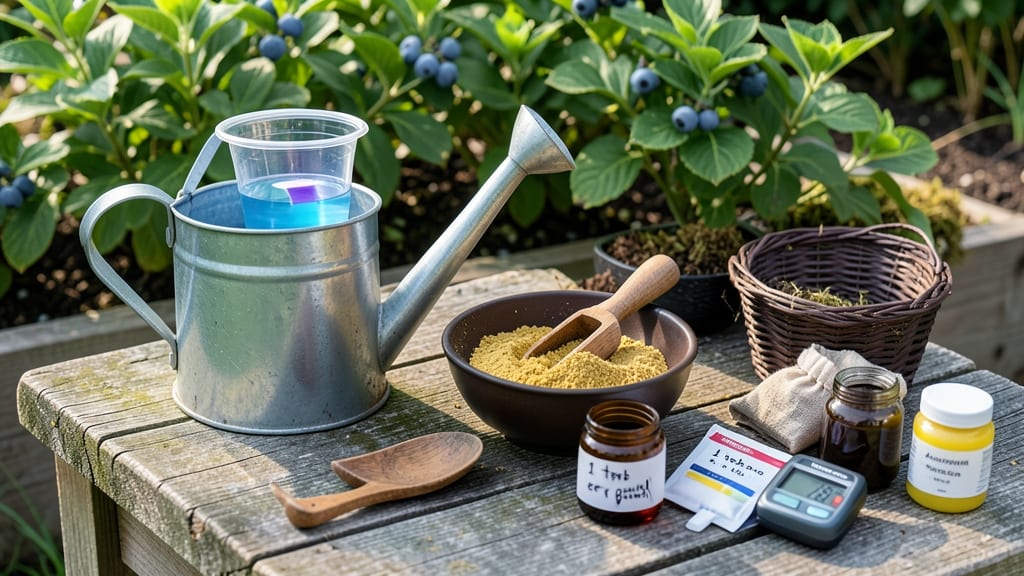
To lower pH in water for plants organically, use natural acids like white vinegar, lemon juice, or apple cider vinegar in measured amounts—start with 1 teaspoon per gallon for small adjustments, always testing the pH first. Too much acid can damage delicate root systems, so gradual changes are key.
Organic acids work by gently introducing hydrogen ions into the water, which react with alkaline minerals to create a more acidic environment. 🌱 For example, white vinegar (acetic acid) is the most common choice because it's inexpensive and effective—just dilute it properly to avoid shocking your plants.
I've found that testing the pH after each adjustment prevents over-acidification, which can actually harm beneficial soil microbes. The key is consistency: small, regular adjustments work better than drastic changes all at once.
Different plants have different needs—acid-loving varieties like blueberries and hydrangeas thrive at pH 4.5-5.5, while most vegetables prefer a neutral 6.0-7.0. That's why I always match the acid type to the plant: citrus juices work well for container plants, while pine needle tea is better for garden beds.
Always let the water sit for 24 hours before using it, so the pH stabilizes properly.
💡 In This Article
- How Organic Acids Adjust Soil pH Safely
- Best Organic pH Adjusters for Different Plant Types
How organic acids adjust soil pH safely
When you add organic acids like vinegar or citrus juice to water, you're introducing hydrogen ions (H+) that react with alkaline minerals like calcium carbonate. These minerals dissolve more readily in acidic conditions, releasing bicarbonate ions that raise the water's acidity level.
For example, white vinegar—made of acetic acid—dissociates into acetate and hydrogen ions, with each molecule contributing one H+ ion to the solution.
This chemical process is why a 1 teaspoon of vinegar per gallon can lower pH by about 1 point in hard water, but only if the water's starting pH is above 7.0. 🔥
The key to safety lies in the acid's strength and how plants absorb it. Strong acids like lemon juice (citric acid) can drop pH faster but must be diluted to 1 tablespoon per gallon to avoid shocking roots.
Weak acids like apple cider vinegar (also acetic but less concentrated) work more gradually, making them ideal for sensitive plants like orchids. Always test the water's pH after adding acid—strips are cheap and reliable, while digital meters offer precise readings.
The goal is to reach your plant's ideal range without overshooting, as sudden pH drops can disrupt microbial life in the soil.
Different plants have dramatically different pH preferences. Acid-loving blueberries, for instance, thrive at pH 4.5-5.5, while tomatoes prefer 6.0-7.0. The pH scale is logarithmic, meaning each whole number represents a tenfold change in acidity.
That's why a small adjustment from 7.5 to 7.0 might be ideal for peppers, but a drop to 6.0 could stress them. Understanding your plant's needs prevents over-acidification, which can leach essential nutrients like calcium and magnesium from the soil.
Timing matters too. Never apply acidified water to dry soil—always water thoroughly first to distribute the acid evenly. For container plants, mix the acid with water and let it sit for 24 hours before using, as this allows the pH to stabilize.
In garden beds, apply acidified water gradually over 2-3 weeks rather than all at once. This mimics natural processes, like rainfall carrying organic acids through forest floors, which gradually acidify the soil without harming plant life. 💫
One common mistake is assuming more acid equals better results. Over-acidification can damage root cell membranes, preventing nutrient uptake. For example, azaleas can tolerate pH 4.5, but pushing below 4.0 risks aluminum toxicity. Always monitor your soil's pH over time—it naturally fluctuates with rainfall, compost additions, and plant growth.
If you're unsure, start with smaller doses and adjust based on your plants' health. Healthy roots, vibrant foliage, and strong growth are the best indicators you've got the pH just right.
For a visual reference, here's how different organic acids compare:
- White vinegar (acetic acid): Fast-acting, best for hard water, dilute to 1 tsp/gallon for 0.5-1.0 pH drop
- Lemon juice (citric acid): Stronger than vinegar, use 1 tbsp/gallon, ideal for container plants
- Apple cider vinegar: Milder, 1.5 tsp/gallon for gradual changes, great for orchids
- Pine needle tea: Slow-release, steep 1 cup needles in 1 gallon hot water, best for garden beds