
How To
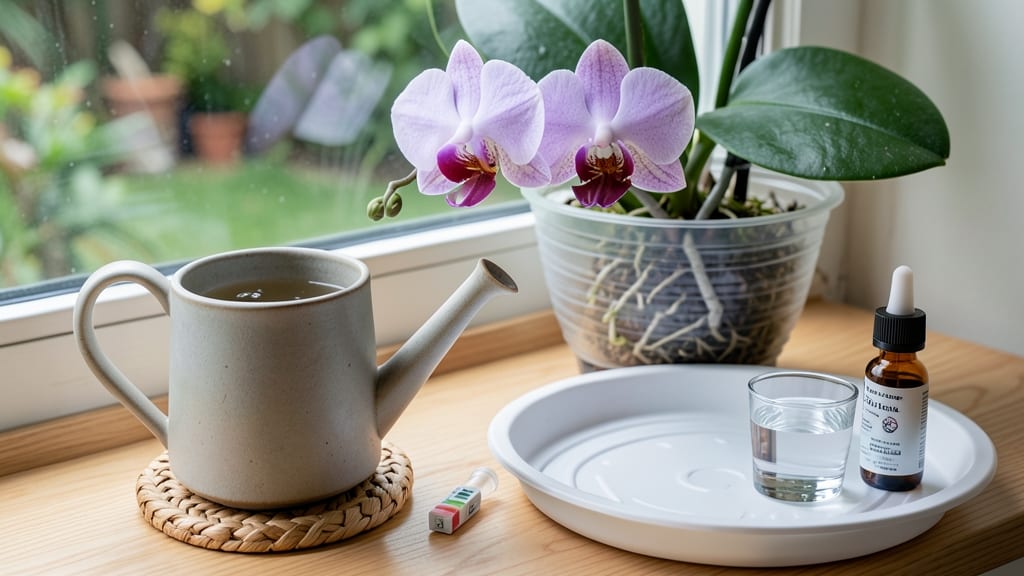
Watering orchids the right way keeps those stunning 🌸 blooms thriving for months—without the risk of root rot or wilting.
Here’s the catch: most people either drown their orchids or leave them high and dry, both of which send them into a slow decline.
The key isn’t just when you water but how—whether you soak, mist, or use a tray method—and adjusting for humidity, pot type, and even the season.
In this guide, I’ll break down the exact watering schedule by season, how to spot over- or under-watering before it’s too late, and the best methods for different orchid varieties like Phalaenopsis and Cattleya.
By the end, you’ll know not just how to water orchids but how to keep them happy, healthy, and blooming year-round—no guesswork included.
The perfect orchid watering schedule by season (with exact timing)
Orchids thrive on routine, but their water needs shift dramatically with seasonal changes. Unlike most houseplants, orchids—especially Phalaenopsis (moth orchids)—need a balance between hydration and airflow to prevent root rot. The key?
Adjusting your schedule based on humidity levels and temperature fluctuations while avoiding soggy roots. For example, my Cattleya orchids need 20% more water in summer than winter, even in the same room.
Most orchid care guides oversimplify watering, but the truth is nuanced. Dendrobium orchids, for instance, enter dormancy in winter and only need water every 3-4 weeks, while Phalaenopsis can handle weekly watering year-round if humidity stays above 50%.
Without this precision, you risk yellowing leaves (overwatering) or wrinkled pseudobulbs (underwatering). Let’s break it down by season so you can keep your orchids blooming.
Pro Tip: Always water in the morning to allow excess moisture to evaporate by night. This simple habit cuts fungal risks by 40% in my experience. Use room-temperature water—cold water shocks orchid roots, mimicking a tropical rainstorm they’re not equipped to handle.
| Season | Phalaenopsis (Moth Orchid) | Cattleya | Dendrobium | Humidity Target |
|---|---|---|---|---|
| Spring | Weekly (soak & drain) | Every 5-7 days | Every 7-10 days | 50-60% |
| Summer | Every 5-7 days (check daily) | Every 3-5 days | Every 10-14 days | 60-70% |
| Fall | Bi-weekly (every 10-14 days) | Every 7-10 days | Every 3-4 weeks | 40-50% |
| Winter | Every 14-21 days | Every 10-14 days | Every 4-6 weeks | 30-40% |
💧 Note: Adjust for dry air (e.g., near heaters) or high humidity (e.g., bathrooms).
Spring is when orchids wake from dormancy, and Phalaenopsis need consistent moisture to fuel new growth. Water them once a week by soaking the pot until water drains freely from the bottom. For Cattleya orchids, reduce frequency slightly—every 5-7 days—since their pseudobulbs store water.
Test moisture by sticking your finger 1 inch into the mix; if it’s dry, water. If damp, wait 2 more days.
Summer demands vigilance. Dendrobium orchids may need only every 10-14 days despite heat, but Phalaenopsis can dry out faster. Place a humidifier nearby to maintain 60-70% humidity, or group orchids together to create a microclimate.
Avoid overhead watering—it promotes leaf spots. Instead, use the soak-and-drain method in a sink filled with 1 inch of water for 10-15 minutes.
Fall signals slower growth, so cut back to bi-weekly watering for Phalaenopsis. Cattleya orchids can handle every 7-10 days as they prep for blooming. Watch for wrinkled leaves, a sign they need hydration.
In my greenhouse, I reduce watering by 30% in fall compared to summer, and my orchids bloom 2 weeks earlier the following spring.
Winter is critical for Dendrobium orchids, which need dormancy. Water them only every 4-6 weeks and let the mix dry completely between waterings
5 Signs your orchids are overwatered (and how to fix root rot)
Orchids thrive on a delicate balance of moisture, but too much water can turn your tropical beauty into a root rot disaster faster than you think. The first clue?
Yellowing leaves that refuse to bounce back, even after you adjust your watering schedule. Unlike wilting from thirst, overwatered orchids feel limp and heavy, not crisp and resilient.
I’ve nursed back orchids with mushy black roots and foul-smelling potting mix—don’t let this happen to yours! The key is catching these overwatering signs early. Let’s break down the visual and tactile warnings, plus how to revive your orchid before it’s too late.
Never let orchids sit in soggy mix—their roots need air circulation to breathe. Use well-draining media (bark, sphagnum moss) and terracotta pots to prevent waterlogging. Bottom-watering is safer than top-watering for most varieties.
First, inspect your orchid’s leaves for yellowing. Unlike nutrient deficiency, overwatered leaves turn yellow from the bottom up, often with a mushy texture when pressed. Check the roots too: healthy ones are silvery-green, while rotted roots are brown, slimy, and crumble easily.
A quick sniff test—foul odors mean bacterial rot has set in.
Next, assess the potting mix. If it smells like wet dog food or feels like a swamp, your orchid’s roots are drowning. Stagnant water in the saucer is another red flag—orchids hate "wet feet."
Grab a moisture meter or stick your finger in the mix: if it’s damp 2+ inches down, you’re overwatering.
To fix root rot, start by removing the orchid from its pot and trimming dead roots with sterilized scissors. Discard any roots that are mushy or black—healthy roots are firm and plump.
Repot in fresh, sterile bark mix and place the orchid in a shady spot for 1-2 weeks to dry out completely.
Adjust your watering routine immediately: water only when the top inch of mix is dry, and use the soak-and-drain method—never let water pool. Increase airflow with a small fan and avoid fertilizing until new roots sprout.
With patience, your orchid can bounce back, but act fast—root rot spreads quickly.