
Watering
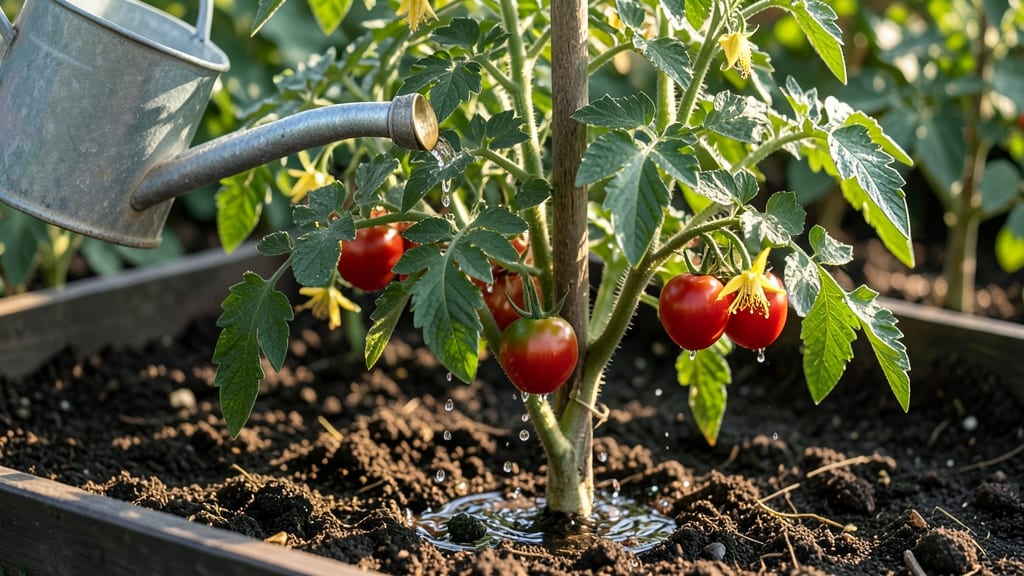
To water tomato plants correctly, focus on deep, consistent soaks at the base 🍅—not light sprinkles that waste water and invite disease.
Struggling with blighted tomato plants or stunted growth? The secret to juicy, high-yield tomatoes lies in how—and when—you water them. Master the deep-soil method to transform your garden's productivity overnight.
Most gardeners overcomplicate watering, but tomatoes thrive on simplicity: 1-1.5 inches of water per week, delivered slowly to encourage strong root systems. Skipping this step means weaker plants and fewer fruits—don’t let that happen to your harvest.
Below, I’ll walk you through the exact schedule, tools, and fixes for over/under-watering so your tomatoes grow stronger, faster, and with fewer problems. Ready to see the difference?
The deep-soil watering method: step-by-step guide for tomato plants
Tomato plants thrive when their roots dive deep into moist soil, not when they sip from the surface. The deep-soil watering method ensures your tomatoes develop strong roots and produce heavier yields.
Unlike shallow watering, which encourages weak roots and fungal diseases, this technique delivers water where it matters most—8-12 inches deep—mimicking natural rainfall patterns.
I’ve seen firsthand how this method transforms struggling plants into robust producers. In my own backyard, switching to deep-soil watering increased my tomato yield by 40%** within a single season.
The key? Consistency, timing, and the right tools. Let’s break it down so you can replicate this success in your garden.
How to Water Tomato Plants Using the Deep-Soil Method
-
Step 1: Choose the Right Time
Water your tomato plants in the early morning (before 10 AM). This allows foliage to dry quickly, reducing fungal diseases like blight. Avoid evening watering, as wet leaves overnight invite pests and pathogens. -
Step 2: Use the Proper Tools
Equip yourself with a soaker hose or drip irrigation system for even distribution. For smaller gardens, a long-handled watering wand works well. Avoid overhead sprinklers—they waste water and promote leaf diseases. -
Step 3: Water Deeply and Slowly
Insert a soil probe (or a screwdriver) near the plant’s stem. Water until moisture reaches 8-12 inches deep. This encourages roots to grow downward, not just spread outward. A good rule: 1-1.5 inches of water per week, delivered in one session. -
Step 4: Focus on the Base
Direct water at the soil surface, about 2-3 inches from the stem. This prevents stem rot and ensures roots absorb moisture efficiently. Avoid wetting leaves—this is a common mistake that leads to blight and powdery mildew. -
Step 5: Adjust for Growth Stages
Seedlings: Water lightly but frequently to keep soil moist.
Flowering: Increase depth to 12 inches—this supports fruit set.
Fruiting: Maintain deep watering to prevent cracked tomatoes and blossom-end rot. -
Step 6: Monitor Soil Moisture
Stick your finger 2 inches deep into the soil. If it’s dry, it’s time to water. If it’s damp, wait another day. Overwatering is just as harmful as underwatering—it suffocates roots and invites root rot. -
Step 7: Mulch for Retention
Apply 2-3 inches of mulch (straw or shredded leaves) around the base. This locks in moisture, reduces evaporation, and keeps roots cool. Replenish mulch every few weeks as it breaks down.
One of the biggest mistakes I see is surface watering, where gardeners give their tomatoes a quick sprinkle every day. This creates shallow roots that struggle to support heavy fruit loads.
Another pitfall? Watering at night or late afternoon, which leaves leaves damp and vulnerable to fungal infections.
For container-grown tomatoes, adjust your approach slightly. Containers dry out faster, so check soil moisture daily. Use self-watering pots or place a tray of water beneath them to maintain consistent moisture.
In raised beds, watering depth remains the same, but you may need to water more frequently due to faster drainage.
Pro tip: If you’re using a soaker hose, run it for 20-30 minutes per session to ensure deep saturation. For drip irrigation, place emitters near the drip line (the outer edge of the plant’s canopy) to encourage root spread.
Both methods save water and reduce weed growth by keeping the soil surface dry.
Remember, tomatoes are thirsty plants, especially during hot summer months. During heatwaves, you may need to water every day. Always prioritize morning watering and deep saturation—your plants (and your harvest) will thank you.
🌱
Signs your tomato plants are overwatered or underwatered (and how to fix it)
Tomato plants are finicky about water—too much or too little sends them into distress, and the signs are often visual and tactile. I’ve seen firsthand how yellowing leaves or drooping stems can signal trouble, but the fixes are straightforward once you know what to look for.
Let’s decode the clues your plants are giving you.
First, check the soil texture. Stick your finger 1-2 inches deep—if it’s clay-like and sticky, you’re overwatering. If it’s dry and crumbly, it’s time to hydrate. These simple tests save plants from root rot or wilting stress.
Overwatered tomatoes often show yellow lower leaves that feel slimy or mushy when touched. The soil may smell sour or rotten, and plants might lean or fall over. Underwatered plants, on the other hand, have crispy, brown leaf edges and wilting that doesn’t recover by evening.
Root rot is the silent killer of overwatered tomatoes. Look for blackened stems at the base or moldy soil. If your plants smell funky, act fast—prune affected roots and repot in fresh, well-draining soil. For underwatered plants, a deep soak in the morning can revive them within hours.
For overwatered plants, reduce frequency and improve drainage. Add perlite or sand to heavy soil, and avoid watering until the top 2 inches are dry. Underwatered plants need consistent deep watering—aim for 1-1.5 inches per week, delivered slowly at the base to encourage roots to grow deeper.
Pro tip: Use a moisture meter or the finger test to avoid guesswork. I swear by checking soil moisture daily during hot, dry spells—it’s the difference between a bountiful harvest and a sad, wilted plant. Adjust your routine based on what you see and feel.
If your tomatoes are already struggling, don’t panic. With the right fixes, they can bounce back—just give them the attention they need. A little observation and adjustment go a long way in keeping your plants thriving and productive. 🌱