
Flowers
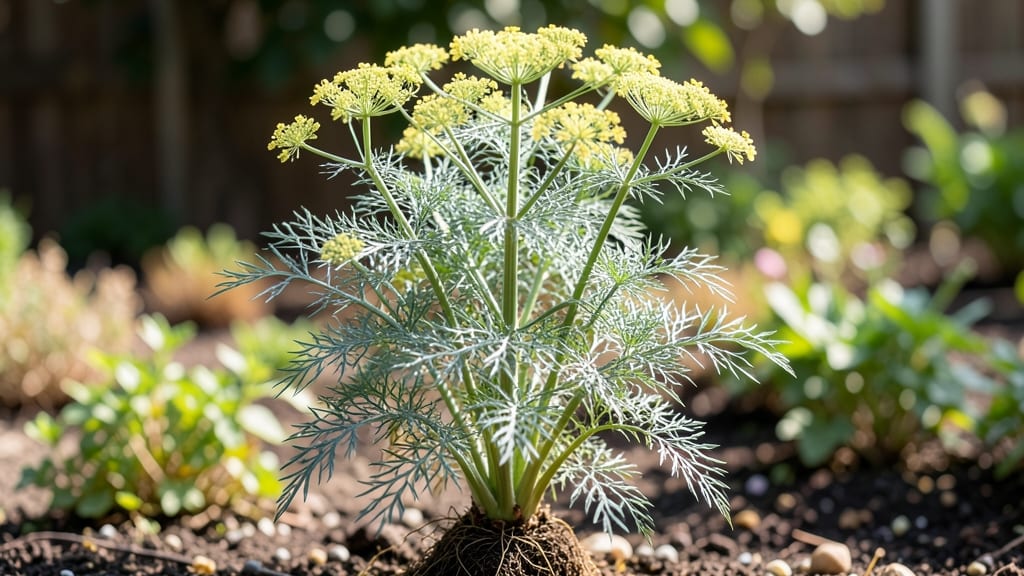
Dill isn't a true perennial—it's a biennial herb that acts like a perennial in mild climates, producing new growth from seed each year but often dying back when frost hits. Its survival depends on your hardiness zone and growing conditions.
While dill doesn't survive winter in most regions, it self-seeds prolifically, creating fresh plants each spring. 🌱 This explains why many gardeners think it's perennial—what they're seeing is actually new seedlings from dropped seeds.
In colder zones (USDA 3-5), even the seeds may fail to germinate reliably after winter, forcing replanting. The key difference lies in its root system: dill's taproot isn't winter-hardy, so protecting it with mulch or growing in containers can extend its life in marginal climates.
For consistent harvests, I recommend planting fresh seeds every 2-3 years in colder areas, while warmer zones (USDA 8+) often get surprise volunteers sprouting without intervention. The 'Fernleaf' variety tends to be slightly more resilient than standard dill, though all types share this biennial growth pattern.
💡 In This Article
- Dill’s Life Cycle and Cold Weather Dieback Patterns
- Extending Dill’s Growing Season in Cold Climates
Dill’s life cycle and cold weather dieback patterns
Dill follows a biennial life cycle, meaning it completes its growth in two years under ideal conditions. During its first year, you’ll see lush, feathery foliage perfect for culinary use, while the second year focuses on flowering and seed production.
The key difference from true perennials is that dill’s taproot system isn’t designed to survive winter dormancy—exposure to 28°F or below causes irreversible damage to the root structure. This explains why even established plants collapse with the first frost in colder climates.
The plant’s survival strategy relies on prolific seed production rather than root persistence. A single dill plant can drop 500-1,000 seeds when mature, which germinate readily in spring temperatures above 50°F. In warmer zones (USDA 8-11), these seeds often sprout spontaneously, creating the illusion of perennial regrowth.
However, in colder regions (USDA 3-6), winter kills both the parent plants and many seeds, requiring annual replanting for consistent harvests.
Temperature plays a critical role in this cycle. Dill thrives in 60-75°F growing conditions but becomes stressed below 50°F. The plant’s natural defense mechanism is to bolt (flower) when days shorten in late summer, redirecting energy from leaf production to seed development.
This bolting response is triggered by photoperiod (day length) rather than temperature alone, making it difficult to prevent in northern climates without careful timing.
What most gardeners overlook is that dill’s hardiness varies significantly by variety. The 'Bouquet' variety tends to produce more robust foliage and slightly larger seeds, which may germinate more reliably in cold soils.
Meanwhile, 'Fernleaf' dill has finer leaves but often bolts faster, reducing its window for harvest. The difference in seed viability between varieties can be as much as 30% in marginal climates.
Here’s what happens at the cellular level: Frost causes ice crystals to form in dill’s vascular system, disrupting water transport and leading to tissue death. The plant’s shallow root system (typically 12-18 inches deep) offers little protection against temperature fluctuations.
In contrast, true perennials like thyme develop deeper, more insulated root networks that can withstand freeze-thaw cycles.
Consider this comparison: In USDA Zone 5, dill plants may survive light frosts (28-32°F) if protected, but hard freezes (20°F or lower) will kill them. Meanwhile, in Zone 10, dill often self-seeds continuously without intervention.
The transition zone (6-7) represents the most challenging environment, where winter protection becomes essential for extending the plant’s productive life.
For gardeners in transitional zones, the key insight is that dill’s "perennial" behavior depends entirely on seed germination success. Even if the parent plant dies, the seeds left in the soil may provide new growth next spring—provided they weren’t buried too deeply (¼ inch is ideal for germination).
This natural reseeding explains why many gardeners mistakenly classify dill as a perennial.