
Flowers
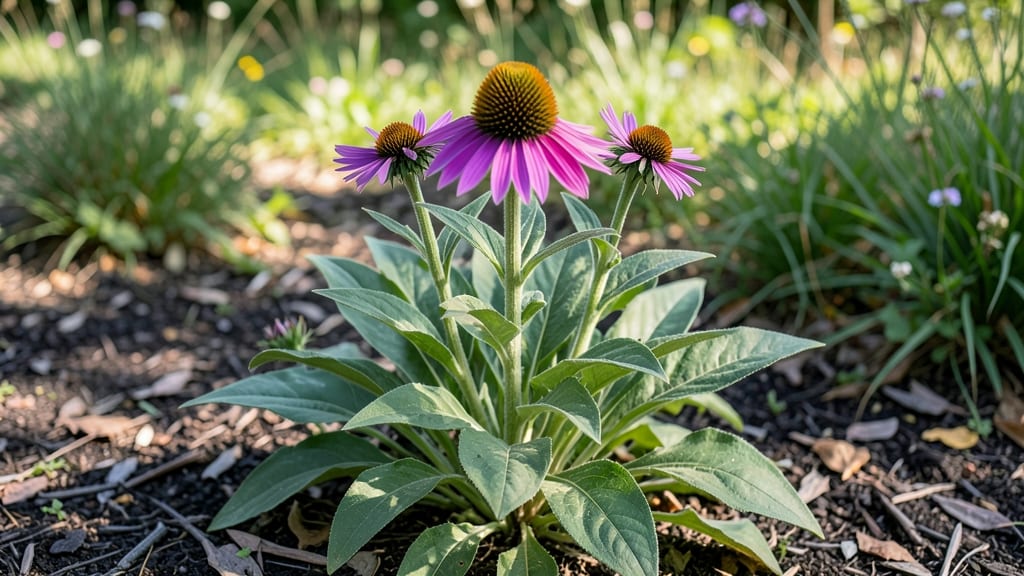
Yes, echinacea is a perennial plant that thrives for multiple years with proper care, returning annually with vibrant blooms in hardiness zones 3 through 9, though some varieties may decline after 3-5 seasons without division or renewal.
Echinacea earns its perennial status through a robust root system that stores nutrients during dormancy, allowing it to regrow each spring. 🌱 Unlike annuals that complete their life cycle in one season, echinacea's deep taproots let it survive harsh winters and return stronger year after year.
The key to extending its lifespan lies in regular maintenance—deadheading spent blooms and dividing clumps every few years prevents overcrowding and disease buildup.
What sets echinacea apart is its adaptability across a wide range of climates, from cold northern regions to milder southern zones. In colder areas, proper winter care like mulching and protecting the crown from freeze-thaw cycles can make all the difference in ensuring consistent regrowth.
Many gardeners underestimate how much pruning in late fall can protect the plant from winter damage, which directly impacts its ability to bloom prolifically the following season.
💡 In This Article
- Echinacea’s Perennial Lifespan and Growth Cycle
- Hardiness Zones and Winter Care for Echinacea
Echinacea’s perennial lifespan and growth cycle
The secret to echinacea's perennial nature lies in its deep, fibrous root system that can extend 2-3 feet below the soil surface. These roots store carbohydrates and nutrients during dormancy, fueling regrowth in spring.
Unlike annuals, echinacea's roots remain alive year-round, even in freezing temperatures, which is why it thrives in hardiness zones 3-9. The plant's ability to photosynthesize even in cool weather gives it an edge over tropical perennials that struggle in cold climates. 🌱
Echinacea undergoes distinct seasonal phases that define its perennial behavior. In spring, new growth emerges from the crown as temperatures rise above 50°F, with leaves unfurling in a rosette pattern. By late spring, the plant shifts focus to flowering, producing those iconic daisy-like blooms that attract pollinators.
After blooming, the plant enters a semi-dormant state in summer, conserving energy before full dormancy in winter. This cyclical pattern allows it to complete multiple growth cycles over decades with proper care.
What many gardeners don't realize is that echinacea's lifespan can be extended indefinitely through regular maintenance. Without intervention, the plant's crown can become overcrowded after 3-5 years, leading to weaker stems and reduced flowering. The solution?
Dividing mature clumps every 2-3 years in early spring or fall revitalizes growth by separating congested roots. This simple act can transform a struggling plant into a vigorous one that blooms more prolifically for years to come. ✨
Another critical factor is the plant's response to light exposure. Echinacea thrives in full sun (6-8 hours daily) but can handle partial shade in hotter zones. Too much shade reduces flowering, while excessive heat without proper watering causes the roots to dry out.
The balance between sunlight and moisture creates optimal conditions for its perennial growth cycle, allowing it to bounce back stronger each season.
Scientifically, echinacea's perennial nature is tied to its hemicryptophyte growth habit—it survives winter by keeping its growing point just below the soil surface. This adaptation protects the meristem (growth center) from freezing temperatures while allowing rapid regrowth when conditions improve.
The plant's ability to regenerate from its root crown makes it remarkably resilient compared to geophytes that rely on underground storage organs like bulbs or tubers. 💛
For gardeners in warmer zones (8-9), echinacea may experience summer dormancy if temperatures exceed 90°F for extended periods. This heat-induced dormancy isn't true winter dormancy but serves as a survival mechanism. Providing afternoon shade during heatwaves can prevent premature dormancy and maintain consistent flowering throughout the growing season.