
Planting
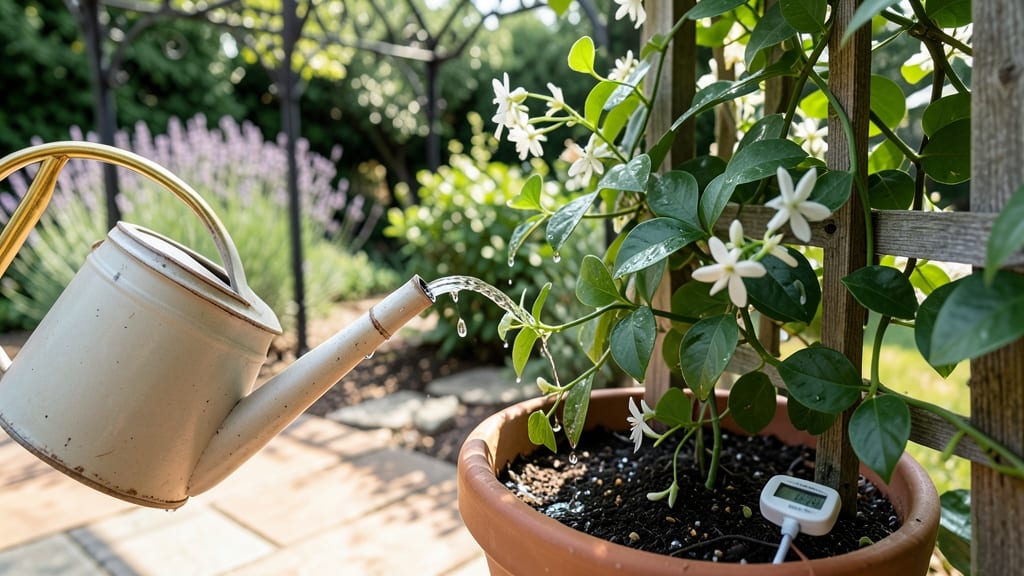
Watering a jasmine plant 🌸 properly means giving it just enough moisture to stay lush without drowning its roots—and the difference between thriving blooms and sad, crispy leaves often comes down to timing and technique.
If you’ve ever walked past a jasmine vine with yellowing leaves or mushy stems, you know how quickly overwatering can turn a fragrant beauty into a sad statistic.
The key? A schedule that adapts to your climate, pot size, and even the season—because a jasmine in July needs far more than one in January.
In this guide, I’ll break down the exact watering routine for your jasmine, whether it’s climbing a trellis in your garden or snug in a container on your patio.
You’ll learn how often to water, how to check soil moisture like a pro, and the subtle signs that tell you to cut back or pour more.
No more guesswork—just a foolproof system to keep your jasmine’s roots happy, its leaves vibrant, and those intoxicating blooms coming back year after year.
Jasmine plant watering schedule by season: how often to water for optimal growth
Mastering your jasmine plant watering schedule is the secret to those intoxicating blooms and glossy leaves. Unlike drought-tolerant succulents, jasmine thrives on consistent moisture but despises soggy roots—so timing is everything.
I’ve learned the hard way that summer heat demands daily checks while winter’s chill lets you relax. Let’s break it down by season so you can water like a pro.
Your jasmine’s water needs shift dramatically with the seasons. In spring, as new growth emerges, the soil warms up and absorbs water faster. By summer, evaporation skyrockets, and those fragrant flowers demand extra hydration.
Then comes fall, when growth slows, and winter brings dormancy. Ignore these seasonal cues, and you’ll either drown your plant or watch it wilt faster than a cut rose.
Before we dive into the schedule, grab a moisture meter or your finger—stick it 1-2 inches deep into the soil. If it feels dry, it’s time to water. If it’s damp, wait another day.
This simple check saves jasmine plants from both root rot and dehydration. Pro tip: Water in the morning to let foliage dry before evening humidity sets in.
| Season | Frequency | Soil Check | Watering Time | Key Factors |
|---|---|---|---|---|
| Spring | Every 3-4 days | Top 1-2" dry | Morning (6-9 AM) | Warming soil, new growth |
| Summer | Daily or every 2 days | Top 1" dry | Early morning | High heat, humidity |
| Fall | Every 5-7 days | Top 2" dry | Late morning | Cooling temps, slower growth |
| Winter | Bi-weekly | Top 3" dry | Mid-morning | Dormancy, cold soil |
Let’s start with spring watering, when your jasmine wakes up from winter dormancy. The soil is cooler, so water penetrates slower. I water mine every 3-4 days, giving the roots time to establish without sitting in wet soil.
Use a deep watering technique: Aim the hose or watering can at the base until water runs out the drainage holes. This encourages roots to grow downward, making your plant more resilient.
When summer arrives, your jasmine’s water needs double in urgency. High temperatures and low humidity (especially in dry climates) mean the soil dries out faster. I’ve seen jasmine leaves curl and droop by mid-afternoon if neglected.
Water daily or every other day, but always check the top inch of soil first. Mulch around the base with organic matter like shredded bark to retain moisture and keep roots cool. Pro tip: Group potted jasmine together to create a microclimate that holds humidity.
As fall temperatures drop, your jasmine’s growth slows, and so do its water needs. I reduce watering to every 5-7 days, letting the soil dry out more between sessions. This is also the time to prune back dead or yellowing leaves—they’ll sap moisture from healthy growth.
If your jasmine is in a pot, move it to a sheltered spot before the first frost, as cold winds increase evaporation. A greenhouse or sunroom works wonders for extending the season.
Winter is the easiest season for jasmine watering—your plant is basically hibernating. I water mine bi-weekly and only if the top 3 inches of soil are bone dry. Overwatering in winter is a common mistake that leads to root rot.
If you’re in a cold climate, reduce watering further or let the soil dry out completely. A well-draining pot with perlite or sand mixed into the soil prevents water from pooling around roots during dormancy.
Environmental factors like humidity and wind exposure can tweak your watering schedule. In humid climates, like my friend’s coastal garden, jasmine needs less frequent watering because the air moisture slows evaporation. But in arid regions, even morning watering might not be enough—consider a self-watering pot or drip irrigation system.
Always adjust based on your local weather forecasts: After a heavy rain, skip watering entirely and let the soil dry naturally.
One final tip: Container vs. in-ground jasmine watering differs significantly. Potted jasmine dries out faster because pots have less soil volume. I water mine every 2-3 days in summer compared to every 5-7 days for in-ground plants.
If you’re unsure, lift the pot—if it’s lighter than expected, it’s time to water. For in-ground jasmine, focus on deep, infrequent watering to encourage deep root growth and drought resistance.
With this season-specific schedule, your jasmine will reward you with vibrant blooms and lush foliage
Signs your jasmine plant is overwatered or underwatered (and how to fix it)
Your jasmine plant’s leaves can tell you everything about its hydration status. Yellowing leaves, mushy stems, or crispy brown edges are all red flags. I’ve learned the hard way that jasmine thrives on balance—too much water suffocates roots, while too little stresses the plant.
Let’s decode these symptoms so you can revive your fragrant vine before it’s too late.
Start by checking the soil moisture with your finger. Stick it about 1-2 inches deep—if it feels damp, hold off on watering. If it’s bone dry, your jasmine is thirsty.
But watch out: soggy soil is just as deadly. Jasmine roots need air circulation, and waterlogged conditions invite root rot, a silent killer.
⚠️ callout warning
Yellow leaves + soggy soil = overwatering. Wilting + dry soil = underwatering. Both issues require immediate action. Stop watering if you see mold or mushy stems. For thirsty plants, water deeply until it drains from the bottom. Always use pots with drainage holes!
If your jasmine’s leaves are yellowing and dropping, it’s likely overwatered. Check the base of the stems—if they’re soft or black, root rot has set in.
Trim affected roots with sterilized scissors and repot in fresh, well-draining soil. Reduce watering to every 7-10 days until the soil dries out completely between waterings.
On the flip side, wilting leaves that feel dry and crispy signal underwatering. Jasmine vines may also drop buds or grow stunted new leaves. Revive your plant by giving it a deep watering—soak the soil until water runs out the drainage holes.
After that, maintain a consistent schedule, like watering every 2-3 days in pots or every 5-7 days in-ground.
Don’t ignore white mold on the soil surface or pale, limp leaves. These are classic signs of overwatering. Let the top 2 inches of soil dry out before watering again, and consider adding perlite or sand to improve drainage.
For underwatered jasmines, a mulch layer helps retain moisture while protecting roots from extreme heat.
Use this quick troubleshooting checklist to diagnose and fix issues fast: ☑️ Yellow leaves + soggy soil → Reduce watering, repot if needed ☑️ Wilting + dry soil → Deep water, adjust frequency ☑️ Mold or mushy stems → Trim roots, improve drainage ☑️ Stunted growth → Check soil nutrients, fertilize lightly ☑️ Crispy leaf edges → Increase humidity with pebbles or misting