
Picking
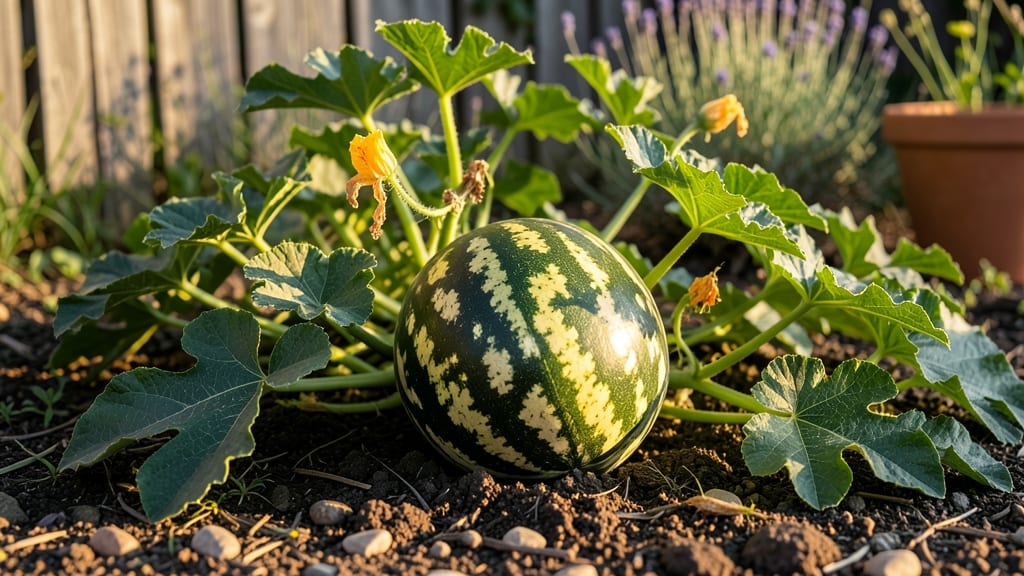
The mango watermelon hybrid creates a tropical fruit that marries mango's sweet, aromatic profile with watermelon's refreshing crunch, delivering a citrusy-melon fusion. These vines grow like watermelons but produce smaller, oblong fruits with vibrant yellow-orange rinds and juicy red flesh dotted with dark seeds.
The mango watermelon hybrid isn't just a novelty—it's a true botanical fusion where the mango's tropical sweetness meets watermelon's crisp bite. 🌱 This crossbreed typically matures in 90-120 days and thrives in warm climates with full sun exposure, though it requires careful hand-pollination since its flowers don't self-pollinate well.
The resulting fruit often weighs 2-5 pounds, making it perfect for small gardens or as a conversation piece at dinner parties.
What makes this hybrid fascinating is how its genetic traits combine: the flesh inherits watermelon's juiciness while developing mango's signature floral notes, creating a flavor profile that's neither fully tropical nor purely melon-like. Pro tip: Plant near bee-friendly flowers to maximize pollination success—this is where most home gardeners struggle with inconsistent yields.
💡 In This Article
- How the Mango Watermelon Hybrid Combines Genetic Traits
- Growing Tips for Mango Watermelon Hybrid Plants
How the mango watermelon hybrid combines genetic traits
The mango watermelon hybrid emerges from a precise cross-pollination process where mango's Mangifera indica genes blend with watermelon's Citrullus lanatus traits. Botanists achieve this by transferring pollen from a mango flower to a watermelon flower using a paintbrush or bee assistance.
The resulting hybrid inherits watermelon's vining growth habit (sprawling 6-10 feet) but develops mango's oblong fruit shape (typically 6-12 inches long) rather than the classic round watermelon.
The flavor fusion happens at the cellular level where mango's volatile compounds (like myrcene and linalool) combine with watermelon's cucurbitacins to create that unique citrusy-melon profile. The flesh's red pigmentation comes from lycopene (like watermelon) but develops speckled black seeds from mango's genetic contribution.
Texture-wise, it maintains watermelon's crispness while gaining mango's juicy, slightly fibrous quality when ripe.
What's surprising is how the hybrid's aroma compounds develop differently than either parent. Mango's signature terpenes (responsible for that tropical scent) interact with watermelon's aldehydes to create a fragrance that's more complex than either fruit alone.
This is why the hybrid often smells like a mix of ripe mango and honeydew melon with a hint of citrus zest. The sugar content typically measures between 8-12% Brix (similar to watermelon) but with higher acidity levels (closer to mango).
Visually, the hybrid's yellow-orange rind comes from a combination of watermelon's carotenoid pigments and mango's anthocyanin precursors. The rind develops a waxy texture similar to cantaloupe rather than watermelon's smooth surface.
When sliced, the red flesh shows marbled patterns from both fruit's vascular structures, creating a visually striking appearance that's more complex than either parent fruit.
One fascinating genetic quirk is how the hybrid's seed production behaves differently. While watermelons produce hundreds of seeds, this hybrid typically yields 50-100 seeds per fruit that are black and elongated (resembling mango pits).
The seeds remain viable for 1-2 years if stored properly, making them useful for future planting attempts. However, these seeds won't produce true hybrids—they'll revert to watermelon characteristics since mango plants are not self-pollinating in this context.
Gardeners often notice the hybrid's growth patterns differ too. The vines produce yellow, single-sex flowers (unlike watermelon's separate male/female flowers), requiring manual pollination for fruit set.
The plants also develop thicker stems (about 1.5-2 inches in diameter) that can support the 2-5 pound fruits without the need for trellising that watermelons often require.
The most rewarding aspect of growing this hybrid is witnessing how its flavor evolves as it ripens. Early stages taste more watermelon-like with mild sweetness, but as the sugar content increases and acidity balances, the mango notes become dominant.
At peak ripeness (when the rind turns fully yellow-orange), you'll get that perfect tropical-melon fusion that makes this hybrid so special. 🌿