
Watering
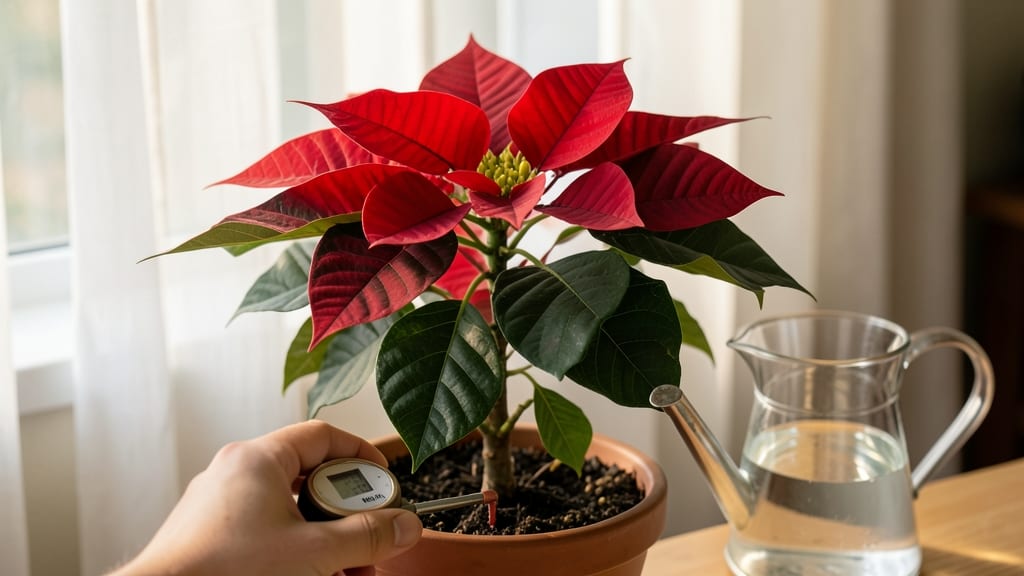
Your poinsettia’s water requirements are the key to keeping its leaves vibrant and preventing root rot—especially when you’re balancing its tropical roots with indoor air.
Struggling to keep your poinsettia’s vibrant red leaves lush year-round? Overwatering or underwatering can turn your holiday star into a sad, droopy mess—often within days. The secret lies in a precise watering schedule that mimics its natural tropical habitat without drowning its roots.
Most people assume poinsettias need constant moisture, but these plants actually prefer their soil to dry out slightly between waterings. Too much water leads to yellow leaves and mold, while too little causes wilting and crispy edges—both of which ruin the festive look.
In this guide, I’ll break down the exact watering schedule for every season, how to check soil moisture without guessing, and the simple fixes for common watering mistakes. By the end, your poinsettia will stay healthy, blooming, and ready for the holidays.
Poinsettia watering schedule: how often to water based on season and pot size
Poinsettias thrive in consistent moisture but despise soggy roots—balancing these needs is key to keeping your plant vibrant. As a tropical native, it prefers even hydration without the risk of root rot, which can strike within days if watered improperly.
The secret? Adjusting your schedule based on season and pot size while testing soil moisture before each watering.
Most gardeners overestimate how often poinsettias need water, leading to drooping leaves or moldy soil. I’ve learned the hard way that a small 6-inch pot dries out faster than a large 12-inch container, and summer heat demands more frequent watering than winter dormancy.
Let’s break down the exact schedule you need to avoid common pitfalls.
| Season | Pot Size | Watering Frequency | Soil Moisture Test | Water Amount |
|---|---|---|---|---|
| Spring (March-May) | Small (6-8") | Every 5-7 days | Top 1" dry | 250-300ml until drainage |
| Spring (March-May) | Large (10"+) | Every 7-10 days | Top 2" dry | 500-750ml until drainage |
| Summer (June-August) | Small (6-8") | Every 3-5 days | Top 1" dry | 250-300ml until drainage |
| Summer (June-August) | Large (10"+) | Every 5-7 days | Top 1.5" dry | 500-750ml until drainage |
| Fall (September-November) | Small (6-8") | Every 7-10 days | Top 1.5" dry | 250-300ml until drainage |
| Fall (September-November) | Large (10"+) | Every 10-14 days | Top 2" dry | 500-750ml until drainage |
| Winter (December-February) | Small (6-8") | Every 2-3 weeks | Top 2" dry | 150-200ml until drainage |
| Winter (December-February) | Large (10"+) | Every 3-4 weeks | Top 2.5" dry | 300
Signs of overwatering vs. underwatering poinsettias (and how to fix them fast)Your poinsettia’s leaves speak volumes about its water needs—yellowing edges or drooping foliage scream for help. The key is learning the difference between overwatering and underwatering, which can both kill your plant if ignored. Poinsettias thrive in consistently moist (not soggy) soil, but their roots suffocate when waterlogged or wither when parched. First, check the soil moisture by sticking your finger 1 inch deep. If it’s damp, hold off on watering—this is the #1 sign of overwatering. If it’s bone-dry, your poinsettia is thirsty. The leaf color and stem firmness also reveal the truth: yellow leaves with mushy stems mean too much water, while brown crispy edges signal dehydration. Overwatering vs. Underwatering PoinsettiasOverwatering
FIX: Let soil dry 50% between waterings; repot in well-draining mix.
Underwatering
FIX: Water deeply until excess drains; add humidity tray.
For overwatered poinsettias, the fix starts with draining excess water immediately. Move your plant to a shady spot (direct light speeds evaporation) and avoid watering for 3-5 days. If the roots smell rotten, trim away blackened sections with sterilized scissors and repot in fresh, chunky potting mix with perlite. Underwatered poinsettias need a deep soak—water until it pours from drainage holes. Place the pot in a tray of water for 10 minutes to ensure roots rehydrate fully. Afterward, mist leaves daily to restore humidity (poinsettias love 40-50% humidity), or group plants together to create a microclimate. Pro tip: Use a moisture meter to avoid guesswork—aim for 40-60% moisture in the top 2 inches of soil. If your poinsettia’s leaves feel slimy or crunchy, act fast! Overwatering causes root rot in 48 hours, while underwatering leads to permanent wilting within days. Remember, poinsettias are tropical plants—they mimic their natural habitat by drinking deeply but infrequently. Adjust your watering based on seasonal light (more water in summer, less in winter) and pot size (small pots dry faster). With these fixes, your poinsettia’s leaves will stay vibrant and lush for seasons to come! 🌸 |