
Watering
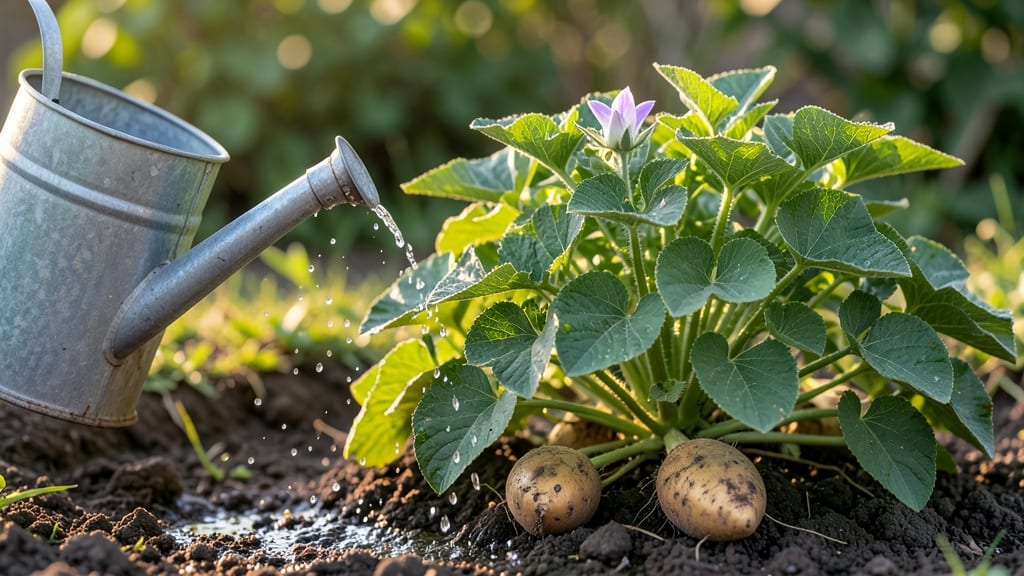
Watering potatoes every day can actually ruin your harvest—too much moisture leads to rotting tubers and wasted effort, while too little stunts growth and shrinks your yield.
Most gardeners overcomplicate it, but the secret to bump-free potatoes is consistency—not daily drenching. In fact, your soil should stay evenly moist but never soggy, with 1-2 inches of water per week being the golden rule.
Here’s what you really need to know: how often to water based on your soil type, the stage of growth (sprouting vs. tuber formation), and even the weather. Skip the guesswork and learn the exact schedule that keeps your 🥔 potatoes thriving without the risk of overwatering.
We’ll cover the ideal watering routine, warning signs of over- or underwatering, and when to cut back before harvest—so you end up with a bucket of perfect spuds, not a muddy mess.
The ideal potato watering schedule by growth stage (with exact timing)
Potatoes don't need daily watering—overwatering actually causes tuber rot and soggy harvests. The key is consistent moisture without drowning the roots. Your watering schedule should change as your potatoes grow from sprouts to tubers.
I'll break it down by stage so you know exactly when to water and how much.
Most gardeners make two big mistakes: watering too little (leading to small, misshapen potatoes) or watering too much (causing disease and rot). The solution? A stage-based approach that matches your plants' needs. Let's start with the critical early stages where watering sets the foundation for your harvest.
🚨 NON-NEGOTIABLE: Always water in the morning (before 10 AM) to reduce fungal risks and let soil dry slightly during the day. Night watering invites blight and scab, two common potato diseases. Stick to this rule, and you'll avoid 80% of watering-related problems.
| Growth Stage | Water Frequency | Amount per Session | Soil Moisture Goal | Key Watch For |
|---|---|---|---|---|
| Sprouting (0-3 weeks) | Every 2-3 days | ½ inch (1.25 cm) | Evenly moist, not soggy | Wilting leaves or dry soil 1 inch down |
| Flowering (3-6 weeks) | Every 3-4 days | 1 inch (2.5 cm) | Consistently damp | Yellowing flowers or cracked soil |
| Tuber Formation (6-10 weeks) | Every 4-5 days | 1.5 inches (3.8 cm) | Deeply moist (2-3 inches down) | Purple stems or hollow tubers |
| Pre-Harvest (2-3 weeks before) | Every 7-10 days | ½ inch (1.25 cm) | Lightly moist surface | Green tubers or thin skins |
During the sprouting stage (first 3 weeks), your potatoes need gentle but frequent watering. Think of this as the foundation phase—too little water stunts root growth, while too much causes rot before tubers even form.
I recommend checking soil moisture by poking your finger 1 inch deep; if it's dry, water lightly. If it's still damp, wait another day.
When flowers appear (around week 3-6), this is when tubers start forming. Increase your watering to 1 inch per session, but space it out to every 3-4 days.
This stage is critical for yield—consistent moisture encourages larger, bumpier potatoes. Watch for yellowing flowers, which signal underwatering, or mushy stems, a sign of overwatering.
By week 6-10, your potatoes are in full tuber formation mode. This is when you can reduce frequency but increase depth. Water every 4-5 days with 1.5 inches per session, aiming to soak the soil 2-3 inches deep.
Use a soil moisture meter or your finger to check—damp soil at 3 inches down is ideal. Skipping this step often leads to small, lumpy potatoes instead of the plump harvests you're dreaming of.
One common myth is that daily watering is necessary for potatoes. In reality, daily watering only makes sense in extreme heat (above 90°F/32°C) or sandy soil. For most gardeners, daily watering causes more problems than it solves.
Instead, focus on deep, infrequent watering that encourages strong root systems. If you're unsure, stick to the stage-based schedule in the table above.
Pro tip: Mulch your potato plants with straw or grass clippings to retain moisture and reduce evaporation. A 2-3 inch layer of mulch can cut your watering needs by 30%, especially in hot climates.
Just be sure to pull mulch back 2 inches from the stems to prevent rot. This simple trick saves time and keeps your soil consistently moist without overwatering.
If you live in a dry climate or use containers, you'll need to water more frequently—sometimes daily in extreme heat. But even then, always let the top inch of soil dry out between waterings. For in-ground potatoes, the soil's natural moisture retention
5 Signs you're watering potatoes wrong (and how to fix it)
Potatoes need consistent moisture, but daily watering isn't always the answer. Overwatering can drown roots, while underwatering shrinks tubers. The key is balance—soil should stay evenly moist but never soggy. I've learned this the hard way after watching my Yukon Golds turn to mush one summer!
Watch for these 5 red flags that your watering routine needs adjustment. Each sign reveals a different problem, and I'll show you how to fix it before your harvest suffers. The sooner you catch these issues, the better your potatoes will turn out.
⚠️ Daily Watering = Big Mistake!
Watering potatoes every day is a common trap that leads to:
- Root rot from poor drainage
- Blossom end rot in tubers
- Fungal diseases like late blight
Correct approach: Water deeply every 3-5 days (or when top 1-2 inches of soil dry). Use the finger test—stick your finger in the soil. If it feels dry, water; if damp, wait. Morning watering is best to prevent fungal growth.
First, check for yellowing leaves that aren't wilting. This often means your potatoes are overwatered. The leaves may look sad and limp, but the real damage happens underground—roots suffocate from lack of oxygen.
To fix this, let the soil dry slightly between waterings and improve drainage by adding compost or sand to heavy clay soil.
Next, look for stunted growth with small, hard tubers. This is your underwatering alert! When plants struggle to get moisture, they prioritize keeping existing tubers small over producing new ones.
Increase watering to 1-2 inches per week and mulch around plants to retain moisture. Drip irrigation works best to deliver water directly to roots.
Another warning sign is cracked soil around the base of your plants. This happens when soil dries out too quickly between waterings, causing uneven moisture stress. To prevent this, water deeply and consistently, and apply a 2-3 inch mulch layer of straw or grass clippings.
This keeps soil temperatures stable and moisture levels even.
If your potato plants show brown, crispy leaf edges, it's often a sign of inconsistent watering. This stress causes the plant to pull water from leaves, leading to browning.
Adjust your schedule to water at the same time each week and use a soil moisture meter to track levels. Consistency is key—potatoes hate surprises!
Finally, watch for green tubers with bitter flavors. This happens when potatoes get too much water after flowering, causing excess foliage growth at the expense of tuber development. Reduce watering slightly after flowering and focus on balanced fertilization to encourage tuber formation instead of leafy growth.
Remember, the goal is consistent moisture, not daily watering. Pay attention to your plants' signals, and you'll harvest perfect potatoes every time! 🥔