
Orchid Care
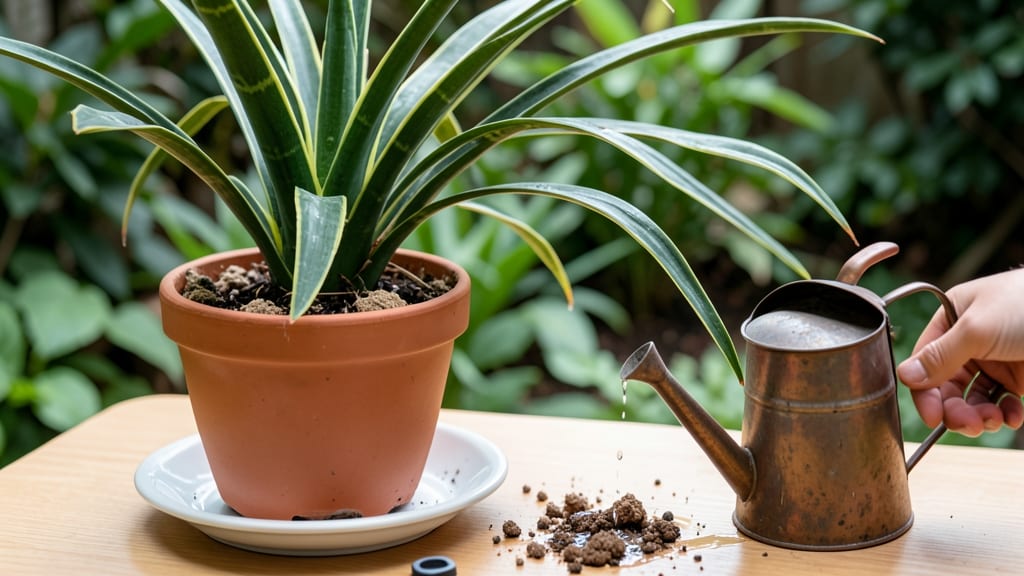
After repotting orchids, you should NOT water them immediately—wait 1 to 2 weeks to allow roots to heal and adjust to their new environment, preventing rot while promoting healthy regrowth. Light misting can help maintain humidity, but avoid soaking the roots prematurely.
Repotting orchids is stressful for their roots, which can become damaged during the process. 🌱 The healing period is crucial because freshly exposed roots are highly vulnerable to fungal infections and rot when exposed to excess moisture.
I've seen many orchid owners make the mistake of watering too soon, which can actually set back their plant's recovery by several weeks. Instead, focus on maintaining good airflow around the plant during this critical adjustment phase.
During those first 1-2 weeks, you can help create an ideal environment by placing your orchid in a spot with bright, indirect light and moderate humidity. 💧 If the air feels particularly dry, a light spray of water around the plant (not directly on the roots) can help maintain humidity levels without risking overwatering.
Remember that orchid roots need oxygen just as much as water, so keeping them slightly dry initially allows them to establish properly in their new pot.
💡 In This Article
- Why Waiting to Water Orchids After Repotting Protects Root Health
- Optimal Post-Repotting Care Schedule for Thriving Orchids
Why waiting to water orchids after repotting protects root health
Repotting orchids causes significant root trauma, as the delicate roots get trimmed and disturbed during the process. These exposed roots act like fresh wounds—they're highly susceptible to infections because their protective outer layer (velamen) gets damaged.
When you water immediately, you create the perfect conditions for fungal and bacterial growth, since excess moisture traps heat and blocks oxygen—something orchid roots desperately need to heal.
The key biological reason is that orchid roots are specialized to absorb both water and oxygen simultaneously through their velamen layer. When roots are freshly repotted, their ability to regulate moisture intake is compromised.
Waiting 1-2 weeks allows the velamen to regenerate and seal minor cuts, while giving the roots time to establish new connections with the growing medium.
Studies show that orchid roots can take up to 10 days to begin actively photosynthesizing again after repotting, which is their primary energy source for recovery.
Think of it like healing a paper cut—you wouldn't submerge it in water immediately, right? The same principle applies here. Premature watering creates a soggy environment where harmful pathogens thrive.
I've observed that orchids repotted in bark mix (a common medium) are especially vulnerable because the bark's natural air pockets get disrupted during repotting, making it harder for roots to breathe.
What's actually happening at the cellular level? The root tips contain meristematic cells that divide rapidly to form new growth. These cells are extremely sensitive to waterlogging—they'll either drown or develop anaerobic conditions that produce toxic byproducts.
The healing period allows these cells to stabilize and begin producing new root hairs, which are crucial for nutrient absorption. 🌱
Different orchid types have varying recovery times—Phalaenopsis orchids (moth orchids) typically recover faster (7-10 days) than Cattleyas (2-3 weeks) due to their different root structures.
The size of the plant also matters: larger orchids with more extensive root systems need longer to heal because they have more surface area exposed to potential infection. Always monitor the roots' color—healthy roots should be green or silvery, while rotting roots turn brown or mushy.
Here's what you can do to support this healing process without watering: Place your orchid in a spot with 50-70% humidity and bright, indirect light (think morning sun through a sheer curtain). The roots need this light to begin photosynthesis almost immediately, even before they're ready for water.
You can also gently mist the leaves (not the roots) with room-temperature water to maintain humidity without risking root rot.