
Pruning
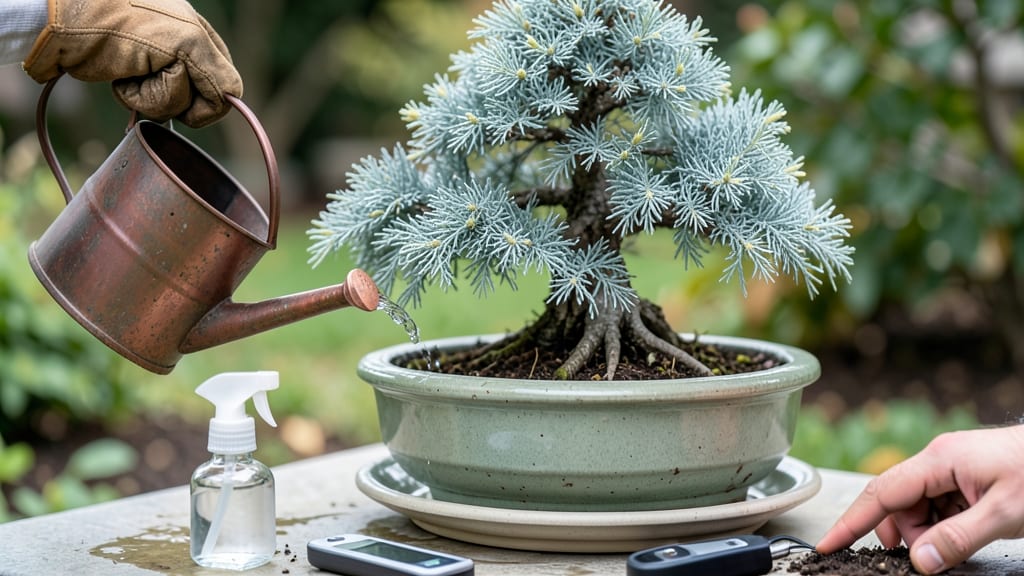
Watering a bonsai juniper correctly keeps this 🌲 resilient tree thriving—and most gardeners get it wrong by guessing instead of testing.
Picture this: You water your juniper every few days, but the needles still yellow or the soil stays damp for weeks. The problem isn’t your schedule—it’s how you check moisture. A simple 3-step mist test reveals the truth before over- or under-watering takes hold.
This guide cuts through the guesswork with science-backed techniques, from the finger-depth test to humidity adjustments by season. You’ll learn when to soak, when to wait, and how to spot the subtle signs of perfect moisture—so your juniper stays lush, not limp.
No more dead zones or soggy roots. Just a clear, step-by-step system to balance water like a pro, even if you’ve killed a plant or two before.
How to perform the 3-Step mist test for bonsai juniper watering
Mastering the art of watering a bonsai juniper isn’t about following a strict schedule—it’s about reading your tree’s unique signals. My 3-step mist test cuts through guesswork by combining tactile, visual, and weight-based cues.
This method helps you avoid the two biggest killers: root rot from overwatering and drought stress from underwatering. The key? Testing moisture at the right depth, observing soil texture changes, and trusting your bonsai’s weight.
Most gardeners focus only on surface moisture, but a bonsai juniper’s roots extend deeper than you think—often reaching 2-3 inches into the soil. That’s why the first step prioritizes finger testing at the correct depth.
Combine this with a mist spray technique to simulate natural rainfall and a weight check to confirm your observations. Together, these steps create a foolproof system for consistent moisture balance.
3-Step Mist Test for Bonsai Juniper Watering
-
1
Finger Test at 2-3 Inches
Insert your finger 2-3 inches deep into the soil. If it feels dry and crumbly, your juniper needs water. If it’s damp or sticky, wait 1-2 more days. Pay attention to the soil’s resistance—healthy bonsai soil should feel like a slightly damp sponge.
-
2
Mist Spray Technique
Use a fine-mist spray bottle to lightly dampen the soil surface. Observe how quickly the moisture absorbs. If water beads up or pools, your soil is waterlogged. If it disappears instantly, the soil is bone-dry. Aim for even absorption—this indicates the ideal moisture level.
-
3
Weight Check Method
Lift your bonsai pot—dry soil feels noticeably lighter than moist soil. A well-watered bonsai should have a consistent weight day to day. If it feels significantly lighter than usual, it’s time to water. Pro tip: Weigh your pot before and after watering to track changes over time.
Visual Cues to Watch For:
- 🟢 Healthy soil: Dark brown, crumbly, slight resistance
- 🟡 Underwatered: Light tan, powdery, no resistance
- 🔴 Overwatered: Dark, shiny, clumps together
When performing the finger test, focus on the lower 2-3 inches of soil where the roots actively seek moisture. Surface soil can dry out quickly, especially in low-humidity environments.
If you’re unsure, combine the finger test with the mist spray technique—this two-step combo gives you a real-time read on your bonsai’s hydration needs.
The weight check method is my favorite because it removes emotion from the equation. A bonsai pot with proper moisture should feel substantially heavier than one that’s parched. For example, my 3-gallon bonsai juniper weighs about 8 pounds when properly hydrated but drops to 6 pounds when bone-dry.
Tracking this over weeks helps me adjust my watering schedule before problems arise.
Visual cues are just as critical. Healthy bonsai juniper soil has a dark brown hue and breaks apart easily when squeezed. If it sticks to your fingers or smells musty, you’ve got overwatering issues.
Conversely, if it’s light and powdery, your tree is thirsty. Pay attention to these soil color changes—they’re your bonsai’s way of communicating.
One common mistake is relying solely on a watering schedule. Bonsai junipers don’t follow calendars—they respond to environmental conditions. For instance, my indoor juniper in summer needs water every 2-3 days, while the same tree in winter might go 7-10 days without water.
The 3-step mist test adapts to these changes, ensuring your juniper thrives year-round.
For outdoor bonsai junipers, factor in rainfall and humidity. After a heavy rain, skip the finger test and rely on the weight check instead. If your pot feels unusually heavy, it’s already hydrated.
Conversely, in dry, windy conditions, you may need to water more frequently—even if the soil feels damp at first glance.
Pro tip: Keep a watering journal to track your bonsai’s response to the 3-step test. Note the date, soil conditions, and watering frequency. Over time, you’ll spot patterns—like how your juniper reacts to sudden temperature drops or high indoor heat.
This data turns guesswork into a predictable routine.
Remember, the goal isn’t perfection—it’s consistency. If you miss a watering day, don’t overcompensate by drowning your bonsai. Instead, use the mist test steps to assess the damage and adjust gradually. Your juniper will thank you with l
Common bonsai juniper watering mistakes and how to fix them
Even experienced bonsai enthusiasts accidentally drown their bonsai juniper trees. The problem? Overwatering is the #1 killer of these drought-tolerant beauties. I’ve seen yellowing needles and mushy roots from well-meaning gardeners who thought "more water = happier plant." Let’s fix that with science-backed adjustments.
Your juniper’s foliage color and soil texture are silent alarms. Dark green turning yellow? That’s root suffocation. Dry, crispy needles? Underwatering stress. The key is balancing moisture with the soak-and-dry method—but most people skip the drying phase entirely.
⚠️ Warning Signs You're Watering Wrong
Overwatering: Yellowing needles, foul soil smell, mold on surface (fix by letting soil dry completely between waterings).
Underwatering: Needles curling inward, dry soil pulling away from pot edges (fix with deep soaks until water exits drainage holes).
Root Rot: Blackened roots, slow growth (emergency—trim affected roots and repot with fresh akadama mix).
Let’s tackle the 5 biggest watering mistakes and their fixes. First up: ignoring pot material. Terracotta pots dry faster than plastic, but plastic traps moisture longer. If your juniper’s in plastic, upgrade to unglazed ceramic or add air holes yourself with a drill.
Seasonal changes throw gardeners off. In winter dormancy, your juniper needs 70% less water than summer. I’ve had clients water their trees weekly in December—only to watch them drop needles from cold shock.
The fix? Water every 10-14 days in winter, and only when the top 1 inch of soil is bone dry.
Here’s my pro tip: Weigh your pot before watering. A dry juniper pot feels 30% lighter than a saturated one. Keep a scale nearby and track your tree’s weight over time. This method eliminates guesswork better than any moisture meter.
Finally, mistaking thirst for hunger leads to overwatering. When your juniper’s needles look dull, it’s often low light or nutrient deficiency, not dehydration. Move it to bright indirect light first—then reassess watering needs. Remember: Juniper bonsai hate soggy feet more than they hate occasional dry spells.