
Watering
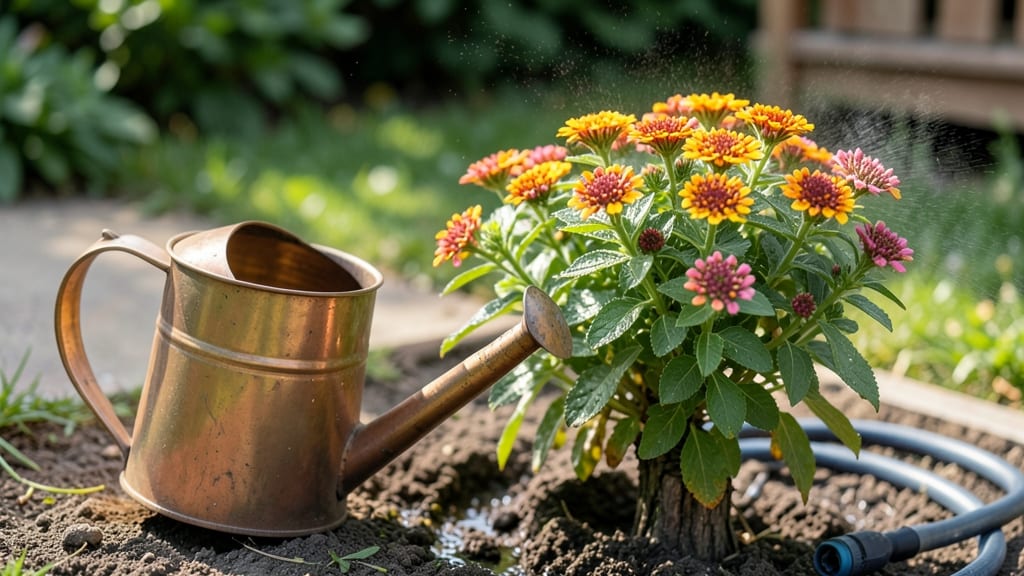
Watering lantana plants the right way unlocks year-round blooms without the fuss of constant care.
Picture this: your lantana 🌺 thrives through summer’s heat, its clusters of bright flowers drawing hummingbirds like a magnet—until you overwater, and suddenly, the leaves yellow and the blooms fade.
The secret isn’t just how much you water; it’s when and how deeply you do it to match lantana’s natural drought resilience.
In Zone 6a, where spring planting kicks off in April, your lantana will thank you for deep, infrequent watering that mimics its native dry conditions. Too much moisture? Root rot sneaks in.
Too little? Buds fail to open. Below, I’ll break down the exact schedule—from summer’s thirsty spells to winter’s near-dormancy—plus how to adjust for pots versus garden beds.
You’ll leave this guide knowing exactly when to water, how to spot trouble before it starts, and the one trick that keeps your lantana blooming like a pro’s—with zero guesswork.
The ideal watering schedule for lantana plants by season
Lantana plants thrive on consistent moisture without soggy soil, making them perfect for busy gardeners. Their drought tolerance means you won’t drown them, but deep watering every few days keeps those vibrant blooms coming.
The key? Adjusting your watering based on season, container type, and climate—humid regions need less than arid ones.
In spring and fall, lantana enjoys moderate watering—about 1 inch per week—to establish roots without encouraging fungal growth. Summer heat demands more frequent watering, while winter dormancy requires minimal moisture. Pots dry out faster than garden beds, so container-grown lantana needs daily checks in hot weather.
For container-grown lantana, use a well-draining mix with perlite or sand to prevent root rot. Water when the top inch of soil feels dry, but avoid letting pots sit in saucers of water.
In garden beds, mulch with 2-3 inches of organic matter to lock in moisture and suppress weeds.
In humid climates, lantana may need less frequent watering due to higher natural moisture. Conversely, arid regions require deeper watering every 2-3 days in summer. Always water at the base of the plant in the morning to reduce evaporation and fungal risks.
Watch for wilting leaves or yellowing foliage, which signal underwatering or overwatering. Lantana’s resilience shines when you balance moisture with proper drainage. A moisture meter can help gauge soil conditions accurately, especially for new gardeners.
Prune dead or leggy stems in early spring to encourage new growth and better water absorption. This also improves airflow, reducing disease risks from excess moisture. Pair pruning with a light fertilizer to support vibrant blooms.
If your lantana’s flowers fade prematurely, it may need more water during heatwaves. Conversely, mushy stems or drooping leaves mean you’re overwatering. Adjust your schedule based on these visual cues and your local climate.
For urban gardeners with limited time, drip irrigation on a timer is a game-changer. Set it to deliver 1 inch of water per week in summer, reducing in cooler months. This method ensures consistent moisture without the guesswork.
Remember, lantana’s drought tolerance makes it a low-maintenance star. With this seasonal watering guide, your plants will reward you with nonstop blooms from spring to frost. Happy gardening! 🌺
5 Common watering mistakes that kill lantana blooms
Lantana thrives on consistency, but even small watering errors can stunt its vibrant blooms. The biggest mistake? Assuming "more water = more flowers." Overwatering suffocates roots, while underwatering stresses the plant into dormancy.
Both extremes trigger yellow leaves and sparse flowering—the last thing you want from this sun-loving shrub.
Another critical error is ignoring soil drainage. Lantana hates soggy roots, yet many gardeners plant it in heavy clay or forget to amend pots with perlite. Without proper drainage, root rot sets in within weeks, turning your lush lantana into a mushy mess.
Even well-intentioned daily watering can backfire if the soil doesn’t dry between sessions.
🌺 Pro Tip: Stick your finger 2 inches into the soil—if it’s damp, wait. If it’s bone-dry, water deeply until moisture reaches 6 inches down. This simple check prevents 90% of lantana watering woes.
⚠️ Warning: The 3 Silent Watering Killers
- Overwatering: Causes root rot and leaf yellowing (check for mushy stems).
- Underwatering: Triggers drooping leaves and brown tips (soil pulls away from pot edges).
- Inconsistent moisture: Leads to sparse blooms as the plant conserves energy.
Fix it: Adjust your schedule seasonally—every 2-3 days in summer, bi-weekly in winter.
Many gardeners also water at night, thinking it’s kinder to plants. Wrong! Wet foliage invites fungal diseases like powdery mildew, which clogs stomata and chokes growth.
Always water early morning so leaves dry by noon. For container lantana, bottom-watering (placing pots in trays of water for 10 minutes) reduces evaporation and fungal risk.
Don’t skip seasonal adjustments. A lantana that thrives in summer’s 90°F heat (water every 2-3 days) may suffocate in winter’s 50°F chill (water bi-weekly). Ignoring this shift causes stunted growth or bud drop.
Use a moisture meter for accuracy—lantana’s roots need 60% moisture in summer but only 30% in winter.
Finally, mulching mistakes sabotage your efforts. Too much organic mulch (like thick grass clippings) traps moisture and smothers roots. Instead, use 2-3 inches of inorganic mulch (gravel or straw) to retain moisture while allowing airflow. This keeps soil at the ideal 60-75°F range for lantana roots.
Remember: Lantana’s drought tolerance is a double-edged sword. While it survives dry spells, it won’t bloom without regular hydration. Balance is key—deep, infrequent watering beats shallow, daily sprinkles every time. 💧