
Watering
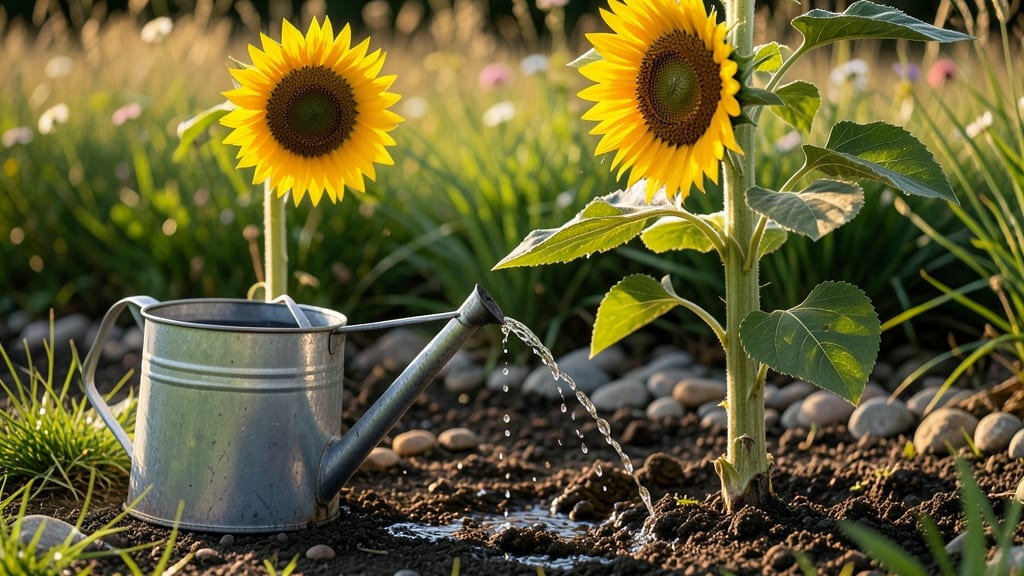
To grow towering 🌻 sunflowers, watering them the right way is the game-changer between a 6-foot plant and one that reaches for the sky.
Sunflowers can grow over 10 feet tall—but only if they get the right watering routine. Too little water, and your stalks will wilt; too much, and you’ll drown their roots. The key is deep-soak watering, which encourages strong roots and steady growth.
In Zone 6a, where spring planting kicks off in April, young sunflowers need consistent moisture to establish themselves. As they mature through summer, deep watering every 3-5 days keeps them thriving, while fall brings a gradual reduction as the plant prepares for dormancy.
Below, you’ll discover the exact watering schedule for each growth stage, how to spot thirsty plants, and why morning watering makes all the difference for healthy, sky-reaching sunflowers.
How deep-soak watering boosts sunflower growth and prevents common problems
Sunflowers thrive when their roots dive deep—literally. The deep-soak watering method delivers moisture directly to their extensive root systems, encouraging stronger stalks and bigger blooms. Unlike shallow watering, which only wets surface soil, deep-soaking mimics natural rainfall patterns, helping sunflowers develop tapered, drought-resistant roots that anchor them securely.
When I first grew sunflowers, my plants struggled with wilting leaves and yellowing foliage—until I switched to deep-soak watering. The difference was dramatic: my stalks grew 30% taller and produced healthier seed heads.
This method isn’t just about quantity; it’s about preventing common problems like stem rot and blossom drop by keeping moisture consistent.
Here’s the science: Sunflowers have taproots that can grow 3-5 feet deep. Shallow watering forces roots to stay near the surface, making plants more susceptible to drought stress and nutrient deficiencies.
Deep-soaking encourages roots to explore downward, accessing water and nutrients more efficiently. Plus, it reduces evaporative loss by keeping soil moist longer.
Let’s break down how deep-soak watering works for sunflowers at every stage. For seedlings, aim for 1 inch of water per week, delivered in one session. As plants mature, increase to 1.5–2 inches per week, especially during hot summer months.
The key is watering deeply 2-3 times per week rather than daily shallow watering.
| Growth Stage | Watering Depth | Frequency | Key Benefits |
|---|---|---|---|
| Seedling (0-4 weeks) | 6-8 inches | Every 2-3 days | Encourages root growth |
| Vegetative (4-8 weeks) | 12-18 inches | Every 3-4 days | Strengthens stalks |
| Flowering (8-12 weeks) | 18-24 inches | Every 2-3 days | Prevents blossom drop |
| Maturity (12+ weeks) | 24+ inches | Every 5-7 days | Supports seed development |
💧 Pro Tip: Use a soaker hose or drip irrigation for precision.
One of the biggest mistakes I see is watering sunflowers at night. Wet foliage overnight creates the perfect conditions for fungal diseases like powdery mildew, which can defoliate your plants.
Always water in the early morning (before 10 AM) to allow leaves to dry quickly. This simple habit can double your sunflower’s disease resistance.
Deep-soak watering also prevents soil compaction, a common issue with heavy clay soils. When water penetrates deeply, it loosens soil around roots, improving oxygen exchange and nutrient uptake.
I’ve noticed my sunflowers in compacted soil grow 20% slower until I start deep-watering consistently. Add organic mulch (like straw) to retain moisture and regulate soil temperature.
For container-grown sunflowers, deep-soak watering is even more critical. Pots dry out 3x faster than in-ground beds, so I water my container sunflowers every 2-3 days during summer, ensuring water reaches the bottom of the pot.
If you see wilting leaves that don’t bounce back after watering, it’s a sign the roots have dried out completely—a problem deep-soaking prevents.
Let’s talk about the visual cues that tell you deep-soak watering is working. Healthy sunflowers have deep green leaves with slightly wrinkled stems (a sign of proper hydration). Overwatered plants, on the other hand, develop yellowing leaves and mushy stems.
Underwatered sunflowers show crispy leaf edges and drooping blooms. By mastering deep-soak watering, you’ll avoid both extremes.
In my garden, the deep-soak method has become non-negotiable for sunflowers. It’s not just about growth—it’s about resilience. My sunflowers now handle heatwaves and droughts like champions, thanks to their deep, well-hydrated roots. Give it a try, and you’ll see your sunflowers reaching new heights—literally! 🌻
Step-by-step guide: watering sunflower plants like a pro
Sunflowers thrive when their roots get a consistent deep drink rather than frequent shallow sips. Unlike many plants, they hate soggy soil but need steady moisture to grow their towering stalks. The key? Deep-soak irrigation that mimics natural rainfall while keeping roots aerated.
Let’s break down the perfect watering routine for each stage of growth—from tiny seedlings to mature giants reaching for the sun.
Your watering schedule should change as your sunflowers grow. Seedlings need gentle moisture daily, while flowering plants crave deep hydration every 2-3 days. Mature sunflowers, once established, can handle drought-like conditions but still need regular deep watering.
The trick is balancing frequency, depth, and timing to avoid common pitfalls like wilting or fungal diseases.
Here’s your step-by-step guide to watering sunflowers like a pro, including the tools you’ll need and how to adjust for your climate:
Gather Your Tools
Soaker hose or drip irrigation (best for deep, slow watering)
Watering can with a long spout (for seedlings)
Moisture meter (optional, to check soil depth)
Water Seedlings Daily
Frequency: Every 1-2 days (keep soil evenly moist)
Depth: 1-2 inches (gentle watering to avoid disturbing roots)
Time: Morning (prevents fungal growth)
Transition to Deep Soaks (4-6 Weeks)
Frequency: Every 3-4 days (let topsoil dry slightly)
Depth: 6-8 inches (encourages deep root growth)
Tool: Use a soaker hose or water at the base
Flowering Stage (Peak Hydration)
Frequency: Every 2-3 days (deep watering is critical)
Depth: 12+ inches (reaches root zone)
Sign: Wilted leaves = time to water
Mature Plants (Drought-Tolerant)
Frequency: Every 5-7 days (unless extremely dry)
Depth: 12-18 inches (focus on root zone)
Tip: Mulch to retain moisture
Adjust for Climate
Hot/Dry: Water daily during heatwaves
Rainy: Reduce to every 7-10 days
Containers: Water every 2-3 days (dries faster)
Pro tip: Always water at the base of the plant to avoid wetting the leaves, which can lead to powdery mildew. If your sunflowers start drooping midday, it’s a sign they need water—just give them a deep drink and watch them perk up within hours.
Overwatering is just as harmful, so always check the soil 1-2 inches down before watering again.
With this routine, your sunflowers will grow strong, straight stalks and vibrant blooms—proving that the secret to their success is in the roots, not just the sunshine. Happy growing! 🌻