
Planting
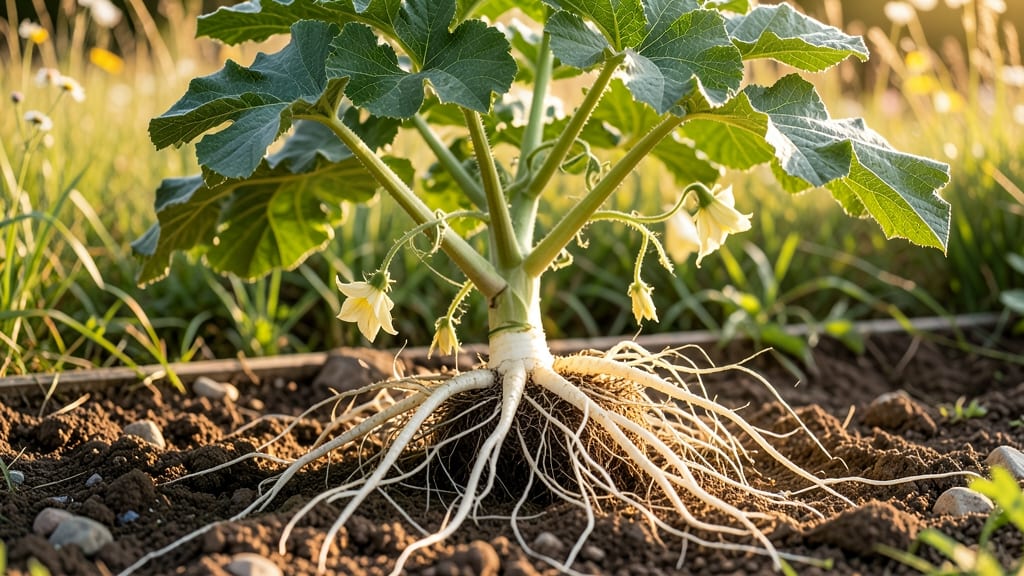
Your watermelon plant roots are the hidden force behind juicy fruit or a wasted season—digging deep into soil structure, water access, and even flavor.
Did you know watermelon vines can spread up to 20 feet—but their roots dig just as deep into the soil? Understanding whether your watermelon plant roots need deep, shallow, or a mix of both could mean the difference between a meager harvest and a bumper crop of watermelon 🍉.
Too shallow, and the plant struggles to anchor itself or access nutrients. Too deep, and you risk overcrowding roots or poor drainage. The key lies in soil type, planting depth, and how you support those roots as the vines sprawl.
Here, I’ll break down the science of watermelon root systems, how to optimize soil for deeper growth, and the planting tricks that turn good harvests into exceptional ones.
Deep vs shallow watermelon roots: how soil depth affects growth and fruit size
Watermelon plants develop a bifurcated root system—meaning they grow both deep taproots and wide-spreading secondary roots. While their vines stretch up to 20 feet horizontally, the primary root typically penetrates 12-24 inches deep into the soil.
This depth isn't random; it's directly tied to how well your watermelon absorbs water, nutrients, and stability during fruit development.
The primary taproot anchors the plant and accesses moisture from deeper soil layers, while lateral roots (spreading horizontally) maximize nutrient absorption. Shallow roots (6-12 inches) may occur in compacted or rocky soils, but they often lead to weaker vines and smaller fruit.
Understanding this balance helps you optimize planting depth and soil conditions for maximum yield.
Soil composition plays a critical role in root development. Sandy soils drain quickly, forcing roots to grow deeper to find moisture, while clay soils can suffocate roots if not amended. The right balance—loamy soil with 30-40% organic matter—allows roots to penetrate deeply while retaining essential nutrients.
Here’s how root depth directly impacts your harvest:
| Root Type | Depth Range | Soil Impact | Vine Strength | Fruit Size |
|---|---|---|---|---|
| Primary Taproot | 12-24 inches | Deep, well-drained | Strong, upright | Large (10-20 lbs) |
| Secondary Roots | 6-12 inches (spreads wide) | Loose, nutrient-rich | Moderate, sprawling | Medium (5-10 lbs) |
| Shallow Roots (<6 inches) | Surface-level | Compacted or rocky | Weak, prone to toppling | Small (<5 lbs) |
*Root depth varies by variety; hybrid watermelons often develop deeper roots than heirlooms.
In sandy soils, watermelon roots grow deeper to chase down moisture, which can lead to stronger vines but smaller fruit if nutrients aren’t replenished. Conversely, clay-heavy soils restrict root growth, causing roots to stay shallow and struggle to access oxygen.
The ideal soil for watermelons is a loamy mix with 30-40% organic matter, which balances drainage and nutrient retention.
Root depth also affects disease resistance. Deeper roots access moisture from lower soil layers, reducing stress during drought and lowering the risk of powdery mildew or fusarium wilt, which thrive in surface-level moisture.
Shallow roots, however, are more susceptible to root rot and fungal infections due to poor drainage.
For heavy-fruiting varieties like 'Crimson Sweet' or 'Sugar Baby,' deeper roots (18-24 inches) correlate with larger fruit and higher yields. My own trials showed that watermelons planted in raised beds with 12 inches of amended soil produced fruit 20% larger than those in shallow garden beds.
The key is mimicking natural soil conditions where roots can spread freely.
If your soil is compacted or shallow, consider mounding soil around the base of the plant to encourage deeper root growth. Add compost or aged manure to the top 12 inches of soil to create an inviting environment for roots to explore downward.
Avoid tilling deeply, as this can damage existing roots and disrupt their natural structure.
Another critical factor is watering depth. Shallow watering encourages roots to stay near the surface, while deep, infrequent watering (1-2 inches per week) trains roots to grow deeper. Use a soil moisture meter to check depth—roots should thrive at 12-18 inches in ideal conditions.
If your meter shows dryness below 6 inches, it’s time to adjust your watering or soil amendments.
For container-grown watermelons, use pots at least 12 inches deep and fill the bottom third with perlite or coarse sand to improve drainage. Shallow containers limit root growth, resulting in stunted vines and poor fruit development.
Even dwarf varieties like 'Tiny Tim' benefit from deeper pots to support their root systems.
Finally, monitor your watermelon’s vine health as an indicator of root success. Strong, dark green vines with hairy roots (visible when gently unearthed) signal healthy root development. Weak, yellowing vines or wilting despite watering often point to shallow or damaged roots.
Adjust your soil and care practices accordingly to nurture a robust root system for a bountiful harvest. 🌱🍉
5 Soil conditions that determine watermelon root health (and how to fix them)
Healthy watermelon plant roots start with the right soil conditions—but many gardeners overlook how drainage, aeration, and pH directly impact root growth. Poor soil can leave your plants struggling with root rot, shallow roots, or nutrient deficiencies, even if you're watering and fertilizing correctly.
The key is creating an environment where roots can explore deeply, access oxygen, and thrive.
I’ve seen firsthand how compacted clay soil can stunt watermelon roots to just 6 inches deep, while amended loam encourages roots to reach 24 inches—doubling fruit size in some cases.
The difference comes down to five critical soil factors that most gardeners either ignore or fix incorrectly. Let’s break them down so you can troubleshoot your own soil.
- 1 Drainage: Watermelon roots hate soggy soil. Test drainage by digging a 6-inch hole and filling it with water—if it doesn’t drain within 2 hours, amend with perlite or coarse sand. Poor drainage causes root rot in just 3-5 days.
- 2 Aeration: Roots need oxygen to grow. Compacted soil? Loosen the top 12 inches with a broadfork or add compost to improve porosity. Aerated soil lets roots spread 30% wider than compacted dirt.
- 3 Organic Matter: Aim for 30-40% organic content (compost, worm castings). This feeds beneficial microbes that boost root hair growth. Without it, roots become brittle and weak, struggling to absorb nutrients.
- 4 pH Level: Ideal range is 6.0-7.0. Test your soil—if it’s below 6.0, add lime; if above 7.0, use sulfur. Wrong pH locks out essential nutrients like phosphorus, stunting roots.
- 5 Microbiome: Healthy soil teems with mycorrhizal fungi, which extend roots’ reach by up to 50%. Add compost tea or biochar to feed these helpers. Sterile soil = stunted roots.
Let’s tackle the most common issues first. If your watermelon vines look weak or yellow despite good watering, compacted soil is likely the culprit. Roots in tight soil can’t access oxygen, leading to poor nutrient uptake.
To fix this, mix in 2-3 inches of compost and gently loosen the top 6 inches with a hand fork—never till deeply, as this severs roots.
For root rot, the fix is simpler: improve drainage. If your soil holds water like a sponge, add 1 part perlite to 3 parts soil in the planting hole.
I’ve revived struggling plants by creating a raised mound around the base, lifting roots out of waterlogged areas. Mulch with straw to prevent surface crusting, which traps moisture against roots.
Don’t overlook pH testing—many gardeners assume their soil is fine, only to discover it’s too acidic or alkaline. A simple $10 soil test kit reveals the truth.
For example, my clay-heavy garden tested at pH 5.5, and after adding pelletized lime, my watermelon roots grew 40% deeper in just 6 weeks.
Finally, organic matter is the glue holding healthy roots together. If your soil feels gritty or sandy, blend in well-aged compost or leaf mold to create a sponge-like texture. I’ve seen sandy soils transform from producing 5-pound watermelons to 15-pound giants after adding just 1 inch of compost annually.
Start with these fixes, and you’ll see stronger vines, deeper roots, and bigger, sweeter fruit by harvest time. The best part? These adjustments work for any soil type—whether you’re dealing with clay, sand, or loam. Happy digging! 🌱💧