
How To
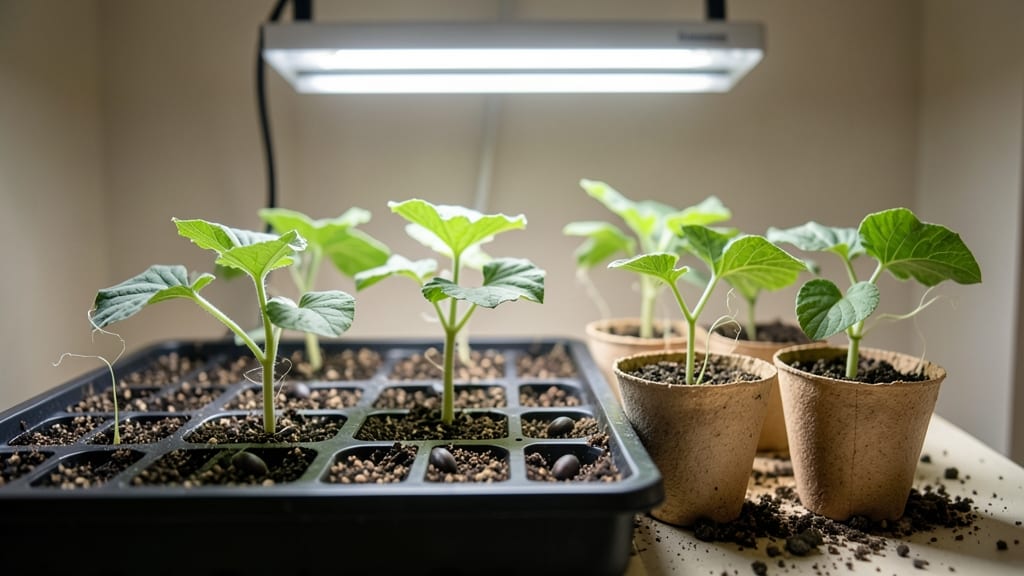
To start watermelon seeds indoors, aim for 4-6 weeks before your last frost date—usually late March to early April in Zone 6a—so vines have time to mature before summer heat peaks.
Picture this: you’ve waited all season for that first ripe slice of watermelon 🍉, only to watch your plants bolt in the heat because you started too late. Or worse, your seedlings flop in cold soil because you rushed them.
Timing isn’t just about dates—it’s about giving your watermelons the strong, healthy start they need to thrive.
Whether you’re in the Deep South or the Midwest, the key is matching your indoor start to your local frost-free window. Too early, and your seedlings will stretch weak and leggy; too late, and you’ll miss the harvest.
I’ll break down the exact zone-by-zone schedule, plus how to adjust for early or late varieties so you’re not guessing when to transplant.
Ready to avoid the common pitfalls? You’ll learn how to calculate your perfect start date, troubleshoot light and heat issues, and ensure your watermelons hit the ground running—no more wasted seeds or bitter disappointment.
Zone-specific indoor watermelon seed starting dates for optimal growth
Watermelons thrive with a long growing season, so starting seeds indoors at the right time ensures your vines mature before summer heat peaks.
The key is balancing last frost dates with your variety’s days to maturity—early varieties need 60-70 days, while heirlooms may take 90 days or more. Let’s break down the perfect indoor start windows by USDA zone to avoid late-season disappointments.
Your indoor starting window depends on two critical factors: when your last frost date occurs and how quickly your chosen watermelon variety grows. Most gardeners aim to transplant hardy seedlings outdoors 2-3 weeks after the last frost when soil temps hit 70°F+.
For example, a 70-day variety in Zone 5 needs 8-10 weeks indoors before transplanting, while a 90-day heirloom in Zone 10 might only need 4-6 weeks.
In Zones 3-4, where summers are short, prioritize early-maturing varieties like ‘Sugar Baby’ or ‘Black Diamond’ (both 60-70 days). Start seeds by March 1 to transplant by June 1, giving vines enough time to vine out and fruit before cooler weather arrives.
Use grow lights if natural light is limited, as watermelons need 12+ hours of light daily to thrive.
Gardeners in Zones 5-6 have a bit more flexibility but should still start seeds by late February. This window ensures seedlings are 4-6 inches tall with 2-3 true leaves by transplant time.
For heirloom varieties like ‘Moon and Stars’, which take 90 days, begin indoors by February 1 and use black plastic mulch outdoors to warm soil faster.
Warmer climates in Zones 7-10 allow for earlier starts, but avoid beginning seeds too soon—overcrowded seedlings or leggy growth from stretching toward light will weaken plants.
In Zone 10, where frost is rare, you can start seeds as early as mid-December for a winter-to-spring harvest, but use heat mats to maintain 75-85°F soil temps for germination.
Pro tip: Adjust your start date based on your watermelon’s days to maturity. Subtract the number of weeks needed to reach maturity from your first frost date (or 90 days before your average first frost in cooler zones).
For example, if your first frost is October 15 and you’re growing a 75-day variety, start seeds by July 25—but that’s too late for indoor starts! Instead, aim for May 15 to transplant by June 15.
Don’t forget to harden off seedlings for
How to calculate your exact indoor starting date based on local conditions
Determining the perfect indoor starting date for your watermelon seeds depends on three key factors: your last frost date, the plant's growth rate, and your local climate patterns.
Even if you're in the same USDA zone as a neighbor, microclimates—like urban heat islands or high-altitude chill—can shift your timeline by weeks. Let's break this down into actionable steps so you never start too early or late.
First, find your average last frost date using the USDA Plant Hardiness Zone Map or your local cooperative extension service. For example, if you're in Zone 7a, your last frost typically falls around April 15.
Watermelons need a long, warm season, so you'll want to transplant them outdoors after all danger of frost and when soil temperatures exceed 70°F.
Now, let's use the step list below to calculate your exact indoor starting date based on your unique conditions. This method accounts for germination time, seedling growth, and transplant readiness—plus adjustments for high-altitude or urban gardens.
Find Your Last Frost Date
Look up your local last frost date (e.g., April 15 for Zone 7a). Use resources like the USDA Zone Map or your state's agricultural extension office. If you're in a microclimate (urban, high-altitude, or near water), adjust by 1-2 weeks earlier or later.
Calculate Transplant Window
Watermelons need 70-90 days to mature. Transplant outdoors when soil is 70°F+ and all frost risk is gone. For Zone 7a, this is typically May 15-June 1. Subtract 2-3 weeks from this date to account for hardening-off time.
Determine Indoor Start Time
Watermelon seeds germinate in 7-10 days and need 4-6 weeks indoors before transplanting. For Zone 7a, start seeds April 1-15. Use this formula: Transplant Date - 6 Weeks = Indoor Start Date. Adjust for slow germination (cold starts) by adding 1-2 weeks.
Adjust for Microclimates
If you're in a high-altitude garden (e.g., Denver), subtract 2-3 weeks from your start date. For urban heat islands, add 1-2 weeks to account for earlier soil warming. Monitor soil temperatures with a thermometer to fine-tune your timing.
Plan for Variety Maturity
Early varieties (e.g., 'Sugar Baby') mature in 60-70 days, while standard types (e.g., 'Crimson Sweet') need 80-90 days. For shorter seasons, choose early-maturing varieties and start seeds 2 weeks earlier than the general guideline.
Once you've calculated your ideal start date, set up your indoor growing space with grow lights or a south-facing window to provide 6-10 hours of light daily. Watermelon seedlings need warmth to thrive—keep soil temperatures between 75-85°F using a seedling heat mat if needed.
Overcrowded seedlings will compete for nutrients, so thin them to 1 plant per 2-inch cell.
Pro tip: Use a planting calendar to track your progress. Mark your indoor start date, transplant date, and harvest window to stay on schedule.
If you're in a region with unpredictable weather, err on the side of starting seeds 1-2 weeks earlier—you can always delay transplanting if nighttime temperatures drop unexpectedly.
By following these steps, you'll give your watermelon vines the head start they need to produce sweet, ripe fruit before the first frost. Happy gardening! 🌱